The 81 Division of the Nigerian Army in Lagos on Monday said it had started investigation on a female soldier who was accused of brutalising her niece for not washing plates.
The investigation, according to a statement issued by the Division’s spokesperson, Lt.-Col. Olaolu Daudu, was borne out of a social media report on Aug. 19 where a female soldier, name yet unknown, was accused of brutalising her little niece.
“The attention of the Division has been drawn to social media reports published on Sunday, Aug. 19, where a female soldier was accused of brutalising her little niece for allegedly not washing plates.
“While the incident was cruel smacks respect for human dignity which the Nigerian Army totally frowns at as it is unfortunate.
“Nevertheless, an investigation in to the matter has been launched by the Nigerian Army Human Rights Desk of 81 Division.
“This is also in conjunction with the National Human Right Commission, South-West Zone to ascertain the level of culpability or otherwise of the accused personnel for appropriate sanctions,” Daudu said.
Daudu said the 81 Division’s General Officer Commanding, Maj.-Gen. Musa Yusuf reassured the public of its uncompromising professional disposition to all forms of illegitimate acts.
Transnet has recorded an increase in revenue by 11.3% to R72.9 billion for the year ending in March 2018.
The company’s Group Chief Executive, Siyabonga Gama, announced the company’s financial results for the year which ended on 31 March 2018 on Monday.
Gama attributed the increase in revenue to a 4.3% increase in railed export coal volumes; a 6.5% increase in railed automotive and container volumes and a 6.1% increase in port container volumes.
The reform pledge was included in Transnet’s financial results for the year through March, which showed an 18% rise in earnings before interest, taxes, depreciation and amortisation to R32.5 billion rand ($2.2 billion). That was driven by rising volumes of rail-transported coal and automotives.
Transnet continued to execute its infrastructure investment programme, spending R21.8 billion, a 1.6% increase from the previous year. This takes total investment under the Market Demand Strategy (MDS) to R165.6 billion in the past six years.
Transnet said it expected to invest a further 163.7 billion rand over next five years, with the aim of “aggressively growing volumes” and also “seeking new markets to compensate for lower growth expected within Transnet’s traditional markets”.
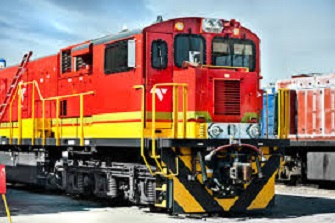
Among the company’s most significant investments, it listed the acquisition of locomotives to modernise its fleet in anticipation of a rise in general freight volumes and the solidifying of the ‘road to rail’ strategy.
“As at 31 March 2018, the cumulative expenditure incurred on the 1 064 locomotive contract amounts to R30.1 billion, with R7.3 billion spent in the year under review.
“A total of 402 locomotives have been accepted into operations while 16 have been delivered and are currently undergoing acceptance testing,” said Gama.
While Transnet boasted an increase in revenue, it said an action plan is in the works that will assist the state-owned entity curb irregular expenditure, which has tainted its reputation.
“The year under review though, has been characterised by a number of serious procurement related governance challenges which has impacted on the company’s reputation and the ability to attract investment.
“The board, together with management, is developing a comprehensive corrective action plan to prevent the recurrence of such instances,” said Gama.
The plan will focus on developing additional controls to prevent irregular expenditure while a mechanism to ensure the completeness of reported irregular expenditure is developed and implemented.
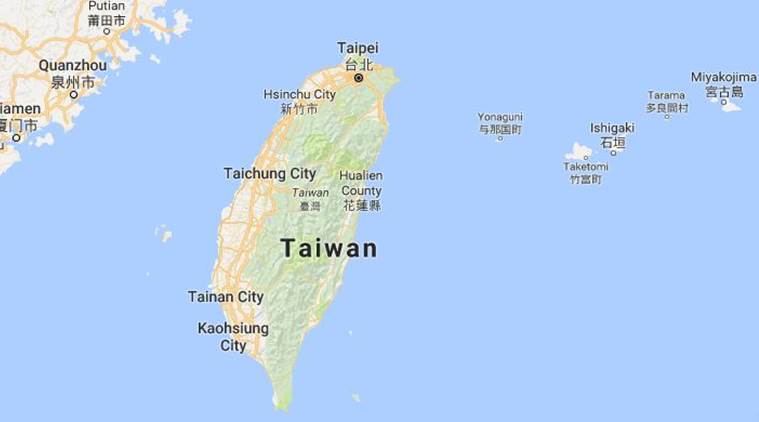
Taiwan President Tsai Ing-wen, said on Monday that the self-ruled island would not bow to pressure after her high-profile trip to Latin America.
Tsai equally said that Taiwan would not bow as a result of stops in the United States, which drew criticism from China.
China, which claims Taiwan as its territory, has ramped up military and diplomatic pressure in an attempt to assert Chinese sovereignty over the island, even as the U.S. government makes fresh overtures to it.
In March, U.S. President Donald Trump signed the Taiwan Travel Act a non-binding bill encouraging the United States to send senior officials to Taiwan to meet Taiwanese counterparts.
While Tsai was not invited to the United States for an official visit, she met U.S. senators while she was there, attended banquets with overseas Taiwanese and spoke of the need for strong ties with Washington.
The number of countries that now officially recognise Taiwan has been whittled down to 18, following moves by Burkina Faso in West Africa and the Dominican Republic in the Caribbean region to formally switch relations to China from Taiwan this year.
“Taiwan would not bow to pressure. Pressure would only make us more determined and united. It would only boost our determination to go abroad,’’ Tsai said at Taiwan’s international airport upon arrival late on Monday after the nine-day trip.
Though she did not elaborate, Tsai said during talks with heads of state during the trip, she had “demonstrated Taiwan’s determination for the value of freedom and democracy,’’.
China, which believes Tsai wants to push for Taiwan’s formal independence, has already complained to Washington about her U.S. stopovers on the arrival and departure legs of her trip to Paraguay and Belize in the past two weekends.
Democratic Taiwan is one of China’s most sensitive territorial issues and Tsai’s U.S. stopovers in the United States, a customary practice for Taiwanese presidents, came amid an increasingly bitter trade war between Beijing and Washington.
While the United States has no formal ties with Taiwan, it is its main supplier of arms and military hardware, and its strongest unofficial diplomatic backer.
In a sign of the geo-political tensions, a Taiwan bakery chain with numerous branches in China disappeared from major Chinese food apps amid calls for a boycott after Tsai stopped by for a coffee at one of its stores in Los Angeles
In response, Tsai earlier urged people in Taiwan to remain united and she remained defiant in the face of Beijing’s pressure.
“My administration will continue strengthening every aspect of #Taiwan-#U.S. relations. Until next time!” Tsai tweeted upon her departure from a U.S. airport earlier on Monday, along with a photo of her holding hands with James F. Moriarty, chairman of the American Institute in Taiwan.
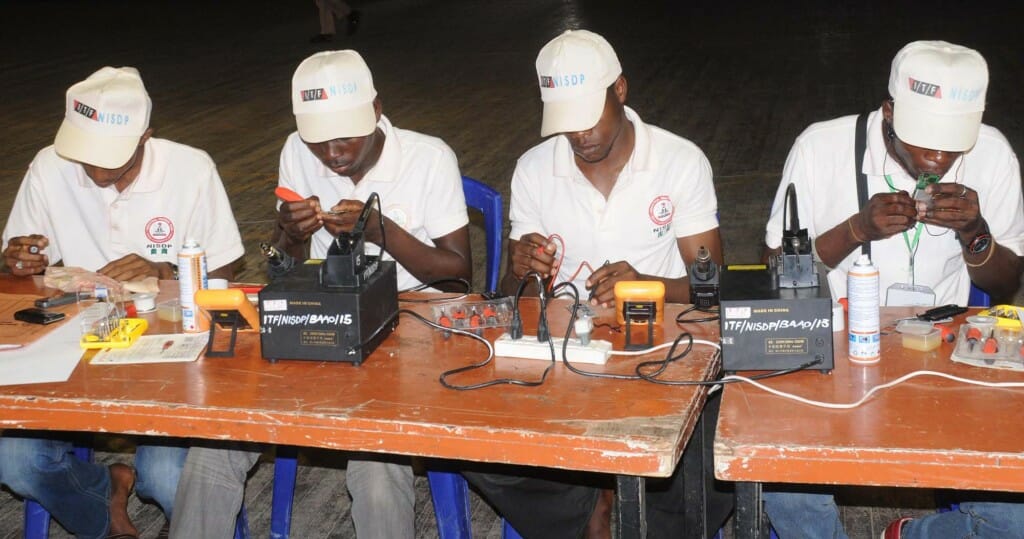
Youth undergoing skills acquisition training by ITF in Jos, Nigeria
Youth undergoing skills acquisition training by ITF in Jos, Nigeria
Chief Executive Officer, Diamond Bank Nigeria PLC, Mr Uzoma Dozie, says the bank has disbursed more than one billion naira to small businesses under the Cash Flow-Based Small and Medium Enterprises (SME) lending scheme.
Dozie said this in a statement signed by the Media Relations Officer of the bank, Ezechinyere Anyanwu on Monday in Abuja.
He said the disbursement was one of the bank’s ways of showing support to SMEs and ensuring financial inclusion in the country.
“This milestone is a demonstration of our resolve to develop innovative ways of advancing financial inclusion in Nigeria.
“It is also a signal to many more successes to come as we push through our technology-driven retail focused strategy.
“This strategy is designed to position Diamond bank as the most profitable and fastest growing retail bank franchise in Nigeria by the year 2020,” he said.
According to Dozie, the scheme inaugurated in Jan. 2 017, in partnership with the Women’s World Banking (WWB), features the Cash Flow-based MSMEs Lending Methodology.
He said the scheme had a strategic focus on cash flow, net asset capacity, character and business proficiency of SMEs as a means of determining their eligibility to access credit.
According to the chief executive, the bank under the lending scheme, has been able to disburse N267 million during the pilot phase.
He said the bank also disbursed N750 million between June and August.
“Remarkably, all the loans disbursed under the scheme to the 550 small businesses are performing despite the recipients of the facilities being first-time borrowers.
“We are confident that the future of retail banking belongs to banks with disruptive business models and solutions that deliver superior customer experience through strategic alliances.
“This also applies to those that create life-style-focused products, processes and channels.
“We pride our financial inclusion strategy as the most robust and customer-centric in the Nigerian banking industry and will achieve more milestones through data-based initiatives that are simply beyond banking,’’ Dozie added.
Diamond Bank Plc is Nigeria’s lead driver of financial inclusion, providing enhanced customer experience through innovation and technology.
The market capitalisation of the Nigerian Stock Exchange (NSE) on Monday shed N219 billion, ahead of Eid-El-Kabir.
The loss by the market capitalisation was as a result of huge losses suffered by major highly capitalised equities.
Specifically, the market capitalisation dipped N219 billion to close at N12. 655 trillion compared to N12.874 achieved on Friday.
Also, the All Share Index shed 603.21 points to close at 34,663.48 as against 35,266.69 on Friday.
The News Agency of Nigeria (NAN) reports that the Federal Government had declared Aug. 21 and 22, as public holidays to mark the 2018 Eid-El-Kabir.
The upward trend recorded on Friday could not be sustained due to investor’s apathy on the market.
The downturn was impacted by losses recorded in medium and large capitalised stocks, among which were: the Nigerian Breweries, Unilever Nigeria, Guaranty Trust Bank, PZ Cussons and Zenith Bank.
Also, market breadth maintained negative sentiment to close with 11 gainers to 22 losers.
Airline Services and Logistics led the gainers’ chart in percentage terms with a gain of 8.99 per cent to close at N4.85 per share.
FCMB Groups followed with 5.88 per cent to close at N1.80, while Regency Insurance appreciated by 4.35 per cent to close at 24k per share.
In the same vein, Skye Bank went up by 4.17 per cent to close at 50k and Lasaco Assurance rose by 3.23 per cent to close at 32k per share.
Conversely, UAC Property led the laggards’ table in percentage terms by 8.19 per cent to close at N1.57 per share.
Honeywell Flour trailed with a loss of 7.59 per cent to close at N1.46, while Japaul Oil and Maritime Services shed 7.14 per cent to close at 26k per share.
PZ Cussons dipped by 7.12 per cent to close at N13.05, while United Capital went down by 6.62 per cent, to close at N2.82 per share.
Also, the total volume traded declined by 41.09 per cent to 220.5 million shares valued at N3.19 billion traded in 3,054 deals.
Transactions in the shares of United Bank for Africa (UBA) topped the activity chart with 42.72 million shares valued at N354.78 million.
Zenith Bank traded 36.66 million shares worth N34.23 million, while Access Bank transacted 32.69 million shares valued at N310.43 million.
Skye Bank followed with 18.32 million shares worth N9.16 million, while FBN Holdings traded 15.58 million shares valued at N151.56 million.
The Nigerian Air Force (NAF) says the Air Task Force of “Operation Lafiya Dole” has been conducting successful massive day and night attacks against remnants of Boko Haram Terrorists (BHTs) and their facilities, near Arra in Borno.
Air Commodore Ibikunle Daramola, NAF Director of Public Relations and Information, disclosed
this in a statement on Monday in Abuja.
Daramola explained that the attacks, which were preceded by days of intensive Intelligence Surveillance and Reconnaissance (ISR) missions, were planned and executed based on credible intelligence indicating that the BHTs were making moves to regroup around the fringes of Sambisa.
” The first air strike was a daytime mission executed on Aug.10 at a location 4.5 Km Northwest of Arra around the fringes of Sambisa, where ISR had confirmed that BHTs were regrouping to launch attacks against our troops in the general area.
” Accordingly, the ATF detailed an Alpha Jet to attack the location. Overhead the area of interest, the Alpha Jet acquired and engaged targets, destroying parts of the settlement and neutralizing several BHTs.
” Intelligence reports later revealed that some of the surviving BHTs had converged at another location 4.8Km West of Arra.
” Consequently, the ATF deployed Mi-35M helicopter gunships for a night attack on the new location on Aug. 18 resulting in the death of dozens of BHTs, ” he said (NAN)
The Gauteng Department of Social Development will reinstate the food bank model and retain the current food bank infrastructure operations, MEC Nandi Mayathula-Khoza announced on Monday.
The announcement follows an abrupt closure of food banks and termination of funding to food relief cooperatives that supply necessities, including school uniform and dignity packs, to communities.
The sudden closure of the food banks followed fraud detected by Treasury. It was then recommended that food banks be closed down for a full forensic investigation to take effect.
Classification Circular 21 from National Treasury recommends that the department no longer directly transfer funds straight to Non-Profit Organisations (NPO) to buy goods and services. The circular says there is a need for the reclassification of all goods and services to be procured via the supply chain management system.
Mayathula-Khoza said while the department recognises the seriousness of the issues raised in the fraud detection review report and that the officials are fully co-operating with the full forensic investigation, the problems must be isolated and dealt with decisively.
Preserving Sustainable Livelihood Programme
The MEC maintained that Sustainable Livelihood Programme and related projects must be preserved as a vehicle for empowering vulnerable groups of people, particularly youth, women, children, HIV and Aids patients, older and frail people, as they work together to eradicate poverty.
“The abrupt introduction of the Classification Circular 21 by National Treasury in the middle of the financial year, and the decision by the Auditor General of South Africa to apply it retrospectively to the [2017/18 financial year] has thrown the sector into chaos, countrywide – and certainly affected service delivery in a negative way.
“It is also the view of the social development sector that the implementation of the classification circular will have dire consequences on the poor people, if it is only interpreted and understood from an accounting point of view, and not within the context of what the Accelerated Social Transformation and sustainable livelihood agenda is all about.
“We note with regret that as a result, the food banks have ceased to operate, the dignity packs programme has halted and the process to accredit cooperatives for the production of school uniform had to be stopped – all… due to the forensic detection recommendations and the Classification Circular. We are further saddened by the fact that a lot of jobs, which depended on these projects and funding from government, have been compromised or lost,” Mayathula-Khoza said.
She said the procurement of food supplies will, however, for now be retained within the Supply Chain Management (SCM), until all other matters have been resolved.
In implementing this decision, the MEC said the department was aware of the fact that the cost of procuring food supplies through SCM could prove to be expensive, which may impact on the current budgets or lead to a reduction of service delivery targets in certain instances.
“This must, however, be done to mitigate the risks identified in the fraud detection review report. Again, in implementing this decision, all efforts will be made to ensure that issues raised in the fraud detection review report are addressed. Legal advice will be sort and where necessary, we will continue to engage each other in Gauteng government to ensure that any possible non-compliance is managed upfront,” Mayathula-Khoza explained.
School Uniform Project implementation
Mayathula-Khoza also announced that the implementation of the School Uniform Project will proceed using the old approach of working with sewing cooperatives, in accordance with the Policy on Financial Awards.
“We must be ready to distribute school uniform to over 151 000 learners by the beginning of the 2019 school term. The school uniform will be produced by over 490 cooperatives, and the department will invest over R147 million on these vehicles of community empowerment,” the MEC said.
Dignity Packs Programme reinstated
The Dignity Packs Programme will be reinstated based on the old approach, in line with the Policy on Financial Awards.
“Shortly, we will commence with the packaging and distribution of over 306 000 dignity packs per quarter, benefiting over 102 000 mostly girl learners per month, including hats and sunscreen for children with albinism,” Mayathula-Khoza said.
Other programmes affected
Mayathula-Khoza said the department also noted with concern that there are other programmes affected mainly by the classification circular, which have been halted.
These include the Welfare to Work Programme; non-centre based services for Early Childhood Development (ECD), including mobile ECD services, toy libraries, new infrastructure and renovations of crèches, community based child and youth care services, including Isibindi Training Programme.
“We remain committed to the principles of clean governance and an environment free of fraud and corruption. We also remain committed to the maintenance of a clean audit status, which we have achieved for six years in a row now.
“Equally so, we remain committed to our accelerated social transformation agenda, and the protection of our vulnerable people.”
While capital expenditure by public sector institutions decreased in 2017, significant amounts were spent on service delivery orientated aspects, Statistics South Africa (Stats SA) said on Monday.
The findings of the 2017 Capital Expenditure by the Public Sector report showed that total capital expenditure by public sector institutions decreased by R12 068 million from R283 276 million in 2016 to R271 208 million in 2017.
Capex (capital expenditure) by public sector institutions has for the last five years exceeded R1.3 trillion with 2017 being the first year-on-year capex decrease, since 2009.
The report found that new construction was the largest component of public-sector capex with public corporations being the largest spenders.
Power utility Eskom remained the main contributor to the total capital expenditure (R75.7 billion) during the 2016/17 financial year, which was spent mainly on power generation projects at Kusile power plant and nationwide on new electricity distribution programmes.
Meanwhile, the South African National Roads Agency’s capital expenditure increased to R9.3 billion in 2017 from R8.5 billion in 2016. Its capital works on roads (such as the Moloto road) amounted to R6.3 billion.
Transnet spent R1.9 billion on purchases of new wagons for freight rail and R22.5 billion on various equipment for various operating divisions across the country, while Telkom invested R8.2 billion mainly in submarine cable systems, network evolution initiatives and freehold buildings, among others.
The report showed that capital expenditure increased on other fixed assets (R2 337 million), land and existing buildings (R1 062 million) and leased assets and investment property (R171 million).
Capital expenditure decreased on plant, machinery and equipment (-R8 893 million), new construction works (-R5 357 million) and transport equipment (-R1 388 million).
Higher education institutions spent R6.9 billion on fixed assets in 2017, with the University of Venda having spent R615 million on work in progress of student residential buildings and the construction of office blocks.
The country’s 257 municipalities were responsible for 23% of total public sector capital expenditure. Johannesburg accounted for 3%, while Cape Town and eThekwini accounted for 2% respectively.
Capital expenditure is any expenditure incurred in or incidental to the acquisition or improvement of land, buildings, engineering structures and machinery and equipment.
The expenditure normally confers a lasting benefit and results in the acquisition of, or extends the life period of a fixed asset.
Capital expenditure does not measure or monitor specific projects of specific entities. It only reports on capex spend (by type) during the financial year.