Home Blog Page 1140

South African Companies Confident Of Accessing Peruvian Markets

0
SA-Peruvian

SA-Peruvian


South African companies on a trade and investment mission to Peru are confident that their products and services will find a market in the South American country.

The Department of Trade and Industry (dti) is currently leading a group of local companies on an Outward Selling Mission (OSM) to the South American country’s capital, Lima.

The local companies are impressed about the countless trade leads and valuable market information they have obtained in the first two days of the mission.

“The most important aspect of any trade mission is the matchmaking session, where business-to-business meetings take place. This is where companies get to know each other and start discussing serious business,” said Managing Director of Thandi Wines Vernon Henn.

Henn said he was “delightfully surprised” by the quantity and quality of the companies that came to meet South African companies.

“They were genuinely keen on getting our products onto the shelves of the Peruvian stores. This is the first step but I am optimistic that when I go back home and start assessing all the leads, I will be able to get a distributor or agent that I can do business with and export our wines to Peru,” said Henn.

Lee-Anne Kruger, the Financial Manager of Salemco International, said she has learnt more about the industry in Peru and the trade and investment opportunities available for South African companies.

“Most of the people I met with during the matchmaking session offered potentially good trade leads. What was even more interesting for us was that the importers and distributors we met were not only interested in one product, but were eager to market the whole range in Peru.

“When we get back home, we will have our work cut out deciding who will serve our products best before making follow-ups,” said Kruger on Wednesday.

Andries Blake of Blake Family Wines expressed confidence that his wines would be able to stand among the best and compete successfully in the difficult Peruvian market dominated by wines from countries such as Chile and Argentina.

“I have no doubt that there is an opportunity here because the South African wine is different. We have uniquely South African brands such as Pinotage and Chenin Blanc that are not available here. We will be offering them premium wines that are targeting the upper end of the market. Fortunately, the companies I met here are looking for exactly what we are offering as they understand their market,” said Blake.

Trade between South Africa and Peru grew from more than R800 million in 2016 to about R1.5 billion last year.

Last week, Trade and Industry Minister Rob Davies said the OSM forms part of the dti’s efforts to strengthen bilateral trade relations and increase trade and investment between South Africa and Peru.

This week’s trade mission, which began on Monday, is the fourth mission to Peru the dti has organised since the technical scoping mission that the dti undertook to Peru in 2013. – SAnews.gov.za


https://www.africaprimenews.com/2018/07/12/politics/president-ramaphosa-in-saudi-arabia-for-state-visit/

South Africa: Fire Outbreak Kills 3 In Johannesburg

0
Gauteng Departments of Health and Human Settlements


By Our Reporter

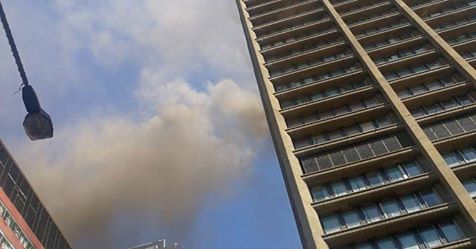
Three persons have lost their lives in a fire that engulfed the 23rd floor of building occupied by the Gauteng Departments of Health and Human Settlements.

Gauteng Infrastructure MEC, Jacob Mamabolo confirmed this to Journalists outside the burning building on Wednesday.

Mamabolo said the cause of the fire is unknown, however, the provincial government, together with the City of Johannesburg will wait for a report on the cause of the tragedy.

“There are currently three members of the City of Johannesburg fire department who have lost their lives. We would like to convey our sincere condolences to the deceased and to their families,” said Mamabolo in a tweet posted on the department’s Twitter account.

The fire broke out at the offices of the provincial departments on Sauer Street in the Johannesburg CBD on Wednesday.

Mamabolo informed officials who work in the building that it will be closed until further notice.

“The officials that were all working in this building will be allowed to stay at home until we find a suitable alternative where the officials can report for duty,” said the MEC.

A firefighting team has been set up to contain the fire.

Nigeria Ranks 2nd Highest Burden Of Tuberculosis In Africa, 7th Globally – Official

1
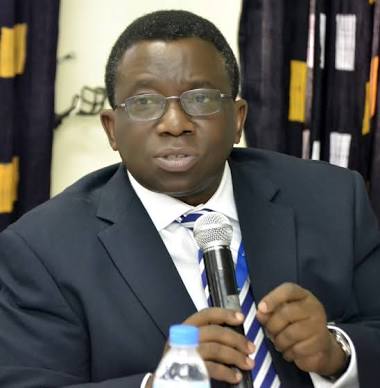
Prof. Isaac Adewole
Nigeria's Minister of Health, Prof. Isaac Adewole,
Prof. Isaac Adewole, Minister of Health, Nigeria.


By Joseph Edegbo

Nigeria’s Minister of Health, Prof. Isaac Adewole says Nigeria has the 2nd highest burden of tuberculosis in Africa and 7th in the world.

Also, Nigeria is among the 14 countries considered by the World Health Organisation (WHO) as being high burden, not only for TB, but also TB/HIV and MDR-TP globally.

The Minister stated this on Tuesday at the National Public/ Private Mix on Tuberculosis Control Summit in Lagos.

Prof. Adewole said however that the Ministry in Collaboration with both national and international TB control agencies is currently providing free TB services in over 7,000 health facilities in the country ,where over 100,000 cases were notified and treated in 2017.

This, he said, represents 25% of the estimated TB cases in the country, while the remaining 75% that are undetected remain in the community.

“The Ministry in collaboration with a broad coalition of partners namely: USAID and the US Centers for Disease Control and Prevention (CDC), the KNCV Tuberculosis Foundation (KNCV)/Challenge TB (CTB), the Department of Defence (DOD), the Global Fund, the International Federation of Leprosy Associations (ILEP), the Stop TB partnership, Association of Reproductive and family Health (ARFH), Institute of Human Virology (IHVN) and the Civil Societies among others, is currently providing free TB services in over 7,000 health facilities in the country, where over 100,000 TB cases were notified and treated in 2017.

“The TB cases notified in 2017 only represent about 25% of the estimated TB cases in the country. “The remaining 75% of the estimated TB cases that are undetected (missing TB cases) remain in the community, leaving a high probability of transmission of the disease to other people. “The infectious sources could be our close associates, workers, drivers, teachers etc. thereby putting all of us including our children at risk, and hence the need for all of us to work together to make Nigeria free of TB.

 “We are working hard to address the menace. The country currently delivers TB treatment and care through a network of over 7,000 health facilities accredited by the National TB and Leprosy Control Programme (NTBLCP) up from 3931 in 2010. Similarly, the number of Drug resistant TB (DR-TB) treatment centres has been progressively increased from 10 in 2013 to 28 in 2017.” he said.

According to the Minister, a cutting-edged technology to enhance TB diagnosis has been deployed in the country , while a total of 391 GeneXpert machines have also been installed at 310 sites across the country for the purpose

The Minister who acknowledged the support provided by all the partners for their immense contributions, assured them of the present Administration’s resolve to end TB in Nigeria.

The Summit was attended by Business Executives, Corporate ,  Multilateral/ Bilateral Organisations as well as Private Health providers and Civil Society Organisations.

Nigeria 2019: Zamfara APC Adopts Indirect Primaries

0
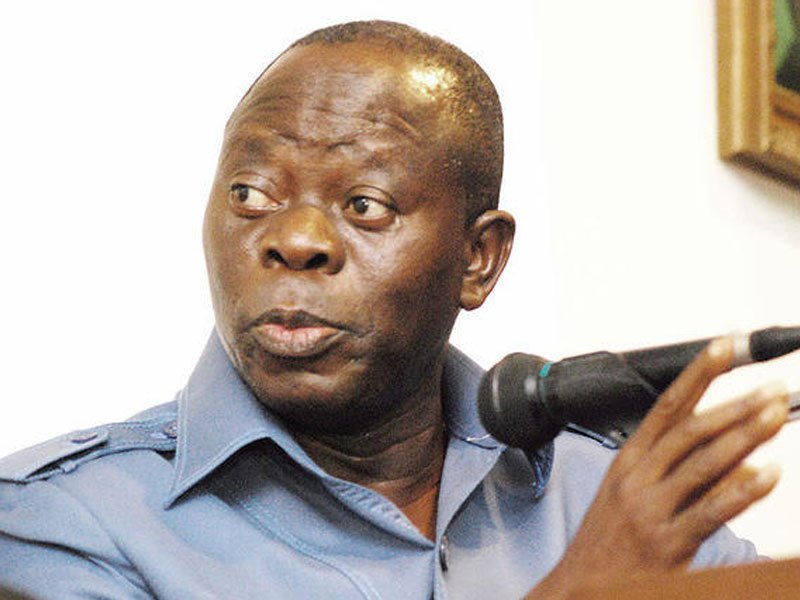
Adams Oshiomhole
National Chairman of All Progressives Congress (APC), Comrade Adams Oshiohmole
Adams Oshiomhole
National Chairman of All Progressives Congress (APC), Comrade Adams Oshiohmole


By Mohammed Munirat Nasir

The Zamfara State chapter of the All Progressives Congress (APC) has adopted the indirect mode of electing party candidates for the 2019 general elections.
Briefing newsmen shortly after the party stakeholders meeting held at the Government House, Gusau, the Chairman, Lawal Muhammad Liman said the adoption of indirect primaries was a collective decision of all members of the party in the state.
“The members have confidence in the leadership style from federal to state levels. You can see all of them, we met and resolved that we are going to conduct indirect consensus primaries,” he said.
Liman added that the adoption was not a deviation but in consonance with the party National headquarters decision.
“The position of our party NEC is that we go back to our state and decide with our executive which mode will be more befitting for us, so it is not a deviation,” he said.
Liman said any time there is general elections, there is a lot of the need for reconciliation and agreements as some may not feel happy.
“We don’t have any faction, in Zamfara we are one and this is the time all our party members should unite for the success of our party,” he said.
A party official who didn’t want his name in print said the stakeholders during the meeting as a matter of ensuring equity, also zoned the governorship slot to the Central zone which has never produced governor of the state.

Nigerian NGO Praises Kaduna For Proposing N147.6 Million To Fund Child Spacing In 2019 [Corrected]

0
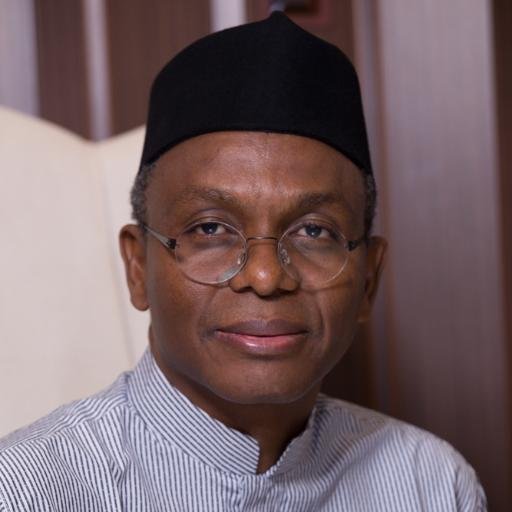
Gov. El-Rufai
Gov. Nasir El-Rufai of Kaduna State, Nigeia
Gov. El-Rufai
Gov. Nasir El-Rufai of Kaduna State, Nigeria


By Our Reporter

A non-governmental organisation, Family Health Advocates in Nigeria Initiative (FHANI), has praised Kaduna State Government for its efforts in sustaining child spacing activities in the state through consistent funding of the programme.

A statement by Acting Secretary of the Organisation, Iliya Kure said, “FHANI recognises and commend the state government for increasing budgetary allocation for procurement of child spacing consumables and commodities in the 2019 draft budget submitted to the State House of Assembly.

“Last year, the budget allocation for procurement of consumables and commodities was N75 million. In the 2019 budget draft submitted to the House of Assembly for approval, the state is proposing to spend the sum of N120 million.

“Recall that recently the State government created a second budget line to address the other five thematic components of child spacing not covered by the initial budget line. The proposed allocation for this new budget line in the 2019 budget draft submitted to the House of Assembly is N27.6 million.

“This is to say; Kaduna state government has fully complied with international standards on financing child spacing programme.

“We celebrate Kaduna State because, no state in Nigeria has attained this feat.

On FHANI’s optimism for the proposals to see the light of the day, the statement says, “We are confident that the State House of Assembly Members will continue to support child spacing programme, because it is about women’s health.

“We recently had a meeting with relevant House Committees on the issue and they displayed good understanding of health challenges faced by women in Kaduna state. They have promised to do all within their power to ensure women of reproductive age receive the needed attention.

“We therefore call on all stakeholders to support the effort of Kaduna state government in addressing the high maternal death indices in the state, especially through child spacing programme,” the statement says.


https://www.africaprimenews.com/2018/08/16/news/nigeria-kaduna-presents-n155-bn-2019-budget-proposal-to-state-assembly/

South Africa Likely To Exit Technical Recession In 3rd Quarter

0
GDP

GDP


South Africa is likely to exit its technical recession in the third quarter, the Bureau of Economic Research (BER) said on Tuesday.

“In terms of our forecast, I think that we will exit the recession in the third quarter,“ said senior economist at the BER, Hugo Pienaar.

Gross domestic product (GDP) figures for the second quarter of 2018 showed that the economy slipped into recession. According to data released by Statistics South Africa (Stats SA), the economy shrunk by 0.7% quarter-on-quarter following a revised 2.6% contraction in the first quarter of 2018.

The widely recognised indicator of recession is two (or more) consecutive quarters of negative growth.

Stats SA said the 0.7% downturn in the second quarter of 2018 was a result of a fall-off in activity in the agriculture, transport, trade, government and manufacturing industries.

Agriculture production fell by 29.2% in the second quarter of 2018, following a 33.6% slump in the first quarter. This was largely driven by a decline in the production of field crops and horticultural products.

At the release of the data at a media briefing in Pretoria, Stats SA noted that the continued drought conditions in the Western Cape and a severe hailstorm in Mpumalanga resulted in extensive crop damage, which also placed additional pressure on production in the second quarter.

Pienaar said agriculture, which had poor numbers for two consecutive quarters, might recover in the third quarter.

“There was a decline in inventories. I would expect that we get a positive print in the third quarter. While it may not be a great print, I think we will exit the recession the third quarter,” he said.

Commenting on today’s data, Pienaar said while the BER expected poor data results, it had not expected it to result in a technical recession.

The transport industry contracted by 4.9%, largely due to decreased activity in both land and air transport. Industrial action within the industry, combined with a decline in freight transport, contributed to the slowdown.

The trade industry experienced its second consecutive quarter of negative growth, falling by 1.9%, while government activity decreased by 0.5%, largely as a result of falling employment numbers in the civil service.

Pienaar said for the first half of this year, the South African economy only grew by 0.9% year-on-year when looking at the seasonally adjusted figures.

The national Budget tabled in February forecasted growth to come in at 1.5% for 2018.

“At that stage it was a fairly conservative forecast. I’m not saying that National Treasury was overly optimistic at that stage, it sounded like a realistic number.

“But now with 0.9% for the first half of the year, it’s going to be extremely difficult. I can’t see that [we’ll] get to 1.5%,” said Pienaar.

Weaker growth 

Finance Minister Nhlanhla Nene is expected to table the Medium Term Budget Policy Statement (MTBPS), which is also known as the mini-budget, in Parliament in October.

Pienaar said government, the private sector as well as economists may have over-estimated growth after the economy grew by 1.3% in real terms in 2017.

“Now it’s very likely that growth will be weaker this year than last year,” he said.

The data has implication for fiscal policy, meaning that revenue will likely be less than what was forecasted in the February Budget.

“I think our budget deficit and our fiscal ratios, come October with the MTBPS, are going to look worse than what we thought in February.”

At the tabling of the Budget, government expected the budget deficit to narrow to 3.5% over the next three years. The Budget also expected a revenue shortfall of R48.2 billion in 2017/18.

“Ramaphoria” 

In terms of what has widely become known as Ramaphoria following the change of guard in February, Pienaar said this had faded in the last couple of months. 

“It’s been clear for quite some time that Ramaphoria was temporary in the first quarter of this year and of course, the global economy has also moved against us. We’ve had the emerging markets crises like in Argentina,” he said of the country, whose Peso collapsed and has announced austerity measures. 

The crises in emerging economies like Argentina are also having an effect on the Rand.

“These GDP numbers confirm that Ramaphoria period was pretty temporary. One also needs to be realistic that even in the first quarter when we had that bounce in confidence, it was not based on fundamental underlying improvements in the economy. It was solely based on expectation that the political changes would down the line result in better outcomes,” said Pienaar. 

President Cyril Ramaphosa became President of the country in February following former President Jacob Zuma’s resignation.

“It probably means that President Ramaphosa’s task of turning this ship around is even harder than it was in the beginning of the year,” said Pienaar.

Effect on interest rates 

Pienaar advised consumers to be prudent with their hard earned money in the coming months.

“Although the economy is weak, if the Rand continues to weaken at the current rate, I think the Reserve Bank will have very little option but to increase the repo rate. I don’t think it will be a dramatic increase but the point is, the next move in interest rates are likely to be higher. The cost of credit will go up a little bit. I advise that consumers be prudent.”

The central bank’s Monetary Policy Committee (MPC) is expected to hold its second last meeting of the year from 18 – 20 September.

At its last meeting in July, the MPC kept the repo rate unchanged at 6.5% per annum.

SAnews.gov.za

Eastern Cape Earmarks R10m To Recruit Mental Healthcare Practitioners

0
SA Mental

SA Mental


In a bid to address mental healthcare in the Eastern Cape Health Department, the ministry has announced that a budget of R10 million has been set aside to recruit health practitioners.

“The plan includes recruitment of mental healthcare practitioners and expanding scope of mental health service providers to include community based mental health care programme.

“A budget of R10 million has been budgeted for recruitment of mental healthcare practitioners for this financial year. The appointments will be made before the end of the current financial year,” said the provincial Health MEC Helen Sauls-August on Tuesday.

For the current financial year, the department said it will focus on recruiting psychologists and registered counsellors to implement the community based mental health programme.

Among the practitioners to be recruited are three psychiatrists, 20 psychiatric nurses, four psychologists and 16 registered counsellors.

The recruitment drive follows the release of a report titled “Investigation into allegations of patient mismangement and patient right’s violations at the Tower Psychiatric Hospital and Psychological Rehabilitation Centre (TPHPRC)”.

The investigation was instituted following allegations that TPHPRC was accused of violating patient’s rights by psychiatrist, Dr Kiran Sukeri, who laid a complaint with the provincial department.

In his report, Makgoba found that Sukeri, grossly exaggerated the happenings at the hospital, but acknowledged that there is a need for the provincial department to prioritise mental healthcare.

In addition, to the recruitments, the department is also processing for a new bid for provision of chronic mental health services, persons with severe mental health and disabilities and community based rehabilitation services.

“Improving mental health facilities is receiving high priority this financial year and this has been translated into increasing the number of mental reviews boards from three to five to cover the five regional geographic areas.

“Going forward the department is responding to great demand for acute mental beds and upgrading mental health care facilities across the province,” said the MEC.

SAnews.gov.za


https://www.africaprimenews.com/2018/07/23/news/make-basic-health-care-fund-a-first-line-charge-csos-to-nigerian-govt/

NSFAS Receives 10 000 Applications For Free Education Bursaries On Day One

0
NSFAS LOGO
NSFAS LOGO
NSFAS LOGO
NSFAS LOGO


Higher Education and Training Deputy Minister Buti Manamela says the National Student Financial Aid Scheme (NSFAS) has received 10 000 applications for free higher education through its contact centre on Monday. 

Manamela said this when he visited the NSFAS office in Cape Town on Tuesday to assess the progress for applications for the 2019 academic year for prospective students who qualify for free higher education. 

Accompanied by newly appointed NSFAS Administrator Dr Randall Carolissen, Manamela said the response from prospective students has been very good. 

“As you know, yesterday we officially opened the applications for the NSFAS for students to indicate that they want bursaries. My intention here today was to essentially look at what the first day looks like and I must say the numbers are quite alarming.” 

He said yesterday alone, 45 000 people logged on to the NSFAS website. 

“They also received more than 10 000 calls yesterday and I think it shows that the information has gone out there. Interest has spiked and therefore it means that capacity has to be developed here in order for us to respond all of those things.” 

Manamela said the applications process is based on a new system, which means funding decisions are made quicker and they are easier for students to fill on those applications, irrespective of where they are. 

“Some of the lessons that we have learnt are being integrated into the new [system],” he said.  

Progress made to clear backlog of outstanding payments to students 

Meanwhile, the Deputy Minister said progress has been made to clear the backlog of outstanding payments to students. 

“What I am also excited about is the fact that progress has been made with regards to backlog issues. 

“The number of students who have been waiting for payments has now been reduced. 

“About two weeks ago when the administrator was appointed, it was up to [over] 60 000, and more than 23 000 of those have been resolved,” he said. 

He said a team that has been deployed to attend to “crisis areas”, which includes UNISA, University of Venda, Tshwane University of Technology, Mangosuthu University of Technology and all the affected TVET colleges, is dealing with the challenges. 

While the concerns that have been raised by students through labour unions are being tackled, Manamela urged students to engage with the new administrator. 

He said the department has heard the plight of the students. 

“Most importantly, we have heard your plight. We understand that it has been extremely difficult for students to be able to get happiness from NSFAS. 

“What I would also like to emphasise is that we have received more than half a million applications and 430 000 of those have already been processed and yes, one student is one too many (sic).

“I also think that we need to look at the positive side and that a lot of work has been done by NSFAS staff in order to respond to the bigger challenge. What is urgent is to ensure that we resolve the backlog of the students that have not been paid and the administrator has given me his assurances that he will not withdraw his troops on the ground until the last student has received their remittances and I think that also gives us hope,” he said. 

Carolissen said, meanwhile, that he has resolved most of the issues ever since he took over. 

“We have disbursed book allowances to UNISA students – 25 000 of them. We have sorted out a number of administrative issues and I think it’s captured by the fact that we have disbursed R2.2 billion over the past two weeks. 

“We are very pleased with the progress because NSFAS staff have responded very positively and they have worked very hard over the past two weeks,” he said.

SAnews.gov.za

Currency Exchange Rates

USD - United States Dollar
ZAR
0.06
EUR
1.17
CAD
0.73
ILS
0.31
INR
0.01
GBP
1.34
CNY
0.14
Enable Notifications OK No thanks