Katsina state Governor, Aminu Bello Masari has emphasised the need for the management of National Health Insurance Scheme (NHIS) to carry out more Advocacies for people in the state to understand the programme properly.
The Governor was speaking while receiving the Executive Secretary of the scheme, Professor Usman Yusuf who paid him a courtesy call at Government House, Katsina, North West Nigeria.
The Governor noted that the scheme, laudable as it is, could be misunderstood by the people as insurance affects the sensibilities of Muslims in general.
Masari was however happy with the performance of a staff of NHIS who volunteers to educate some communities in Danja local government area on the advantages of the scheme, which he said, has brought acceptance and participation.
The Governor disclosed that the state government in collaboration with the State House of Assembly, the state chapter of Nigeria labour Congress NLC, Medical and Health Workers Union are working closely to come up with a bill for an Agency to replicate NHIS in the state.
Masari said that the Agency would reduce problems of seeking for donations for patients to buy drugs prescribed for them by Doctors in clinics and hospitals.
He commended the Executive Secretary for the good works in the NHIS, stressing that he was not surprised when he learnt of his suspension sometimes back.
Earlier in a remark, the Executive Secretary of NHIS, Professor Usman Yusuf spoke at length on the National Health Bill assented to by President Muhammad Buhari, saying the bill had provided for at least one percent of realisable federal revenue to be expended on the health sector.
Of the amount, he said five percent is secondary, forty five percent for primary healthcare, while fifty percent is for the NHIS, stressing that although the scheme had been characterised by failures in the past, everything is being done to turn round the fortunes of NHIS.
He emphasised the need for the passing of the bill at state levels for the insurance scheme to support the purchase of health consumables at the grassroots level.
Professor Usman Yusuf who said he was part of the restoration agenda-setting of the Masari led government, even before 2015 general elections, expressed happiness that the governor had started implementing the agenda in the renovated and upgraded hospitals across the state.
He also commended Governor Masari for the fatherly role he played during his suspension from office and the resolution of the problem.
He used the occasion to announce the death of the State coordinator of NHIS, Mr. Kazaure who died in an accident along Kankara during one of the advocacy visits on NHIS activities in the state.
UN says the health of hundreds of millions of people are at risk following limited progress being made in addressing the multiple forms of malnutrition, ranging from child stunting to adult obesity.
“2018 edition of the global report on the State of Food Security and Nutrition’’ released on Tuesday in Rome by five UN agencies made available to News Agency of Nigeria (NAN) in Abuja by Food and Agriculture Organisation (FAO), made this known.
The five UN agencies are Food and Agriculture Organisation (FAO), International Fund for Agricultural Development (IFAD), World Food Programmer (WFP), United Nations Children’s Emergency Fund (UNICEF) and the World Health Organisation (WHO).
The report also found limited progress in reducing child stunting, stating that nearly 151 million children younger than 5 were too short for their age due to malnutrition in 2017, compared with 165 million in 2012.
Globally, Africa and Asia accounted for 39 per cent and 55 per cent of all stunted children respectively.
Africa has seen an upward trend in the number of stunted children, while Asia has experienced the largest relative decrease in stunting prevalence.
The report argued that malnutrition in all its forms is not limited to hunger, but also micro nutrient deficiencies, as well as overweight and obesity.
The report described it as a very critical challenge that required a better understanding of the determinants and processes that influence diets.
The agencies noted that latest available estimates indicated that about 815 million people in the world facing hunger and malnutrition are in fact the number one risk to health worldwide.
“It discovered that 821 million people one in every nine were malnourished in 2017, up from 815 million in 2016, putting at risk the UN’s goal of eradicating hunger globally by 2030.
The report added that there was also limited progress in 2017 in addressing multiple forms of malnutrition, such as child stunting and adult obesity, putting the health of hundreds of millions of people at risk.
According to the report, hunger is on the rise over the past three years, returning to levels from a decade ago.
“This reversal in progress sends a clear warning that more must be done and urgently if the Sustainable Development Goal (SDG) of ‘Zero Hunger’ is to be achieved by 2030,’’ it said.
“The report describes as “shameful” the fact that one in three women of reproductive age globally is affected by anemia, which has significant health and development consequences for both women and their children.
“No region has shown a decline in anemia among women of reproductive age, and the prevalence in Africa and Asia is nearly three times higher than in North America,’’ it said.
The agencies said further that the rates of exclusive breastfeeding in Africa and Asia are 1.5 times higher than those in North America where only 26 per cent of infants under-six months receive breast milk exclusively.
The report confirmed that obesity on the rise and adult obesity is worsening, and more than one in eight adults in the world is obese.
It showed that the problem is most significant in North America, but Africa and Asia are also experiencing an upward trend.
“Under-nutrition and obesity coexist in many countries, and can even be seen side by side in the same household.
“Poor access to nutritious food due to its higher cost, the stress of living with food insecurity, and physiological adaptations to food deprivation help explain why food-insecure families may have a higher risk of overweight and obesity,’’ it said.
The report recommended that as solutions to hunger and all forms of malnutrition, there must be immediate focus on ensuring an adequate supply of food, but equally, on the quality of diets.
It added that in spite of record food output globally, hunger is still with us. The report argued that key policy actions are urgently needed to tackle this scourge and must focus on improving diet quality for all.
The report also called for implementing and scaling up interventions aimed at guaranteeing access to nutritious foods and breaking the inter generational cycle of malnutrition.
It said special attention must be paid to policies on groups who are the most vulnerable to the harmful consequences of poor food access, infants, children aged under five, school-aged children, adolescent girls, and women.
The report also suggested that a sustainable shift must be made toward nutrition-sensitive agriculture and food systems that can provide safe and high-quality food for all.
The report, however, called for greater efforts to build climate resilience through policies that promote climate change adaptation and mitigation, and disaster risk reduction.
According to FAO, the report gave an updated estimate of the number of hungry people in the world, including regional and national breakdowns, and the latest data on child stunting and wasting as well as on adult and child obesity.
“It is indeed a snapshot on global hunger and malnutrition, and analysis of their main drivers.
“It is an important yardstick in measuring progress towards the Sustainable Development Goal of Zero Hunger,’’ it said in a statement.
It added that the report also offered analysis of the drivers of hunger and malnutrition, which included a special focus on the impact of climate variability and extremes.
By Gabriel Agbeja and Ijeoma Olorunfemi, News Agency of Nigeria (NAN)
The theme of previous observance of the Ozone Day on every September 16, particularly that of 2017, “Caring for all life under the sun’’, has clearly stated importance of the ozone layer to the life on earth.
Scientists posit that the layer was formed in the atmosphere around five hundred million years ago when it accumulated enough of the oxygen as a result of the photosynthesis to protect life under the sun.
Some scientists also observe that the theme of the 2018 Ozone Day — Keep Cool and Carry on: Montreal Protocol — is apt as a follow-up campaign in sensitising the world to the need for moderating human activities to protect the ozone layer.
Observers note that the sensitisation will be useful in that regard since the scientists have proved beyond doubt that ozone layer depletion — the wearing out of the amount of ozone in the stratosphere — is caused by human activity.
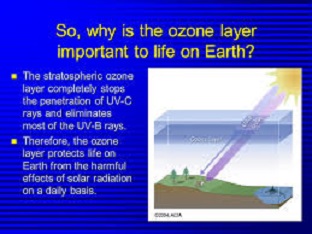
Scientists also argued that high above the ground, between 15 kilometres and 30 kilometres, lays a thin layer of ozone that absorbs direct sunlight to protect everything and everyone on the ground from exposure to the harmful direct sun radiation.
According to their findings, industries that manufacture goods such as insulating foams, solvents, soaps, air conditioners, refrigerators and some food containers emit chlorofluorocarbons (CFCs) that later store up in the stratosphere to affect the layer.
They argue further that human-produced chemicals are responsible for the observed depletions of the ozone layer.
In his view, Mr Abayomi Oguntunde, Director of Bio-resource, Federal Ministry of Science and Technology, observes that human activities that involve the emission of fluorine, bromine, chlorine, carbon and hydrogen among others, can deplete the ozone layer.
The director said that knowing how to prevent ozone layer was important to save lives and secure clear atmosphere.
He suggested an energy efficient model when buying a refrigerator, pointing out that less CFCs would be released when fridge wear out.
“Ensure your car’s air conditioner is carefully serviced; go to a service station designed to recycle the refrigerant, otherwise, the CFCs will be vented into the atmosphere.
“Don’t use foam plastic insulation in your home, unless it is made with ozone safe agents; use fiberglass, gypsum, fiberboard, or cellulose insulation instead and don’t buy a halon fire extinguisher for home use.
“Check directions on what to do with aerosol cans; video head cleaners, boat horns, spray confetti, photo negative cleaners and drain plungers,’’ he advises.
Similarly, Prof. Babatunde Rabiu, Director Centre for Atmospheric Research of the National Space Research and Development Agency, pleads with the Federal Government to implement acts that are designed to protect the environment.
He said that diverse anthropogenic activities have contributed to the pollution of the environment, including the depletion of the ozone layer.
He explained further that the ozone layer is a region of the atmosphere that surrounds the earth and contains a particular gas known as ozone.
According to him, fossil fuel vehicles, bush burning, gas emissions especially from heavy industrial areas are all factors that pollute the environment and the loss of the ozone layer.
Rabiu said that the sun continues to emit radiation from time immemorial but human activities and technological advancement have continued to affect the ozone layer.
“Some of the gases that emitted on earth by our anthropogenic activities, human activities and incomplete combustions, affect the ozone layer.
“When these gases get to the top, they react with ozone gases and convert ozone molecules to ordinary oxygen and they are radicalised.
“When this happens, we lose the concentration of ozone in the atmosphere and so the protection that ozone offers the earth will begin to lose its value at that level.
“This is why the region is very important to us; it is a natural region in the atmosphere that protects the earth from receiving direct radiation which comes from the sun.
“We have to start thinking of the eradication of vehicles with incomplete combustion, indiscriminate burning of tyres and bush should also be stopped.
“Gas flaring has to be stopped in the Niger-Delta region, the use of stove for cooking has to reduce, the government needs to come in and see how they can reduce usage of firewood for cooking,’’ he said.
He observes that direct radiation of the sun on the earth could be harmful to humans which could lead to tanning of the skin and aid skin cancer.
Rabiu further insists that the government and stakeholders in the environment sector have the responsibility of sensitising the public to the need to protect the environment.
He says that that there is a need for the country to consider a ban on fossil fuel cars with incomplete combustion as it is being considered in some developed countries.
But Mrs Adenike Aluko, a public health officer in Osun, calls on the Federal Government to invest more on the development of renewable energy technology to further reduce the effect of climate change.
According to her, the use of alternative energy, such as wind, solar and geo-thermal energy is healthier than fossil fuels because of the emission of carbon monoxide to the environment.
“Investing in renewable energy technology would be a right step in achieving Sustainable Development Goals.
“Scientific knowledge allows people to develop new technologies, solve practical problems and make informed decisions.
Aluko further urged well-meaning Nigerians to partner the government in ensuring steady funding of research on new measures to mitigate the impact of climate change.
“Without proper funding, science and technology sector cannot progress and such funding ultimately comes from the society that will reap its benefits,’’ he said.
The world agreed in Montreal in 1987 to do something about the depletion of the ozone layer and in 1994, the UN General Assembly proclaimed September 16 of every year to be the International Day for the Preservation of the Ozone layer.
Scientists have also, recently, announced that the ozone hole, which has been growing since it was discovered in 1985, may have started to shrink.
According to them, if the actions of humans have brought about an ozone layer healing, the international community has proven that it can solve serious environmental problems when everyone works together.
Gwargwaje Police Barrack Nursery and Primary School LGEA Zaria, Sabon Gari Local Government Area of Kaduna State, is one, possibly representing several others with similar sad tale of how public schools have over the years, dilapidated with little or no efforts by successful government across all tiers to restore the lost glory of this most important sector of the economy.
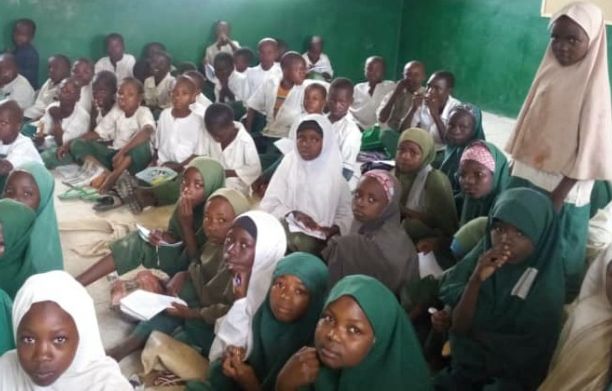
Investigation revealed that, the school has a total of 1,747 pupils, 16 teachers, nine supporting staff called Empowers and six dilapidating classrooms for this number of children. Ordinarily, the standard supposed to be maximum of 40 pupils per class in order to give room for learning contact between the teacher and his pupils. The pupils are sitting and leaning on bare floor while their teachers are managing to connect with them because there are gross inadequate wooden furniture. The primary 1 has four register each planned to accommodate 80 pupils.
As stated earlier, the United Nations recommended 40 pupils per classroom to enhance contact between the teacher and his or her pupils. This is called teaching methodology. With this overcrowded classrooms, the possibility of having qualitative education remains a mirage.
What this means is that, it will be difficult if not impossible for the pupils to learn in this rowdy learning condition or the teacher impacting knowledge as expected if the population size is manageable.
A credible source within the school catchment area hinted that, a government official visited the school with a letter directing him to relocate the school because the school lack the capacity to use the classrooms.
“That official came with a letter that the 20 classrooms out of 24 were to be relocated to another school within the local government and that was all we know. They said we don’t have the population.
“The question is, if we don’t have the population, why would respected international organisation like United Nations Children Funds (UNICEF) came and executed their Water Sanitation and Hygiene (WASH) project in this school?” the source queried.
Reacting, Director, Planning, Monitoring and Evaluation, Ministry of Local Government Affairs, Kaduna State, Zachariah Narcus expressed concern over the development, promising to take it to higher authority for further investigations.
He said, “according to 2017 appropriation, there suppose to be 24 classrooms in that school. But we could see only a block of four classrooms. What I can tell the public is to be patient with us. I will report this to higher authority for further investigations.
“It was observed that the other 20 classrooms have been transferred to another school in Tudun Chikun in the same Zaria though I’m yet to go their whether the classrooms are on ground there or not.
“Based on what we heard, the 20 classrooms were relocated because the school at Gwarwaje do not have the population. But with what we saw, that was not true. This is a school you have more than 120 in a class on the average. In some classes like primary 1 and 2, we have 300 and 200 pupils choking themselves up.
“Like I said, we will investigate further. It is unlawful to relocate a project that has been appropriated by law from one location to the other. The law said, if at all there is going to be relocation, it must go through the same appropriation. We will report it to higher authority to investigate further”, he reaffirmed.
However, when contacted, Acting Director, Project and Monitoring, Kaduna State Universal Basic Education, Salihu Sanusi told Daily Sun in his office that, the agency has the right to relocate any project from one location to the other either as a result of lack of population or land to erect such project.
“When I visited the school, I saw a few pupils contrary to what we were told earlier and we thought since the population is not there, can we relocate the project to other school within the same local government since its their resources. Some schools are congested.
“It is not as if we relocate 20 out of the 24 classrooms. We relocated the entire 24 classrooms to AB Diko in Tudun Chikun. The block of four classrooms you saw on ground was relocated from another school, at Angwan Kaya in Zaria because there is a bigger intervention ongoing there. We are still going to renovate the old structure at Gwagwaje as captured in 2018 budget. Don’t forget that we are still implementing some of the 2016 budget as we speak.
“I want to tell you that, there was no political influence in what we did. It is a reality, a child of necessity. Education office wrote to us that they do not need the project in that school. They wanted it transferred. Based on the enrolment, they need it but when we saw the number of the pupils, we agreed with the letter written to us by education office that the school do not have the capacity to use 24 classrooms.
“It is important to tell you that, it is part of our work to change the scope of work or relocation. We check our data and come up with what and where to execute projects and not as if someone lobby or advocate for it. We prepare our plan, we get our allocation every year and we send our plan to Abuja for approval. In a nutshell, it is within SUBEB power to do what we did. We have also handed the four classrooms to the school”, he added.
President Xi Jinping said on Tuesday that Russia and China should work together to oppose protectionism and what he called unilateral approaches to international problems.
Xi made the comments at a news conference in Vladivostok in Russia’s far east after holding talks with Russian President Vladimir Putin on the sidelines of an economic forum.
Xi, whose country is locked in an escalating trade showdown with the United States, did not mention Washington but said an increasingly unpredictable geopolitical climate made partnership between Russia and China even more important.
NAN reports that the 2018 China-United States trade war (also known as the Trump trade war, is an ongoing trade war between China and the United States which Trump promised in his campaign to fix China’s longtime abuse of the broken international system and unfair practices.
Each country has introduced tariffs on goods traded with the other.
Starting in April 2018, the U.S. imposed tariffs on steel and aluminum imports from China, as well as Canada and countries in the European Union.
On July 6, the U.S. imposed 25 per cent tariffs on 34 billion dollars worth of Chinese goods, as part of President Donald Trump’s tariffs policy, which then led China to respond with similarly sized tariffs on U.S. products.
Four days later, following Trump’s orders, the Office of the U.S. Trade Representative (USTR) published a list of 200 billion dollars in Chinese products to be subject to a newly proposed – but not yet implemented – 10 per cent tariff.
China quickly responded to the announcement by blasting the proposed tariffs as “irrational” and “completely unacceptable”.
The Trump administration said the tariffs were necessary to protect national security and the intellectual property of U.S. businesses, and to help reduce the U.S. trade deficit with China.
The U.S. administration is relying partly on Section 301 of the Trade Act of 1974 to prevent what it claims are unfair trade practices and theft of intellectual property.
This gives the president the authority to unilaterally impose fines or other penalties on a trading partner if it is deemed to be unfairly harming U.S. business interests.
Trump had already, in August 2017, opened a formal investigation into attacks on the intellectual property of the U.S. and its allies, the theft of which cost the U.S. alone an estimated 225 to 600 billion dollars a year.
North West Premier, Professor Job Mokgoro, has called for calm while also condemning acts of violence that broke out in Klerksdorp recently.
“The Premier condemns in the strongest possible terms acts of murder, public violence and other alleged criminal activities that engulfed Klerksdorp on Sunday and Monday, reported to be as a result of clashes between foreign nationals and local taxi drivers,” said the Office of the Premier.
According to the police, incidents of public violence were sparked by the killing of a local taxi driver, whose body was found with two stab wounds by the police who were patrolling the area on Sunday.
It is alleged that some local taxi drivers grouped themselves to avenge the killing of their colleague, who they believe was killed by foreign nationals.
A 28-year-old Zimbabwean national was allegedly stabbed with a knife on his chest while at his tuck shop. He was taken to hospital but certified dead on arrival.
In addition, a group of people suspected to be taxi drivers was seen setting alight hawkers’ stalls at the local taxi rank. However, public order police managed to normalise the situation.
Two separate cases of murder were opened for investigation, while 12 people were arrested in connection with the clashes.
They face charges of public violence and possession of suspected stolen goods.
The 12 appeared briefly in the Klerksdorp Magistrate Court and were granted bail of R500 each.
They are due to appear in court again today.
“Premier Mokgoro has commended the police for their swift action in arresting the suspects and has urged residents of Klerksdorp not to take the law into their hands but to cooperate with the police and the justice system to ensure that the perpetrators face the full might of the law,” said the Premier’s Office.
Police Minister, Bheki Cele, speaking after the South African Police Service presented the Crime Statistics for the 2017/18 financial year at the Good Hope Centre in Parliament on 11/9/2018
Police Minister, Bheki Cele, speaking after the South African Police Service presented the Crime Statistics for the 2017/18 financial year at the Good Hope Centre in Parliament on 11/9/2018
Fifty-seven people are murdered in South Africa every day, a statistic that requires more stringent action by the police.
This is according to Police Minister Bheki Cele who was speaking as the South African Police Service presented the Crime Statistics for the 2017/18 financial year at the Good Hope Centre in Parliament on Tuesday.
“The crime stats of this financial year – 2017/18 – are nothing to write home about, absolutely nothing to write home about. I think our emphasis should be on what is to be done rather than the crime stats, which don’t (sic) give any joy.
“The example I have all the time when I talk about these stats, it doesn’t matter what figures you give. But if you cannot deal with or control murder cases, you are not bringing any joy to the South African people.
“It doesn’t matter what else you reduce, but if people die and it looks like … 57 [people are dying] per day. That’s how many South Africans are murdered, 57 a day. It borders close to a war zone,” he said.
An eagle eye’s view of the murder statistics shows that 20 336 murders were reported during the period under review, which represents a 6.9% increase overall when compared to the previous year.
Cele said when looking at a 10 year overview, while police managed to bring down the murder rate from 18 084 in 2009 to 15 554 in 2010, the trend changed in 2013 when the rate spiked to 16 213. This trend has continued over the years to over 20 000 being killed this year.
Cele said as a result of the trend he has instructed the police’s top management that South Africans cannot be left to live in fear.
“I immediately say the South African Police Services dropped the ball for such figures to happen. I want to put it here that answer we must give is what is to be done because I have said to the members of the SAPS that never again we come here again to give such statistics or worse than this. It can’t be that South Africans are put under such stress and such fear… [for] murder,” he said.
Cele said while police need to do more to bring the murder rate down, it cannot be left to the police alone to arrest the situation.
The murder rate, meanwhile, provoked a reaction from Members of Parliament, with Police Committee Chair Francois Beukman stating that the 6.9% murder rate was “alarming and unacceptable”.
The Nigerian Defence Academy, NDA, said on Monday that the institution will be graduating 365 officers into Nigeria, Republic of Benin and Togo armed forces.
NDA is the premier military university in the entire African region, training young Nigerians and those of allied countries in both military and academics.
They are endowed at the end of a 5 – year training stint at the Academy with a degree from any of the 4 Faculties currently operational and commissioned into the Nigerian Armed Forces and those of Allied Countries.
Commandant of NDA, Major General Adeniyi Oyebade, while briefing newsmen on activities mapped out on the passing out parade (PoP) of the cadets for Army, Navy and Air Force in Kaduna , explained that the graduating students have met the necessary requirements that qualified them for the award after five years of serious military and academic trainings.
Represented by Air Vice Marshal (AVM) Idi Ami, the Commandant further said, the event billed for October 6, 2018 at the Academy parade ground, is expected to be reviewed by President Muhammadu Buhari.
“365 cadets officers including 2 allied cadets from Republics of Benin and Togo. Out of which 131 cadets of 65RC will be commissioned into the Nigerian Army, while members of 66RC of Navy and Air Force will proceed to their respective services for further training before commissioning.
“As you may recall, last year, the President, Commander – in – Chief of the Nigerian Armed Forces, President Muhammadu Buhari GCFR, was suitably represented at the POP ceremonies for 64RC (Army), 65RC (Navy/Air Force) and SSC 44 (Army) by the Vice President, Professor Yemi Osinbajo GCON.
“This year, the President Commander-in Chief of the Armed forces President Muhammadu Buhari will be at hand to grace this year’s events,” he explained.
Meanwhile, the Academy is expected to also confer honourary degrees on 3 eminent Nigerians; Alhaji Mohammed Indimi, Businessman and philanthropist, Dr. Adewumi Adesina, President African Development Bank and Lt Gen C I Obiako, former Military Adviser to United Nations.
So far, NDA has trained over 20,000 officers since inception, of which a small fraction are from allied countries like Benin Republic, The Gambia, Ghana, Seirra Leone, Togo and others.