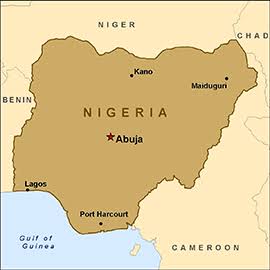
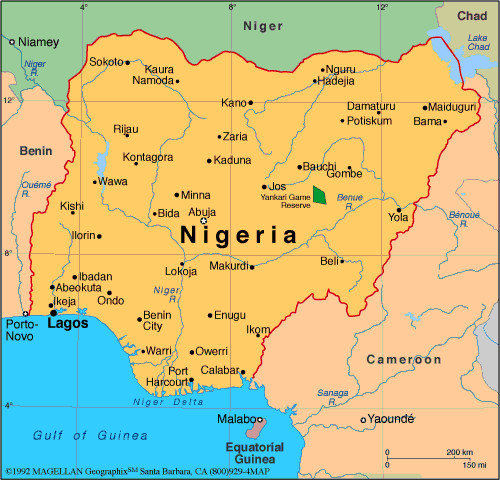
National Coordinator, Nigeria Living Standard Survey (NLSS), Mr Tunde Adebisi, says the National Bureau of Statistics (NBS) will spend 3.5million dollars in carrying out the living standard survey.
Adebisi told newsmen on Thursday in Keffi, that the grant by the World Bank would be disbursed to the NBS through the National social Safety Net Coordinating Office (NASSCO).
According to him, the first trench of the disbursement has already been done and the field work for the project would commence on Sept. 27.
The News Agency of Nigeria (NAN) reports that the NLSS aims to measure the level of poverty and welfare of citizens at the national and sub-national levels of government.
NAN also reports that the survey when completed would inform government inbaddressing the impact of its policies and programmes.
According to Adebisi, about 320 staff comprised of the World Bank, the NBS, Monitors and trainees would be used in carrying out the project.
Earlier, the Statistician General of the Federation, Mr Yemi Kale, said the survey was supposed to be done every five years but was not done in 2014 due to funding and logistics challenges.
Kale said the project would take 12 months to be completed but some indicators of the survey would be published quarterly.
He said the bureau had taken critical quality assurance measures to ensure it got accurate statistics from respondents in the country.
On the proposed census of agriculture products, Kale said:” we are going to every farmland, weather crop or livestock and capturing it on a map.
“And by the time we finish this survey, we will know where every single farmland is; the name of the farm, what it is growing, the size of the land will be on a map.
“This data is important to the country, it is not the usual one size fits all.
“You have to understand what each farm is growing , what their particular challenge is and from that information agencies like the Ministry of Agriculture can now take targeted policy and dicision rather than general policies.
“We have finalised the process and it should start next year,” he said.
On the census for industry and businesses, he said all streets and local governments would be combed to record every business being operated from micro to small, medium and large scale business.
“As long as you have a physical location where you do your business, you will be captured,” he added.
Also on the rebassing of the country, the statistician general said most of the statistics needed for the rebassing were being worked on.
He said:” To be able to rebase, you need to get information on household consumption and expenditure.
“It has not be done since 2009 and we need updated information, so until we get the new data on businesses we cannot do anything regarding that.
“We will also start the process next year, and we expect that after a year or a year and half we should be done. “
The Maternal and New Child Health (MNCH2), a UK-DFID funded programme, has claimed that Nigeria loses about 700 Nigerian children daily as a result of different preventable health challenges.
Dr Ashiru Hamza, the Advocacy and Accountability Advisor of the organisation, disclosed this while presenting the evidence at an Editorial Roundtable meeting in Kaduna on Thursday.
The News Agency of Nigeria (NAN) reports that MNCH2 organised the meeting in order to step up media coverage on health-related issues aimed at sustaining the MNCH2 intervention in the six northern states of Kano, Kaduna, Katsina, Jigawa, Yobe and Zamfara as the programme is exiting its five years intervention by May 2019.
According to him, the country accounted for 10 per cent annual maternal death globally based on a survey conducted in Nigeria in 2016.
He said: “The under-5 mortality in the northern parts of the country is also much higher than the national rate which is 265 and 120, respectively.’’
He noted that women and under-5 children suffered treatable complications in pregnancy and childbirth such as injury, infection and disability.
He further said several studies conducted in the country indicated a drop in maternal mortality in Southwest and South East by 165 and 286, respectively, while the situation had remained as high as 1,549 and 1,026 in the North East and North West, respectively.
This, Hamza said, was also caused by lack of accountability and transparency where a substantial proportion of health funds do not reach the end user with the consequences of children who lost their mothers 10 times likely to die prematurely.
The Deputy Team Leader (Results) of MNCH2 Nigeria, Dr Dauda Suleman, had earlier urged the participants to influence concern from policy makers to improve the healthcare indices.
NAN also reports that the meeting was attended by public and private media executives; representative of Palladium, Dr Ibrahim Dala; and a representation from Nigerian Health Watch.
The Federal Government has said that the result of Nigeria AIDS Indicator and Impact Survey (NAIIS) would determine the burden of HIV/AIDS in the country.
The government also said the outcome of the survey would help it design a better plan for persons living with the scourge.
Dr Greg Ashefor, member of the National Technical Committee of NAIIS, made this known to newsmen while monitoring the exercise on Thursday in Port Harcourt.
He said that the survey was being conducted by the federal government in partner with CDC USA, NACA, NAIIS, UNICEF and WHO, among other stakeholders.
The theme of the survey is “For healthy families: HIV and viral Hepatitis free generation”.
Ashefor, who is also the Director of Research and Medical Evaluation, National Agency for the Control of AIDS (NACA), said that the ongoing survey was to establish the number of persons with HIV/AIDS in the country.
According to him, the survey will help government to know the number of persons affected with the diseases in the country and to provide adequate treatment and care for the patients.
“The house holds survey conducted for 2018 will help to plan better for HIV/AIDS care and services; it will also enhance the linkage of HIV positive persons to care and also determine the spread of hepatitis A and B in the country,’’ the director said.
He said that the response of persons in various communities in Rivers where the survey was ongoing among the six States in the Web two was commendable.
“Rivers, Ondo, Anambra, Jigawa, Kaduna and Kwara states are the six states mapped out for the survey and the response coming from Rivers state is above 90 per cent; so it is quite commendable.
“I am not surprise because there was enough calls, awareness and mobilisation on ground before we started the programme,” he said.
Ashefor also explained that the aim of the survey was for Nigerians to know their health status and to also get the statistics of the accurate number of persons with HIV and Hepatitis as it was estimated in 2017 that 3.2 million persons were leaving with HIV/AIDS in the country.
He said that the tested and affected persons after the survey would be contacted and referred to the health facilities of their choice where they would be receiving free treatment.
“Those individuals interviewed, drawn blood and tested positive will be contacted and our refer team will tell them hospitals where they will chose to go for treatment.
“Some of them may not want to go for the treatment but our team will come back after the results are out to take them to the facilities of their choice,’’ Ashefor said.
Mr Fidelis Ockri, the South South Team Leader of Team Nine in NAIIS, also appreciated encouraging response of people in Rivers.
Ockri said that the community households were welcoming.
He said that out of about 400 persons that were interviewed about 300 tested and the result showed nine persons positive within the days of the exercise.
“We used various methods to conduct the test and we have nine persons tested positive as at today, we don’t know if the number of persons will increase or not,’’ he said.
He said that some communities were complaining that government should have spread the exercise to all communities in the state to enable them benefit.
“One of the challenges we are facing is that some people are reluctant to give their blood for testing but the response so far is encouraging.
“Some of them who were tested positive during the last survey said they were unable to continue with the treatment because some of the hospitals they use for treatment were charging them money for their treatment,’’ he said.
He called on government to spread the exercise to more communities and states to reach its goal on HIV and Hepatitis free generation.
Ms Blessing George, one of the respondents, called on Nigerian youths to embrace the exercise and know their status.
George also called on government to sustain the exercise by making sure they tell those affected with HIV and also treat them.
Another respondent, Mr Maxwell Ayira from Ebubu community, commended the organisers of the survey and called on them to sustain the programme for the country to be HIV-free.
Ayira also called on every member of the community to make use of the opportunity to know their status.
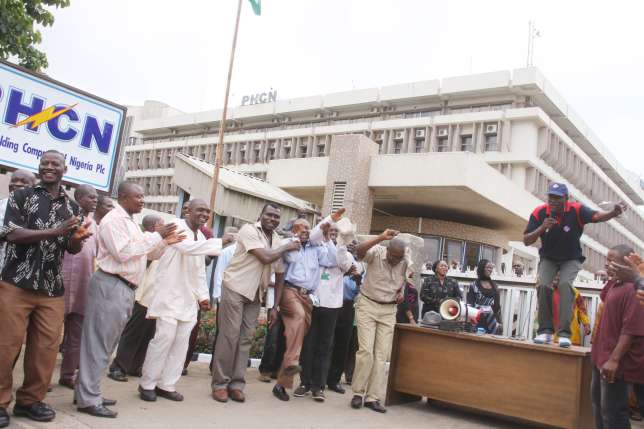
National Union of Electricity Employees FCT Branch in one of their protests in Abuja, Nigeria (Photo: Pulse)
National Union of Electricity Employees FCT Branch in one of their protests in Abuja, Nigeria (Photo: Pulse)
Federal Government has released about N1.05 billion to settle outstanding claims and entitlements of 408 staff and retirees of the defunct Power Holding Company of Nigeria (PHCN).
The Director-General of the Bureau of Public Enterprises (BPE) Mr Alex Okoh said on Thursday in Abuja that the payments were approved by the National Council on Privatisation (NCP), chaired by Vice President Yemi Osinbajo.
Okoh in a statement issued to the News Agency of Nigeria (NAN) said that the settlement of the outstanding liabilities became possible after the Bureau on March 27, 2018, constituted a Technical Working Group, that worked with the Office of the Accountant-General of the Federation to work out the payment.
The Government had after privatising the power company paid 47,041 out of the 47,913 staff of the defunct PHCN in 35 batches.
Also, 2,962 out of the 4,423 retirees of the company were paid and death benefits also paid to beneficiaries in 14 batches.
However, the remaining workers and retirees could not be paid because the government could not verify their claims as workers or past workers of the PHCN.
The NCP at its meeting of April 16, 2015, directed BPE to continue with the process of verification and payment of outstanding cases until a final resolution was achieved.
Following the NCP directive, the Bureau conducted the final verification in the six geo-political centres from October 3 to 14, 2016, resulting in the 408 beneficiaries who are now scheduled for payment.
A Hungarian tribunal in Szeged on Thursday gave a final five-year jail sentence to a Syrian man for “act of terrorism,’’ local media reported.
He perpetrated the act at the Hungarian border with Serbia in a clash between migrants and Hungarian police in the summer of 2015.
The tribunal found him guilty of “illegal crossing of a border as a participant and as a coordinator of a riot aimed at enforcing the State with an act of terrorist offense, as well as in violent behaviour against a person”.
The man may be released on conditional leave after having purged two thirds of the punishment at the earliest.
In his decision, the tribunal relieved the seven-year prison sentence imposed by the First Instance Court of Szeged in March earlier this year.
According to the court, the sentence was lowered due to the fact that the defendant did not speak Hungarian and he had to take care of his family living abroad.
Ahmed H., a 41-year-old resident of Cyprus for around a decade, has already received a 10-year term in November 2016, but a court of appeal in Szeged in June 2017 has annulled that first verdict in the same June.
The court in southern Hungary had ordered a retrial, citing inconsistent evidence in the original trial.
Ahmed H, after the end of his jail term, will also be expelled from Hungary for a period of 10 years, as an additional sentence.
During the legal procedures, Ahmed H. repeatedly rejected the charge of terrorist acts.
He said that he just planned to help his family get away from war.
The Syrian man was arrested in Hungary in September of 2015 following the clashes.
The prosecutors also claimed that Ahmed H. had thrown rocks at police, and given police an ultimatum.
The verdict came in the middle of tensions between the Hungarian government and the European Union.
Recently, the European Parliament adopted the so-called Sargentini report, condemning Hungary for the non respect of EU values it vowed to respect upon its entry in the EU back in 2004.
Islamabad has invited Saudi Arabia to become the third partner in the Beijing-funded Belt and Road corridor of major infrastructure projects inside Pakistan, Pakistan’s information minister said on Thursday.
The announcement came on the back of a two-day trip to Saudi Arabia by new Prime Minister Imran Khan, who had been expected to push for financial assistance from Islamabad’s ally to help Pakistan deal with a brewing currency crisis.
Information Minister Fawad Chaudhry did not reveal if Saudi Arabia would be loaning money to Pakistan to help top up its dwindling foreign currency reserves, but said he expected Saudi Arabia to invest in Pakistan in a major way.
“Saudi Arabia is the first country whom we have invited as third country partner in CPEC,’’ Chaudhry said, referring to the China-Pakistan Economic Corridor (CPEC), the Pakistan leg of China’s vast Belt and Road infrastructure initiative.
Beijing has pledged 60 billion dollars to build power stations, major highways, new and upgraded railways and higher capacity ports, to help turn Pakistan into a major overland route linking western China to the world.
Chaudhry said a Saudi delegation will be coming to Pakistan in the first week of October, including the Saudi minister for finance and energy, and that should lay down a “foundation for a very big partnership”.
“God willing, very big investments will be coming to Pakistan from Saudi Arabia this way,” he added.
Khan’s term began with new doubt over the CPEC projects, when his commerce minister was quoted as saying Pakistan would suspend them for a year and review them.
The minister later said his comments were taken out of context, and Pakistani officials reassured Beijing there would be no delay.
Pakistan has in the past suggested that other countries could join CPEC, but the response has been lukewarm due to concerns that China would dominate any relationship.
Saudi Arabia has a history of bailing out Pakistan financially. In 2014, six months after Pakistan obtained its last IMF bailout, Saudi Arabia loaned it 1.5 billion dollars that the government used to strengthen its rupee currency.
Ahead of Khan’s visit to Saudi Arabia speculation was rife that Islamabad will be asking for a loan to help Pakistan avoid being forced to seek another IMF bailout.
The first transmitter in Senekal will be switched off today as part of the countdown to the Free State analogue switch-off in December.
This is in line with the commitment agreed to with the International Telecommunication Union (ITU), as South Africa joins the international community in migrating from analogue to digital broadcasting.
South Africa recently hosted the ITU Telecom World conference in Durban, where developments in Information and Communication Technologies (ICTs) dominated discussions.
The digital migration project is freeing up broadcasting spectrum, which in turn will translate into reduced data costs, improved picture and sound quality, an enriched user experience and more channels to choose from.
South Africa has already begun in earnest its migration campaign, having started switching communities in border-lying provinces from analogue to digital broadcasting to minimise signal interference from neighbouring countries. The Free State shares a border with landlocked Lesotho.
“A communication campaign is underway to ensure that all households are ready for the switch-off. Households with analogue television sets looking to buy new ones are advised to choose those with an integrated digital tuner,” said Minister Nomvula Mokonyane on Thursday at a post-Cabinet media briefing in Tshwane.
It has been 10 years since Cabinet approved the policy of the country migrating its analogue broadcasting system to digital. On Thursday, Mokonyane said Cabinet is satisfied with the progress being made.
Mokonyane had previously said the Department of Communications would look into potential public-private partnerships to support expedited migration to digital through cost-effective and efficient means.
Government is making available subsidised set-top boxes, which convert signal on analogue TV sets, to households earning less than R3 200 per month.
Households with an income above the threshold of R3 200 per month have an option of buying a new integrated digital TV set with the built-in digital terrestrial TV decoder, which is available through major retail outlets.
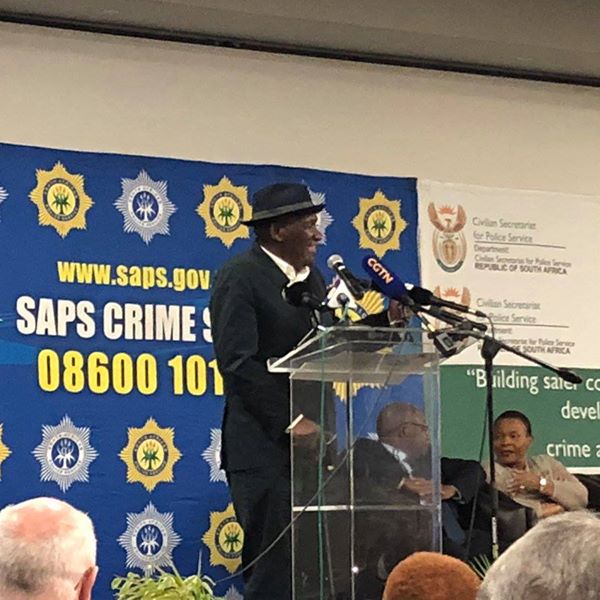
South Africa's Police Minister Bheki Cele addressing a meeting
South Africa’s Police Minister Bheki Cele addressing a meeting
The Oxford Dictionary defines corruption as “dishonesty” or an “illegal behaviour”. Full stop. It ends there.
The results of Police Minister Bheki Cele’s recent dissection of the word are less flattering. However, it piercingly removes the scabs of the plague’s recuperating laceration, writes Sihle Manda.
“Corruption kills the progress of communities,” an animated Cele told delegates at the recent National Summit on Crime and Violence Prevention in Boksburg, Ekurhuleni. Intensely sobering was that the statement was met with a deafening silence in the second or two while he caught his breath.
Government has prioritised the scourge of corruption, adopting a zero tolerance approach in both the public and private sector. Corruption is deemed a societal problem to be fought collectively.
The pandemic of fraud and corruption continues to be a source of trepidation to the country’s development prospects but government’s recent interventions have sparked optimism that the tide will gradually turn.
Having taken stock of this harsh reality, government has undertaken a series of interventions in an effort to stop the rot.
The Anti-Corruption Inter-Ministerial Committee and the Anti-Corruption Task Team has developed a broad framework to deal with corruption and is in the process of finalising the development of a holistic Anti-Corruption Strategy.
Government’s arsenal to combat corruption includes the adoption of a Code of Conduct for the Public Service.
Additionally, government established specialised anti-corruption units such as the SAPS Organised Crime Unit, the Directorate for Priority Crime Investigation (Hawks), the National Prosecuting Authority’s Asset Forfeiture Unit and the Financial Intelligence Centre.
These efforts are bolstered by Specialised Commercial Crime Courts as well as the creation of the national and sectoral anti-corruption hotlines.
“We have corruption as a disease,” Cele lamented. “Nobody can now deny that some of us in South Africa are corrupt – very corrupt. It’s not just police as some of us would want us to believe. [This] is one area that the President has made a serious call.”
Corruption Watch’s 2018 Analysis of Corruption Trend (ACT) Report, says it continues to receive thousands of complaints from the public with harrowing experiences. The non-profit organisation, working to fight corruption in South Africa, received 2 500 complaints according it its 2018 report. The matters ranged from recruitment to procurement in schools, police stations and municipalities, among others.
The picture is not assisted much by international observers. According to Transparency International’s 2018 Corruption Index, South Africa slipped from rank 64 to 71 from 180 countries.
In an attempt to up the ante on looting Robin Hood opposites, the South African Police Service will soon announce an anti-corruption body to ensure police net perpetrators more efficiently.
“We’ll soon be announcing that we want eminent people to join the anti-corruption body in the South African Police. It will be people like retired judges, bishops and so forth. This will be to make sure that we have all the integrity of a monitoring structure,” Cele said.
“It can’t be us alone in monitoring ourselves. Cats can’t monitor cats not to eat the cheese; you need some other animals.”
Cele is adamant that the lives of millions South African’s will continue to linger in oblivion should the epidemic not be halted.
“If we don’t fix this [corruption], we won’t fix the lives of the people. So, don’t look away where you see corrupt practices, [more] especially, don’t be part of it,” he said.
The notion that only government officials were corrupt needed to be stopped as this act required collusion between business and government, Cele said, reiterating his stance during the release of the 2017/18 crime statistics.
“I agree, some government people [are] corrupt. But who corrupts them? Did they wake up corrupt? Or somebody said: ‘If you give this to me, I’ll give you a cut. Just give me the tender, I’ll take 60[%], you’ll take 40[%]’ – and that’s a R20 million cut,” he said. We are not going to go anywhere if we don’t deal decisively with corruption. Corruption is across the board. People are corrupt out there, especially government people.”
Cele heaped praise on President Cyril Ramaphosa on his unflinching stance on fraud and corruption, citing his recent signing off of Special Investigation Unit proclamations into maladministration at various government departments, state-owned entities and municipalities.
One of those was the investigation into the Office of the State Attorney, which is alleged to have fleeced the state of R80 billion in malpractice, lack of professionalism and suspicion of abuse of office towards unlawful ends.
“[Have you ever] thought this office would be investigated by the office of the SIU? They are investigated for the abuse and stealing of R80 billion. Eight-zero billion – Office of the Attorney General. I’ve never heard you shout about them being corrupt,” he said.
The reinvigorated elite police unit, the Hawks, Cele said, “must get their wings and fly”.
“Strengthening all the police units, all the courts and becoming really brutal and making sure that structures like the IPID are working. But ourselves as police, two Fridays ago we arrested six of our own in the Eastern Cape. Three months ago we arrested 17 at a go in the Eastern Cape.”
Justice and Violence Prevention head at the Institute for Security Studies (ISS), Gareth Newham, recently wrote on the institution’s website that President Ramaphosa has to support much-needed criminal justice system reforms that could hold the corrupt accountable.
“An active civil society, an independent judiciary and a strong media are also fundamental to improving the criminal justice system and strengthening the rule of law,” he wrote.
He said some headway has been made with the positive appointments of new head of the Hawks, Godfrey Lebeya, and the police’s Crime Intelligence Division, Anthony Jacobs.
“[The] new law enforcement agency leaders must urgently replace compromised or unsuitable individuals with capable managers, investigators and prosecutors,” he wrote.
With the evident untangling of the complicated web, it is evident that Government seems more firm than ever to get to the belly of the devouring beast.