Minister of Foreign Affairs, Geoffrey Onyeama has called on the international community to partner with Nigeria to end poverty, fight inequalities and tackle climate change in the country.
Onyeama made the call this at the High-Level Meeting on Financing the 2030 Agenda for Sustainable Development, on the sidelines of the ongoing 73rd Session of the General Assembly of the UN in New York, U.S.
He said that financing for development was key to the successful implementation of the Sustainable Development Goals (SDG) agenda -2030.
He underlined Nigeria’s position on the agenda, saying while each of the 17 SDG was important, their respective implementation required a revitalised global partnership that thrived on a win-win principle.
He called on world governments to increasingly work with other stakeholders to deliver on their national SDG action plans, while businesses must continue to find new ways to pursue the global goals as a strategic business agenda.
However, he expressed concern that the world economy remained vulnerable to financial and economic volatility.
The minister said that the occurrence affects progress in policy agenda across all the action areas of the Addis Ababa Action Agenda and the 2030 Agenda for Sustainable Development.
“Consequently, it is necessary to address medium-term risks, including the potential effects of rising global interest rates as it leads to a reversal of capital flows and increased debt distress to the disadvantage of developing countries.
In the realization of this fact, he said that Nigeria had chosen economic diversification as its path to sustainable economic prosperity.
According to him, government has undertaken various initiatives to move from an oil-dependent to a multi-sector economy, with attention on the development of the agriculture and mining sectors.
Onyeama explained that the objective was to stabilise the system and attract foreign and domestic investment into the priority sectors of the economy.
He called on the international community to continue to partner with Nigeria to end all forms of poverty, fight inequalities and tackle climate change in a manner that “ensures that no one is left behind’’.
Onyeama noted that to a large extent, the successful implementation of the SDGs 2030 and the African Union Agenda 2063, depended on strengthening of institutional and human capacities in the country.
He said that the success also depended on improving strategic linkages at various levels, and mobilising and financing of the value-chain of a well-structured economic transformation. NAN
Kaduna State Family Planning Stakeholders Meeting organised by the Family Health Advocates in Nigeria Initiative (FHANI) has expressed concern over the proliferation of private health training institutions and its resultant effect on health delivery system in the State.
The meeting supported by Pathfinder International was held in Kaduna, Northwest of the country, featuring presentation of the Family Planning Score Card, Progress Report and FHANI’s advocacy direction for 2019 among others.
Participants to the meeting noted with concern that the Institutions were producing quacks, whose service pose a great danger to the people.
They also expressed displeasure with the unfriendly attitude of service providers towards the public in the discharge of their duties and called for a change of heart.
The meeting advised FHANI not to only increase advocates in the rural areas, but to also expand its network beyond Kaduna.
Other areas of focus, the Stakeholders suggests, include carrying along other related MDAs in advocacies apart from the Ministry of Health.
Tracking of consumables and the distribution should also be given attention , while government on its part should ensure adequate security at Facilities .
Adolescents, the Stakeholders said, should not only be supported to make the right choice, but should also be educated on the importance of protecting themselves.
The participants including Supporting partners, gave FHANI a pat on the back for not only producing a scorecard on family planning in the State, but also for being the first local NGO to do so in Nigeria.
National Emergency Management Agency (NEMA) in Collaboration with other relevant disaster management agencies is to re-assess and re-strategise towards building the culture of preparedness, prevention and quick response to disasters in the country.
NEMA’s North West Zonal Coordinator, Ishaya Isah Chonoko who stated this in Kaduna at a stakeholders Meeting said the move was necessary to contain destruction of property and casualties caused by floods
“It is therefore against this background that NEMA/SEMA as agencies saddled with the responsibility of coordinating disasters in the country, have found it expedient to organise this forum to assess the state of preparedness of all Organisations or Agencies that are stakeholders in disaster management in this Zone.” He said.
“The use of the Agency’s proactive approach to disasters as part of our Disaster Risk Reduction (DRR) strategy needs to be imbibed by all stakeholders in order to reduce the risks and mitigate impact of disasters in our communities.” He said.
According to the Coordinator, NEMA’s mandates are to manage disasters in all its ramification, compelled to ascertain the capacity of all its critical stakeholders and monitor their state of preparedness with a view to proffering solutions towards efficient and effective disaster management in the Zone.
He said the recent floods in Kaduna had made it necessary for the agency to drill and task stakeholders to carry out sensitisation campaigns on disaster management.
“There is need for frequent interaction of stakeholders, to enable us all keep abreast of any development within the circle. The need therefore for collaboration, planning and commitment to deal with disaster issues timely by all the tiers of government particularly the LGAs cannot be over emphasised,” he said.
The Coordinator however warned that unless disaster management and risk reduction are effectively driven at all levels, their impacts will be extremely difficult and costly to address.
Speakers at the meeting frowned at the poor response to disasters and urged those saddled with the responsibilities to intensify efforts in order to achieve the set goals.
The Manufacturers Association of Nigeria (MAN) and the Association of Ghanaian Industry (AGI), on Thursday, signed a memorandum of understanding (MoU) to facilitate exchanges and joint actions for a conducive atmosphere for the operation of manufacturing business in both countries.
Dr Frank Jacobs, Outgoing President of MAN and Dr Yau Agyei Gyamfi, President Association of Ghanaian Industry signed the MoU at the 46th Annual General Meeting of the manufacturers Association of Nigeria in Lagos.
The MoU serves to form the nucleus of a coalition of manufacturers across West Africa.
Going forward, Mr Segun Ajayi- Kadri, Director-General, MAN, said both associations would together embark on joint activities, experience sharing of business initiatives and technical assistance and cooperation.
“It promises to engage government to encourage policies that will promote trade relations between the two countries and remove barrier of trade first between the two and thereafter across the west African sub-region,” he said.
Ajayi-Kadri revealed that the decision was arrived at after series of meetings in Lagos and Accra, saying that it has the full support and mandate of the entire membership of the two associations.
Meanwhile, the financial statement of the Manufacturers Association of Nigeria showed that it recorded an income of N1.35 billion for the financial year ended in Dec. 31, 2017, against N1.15 billion in 2016, translating to an increase of 17 per cent for the December 2017 financial year.
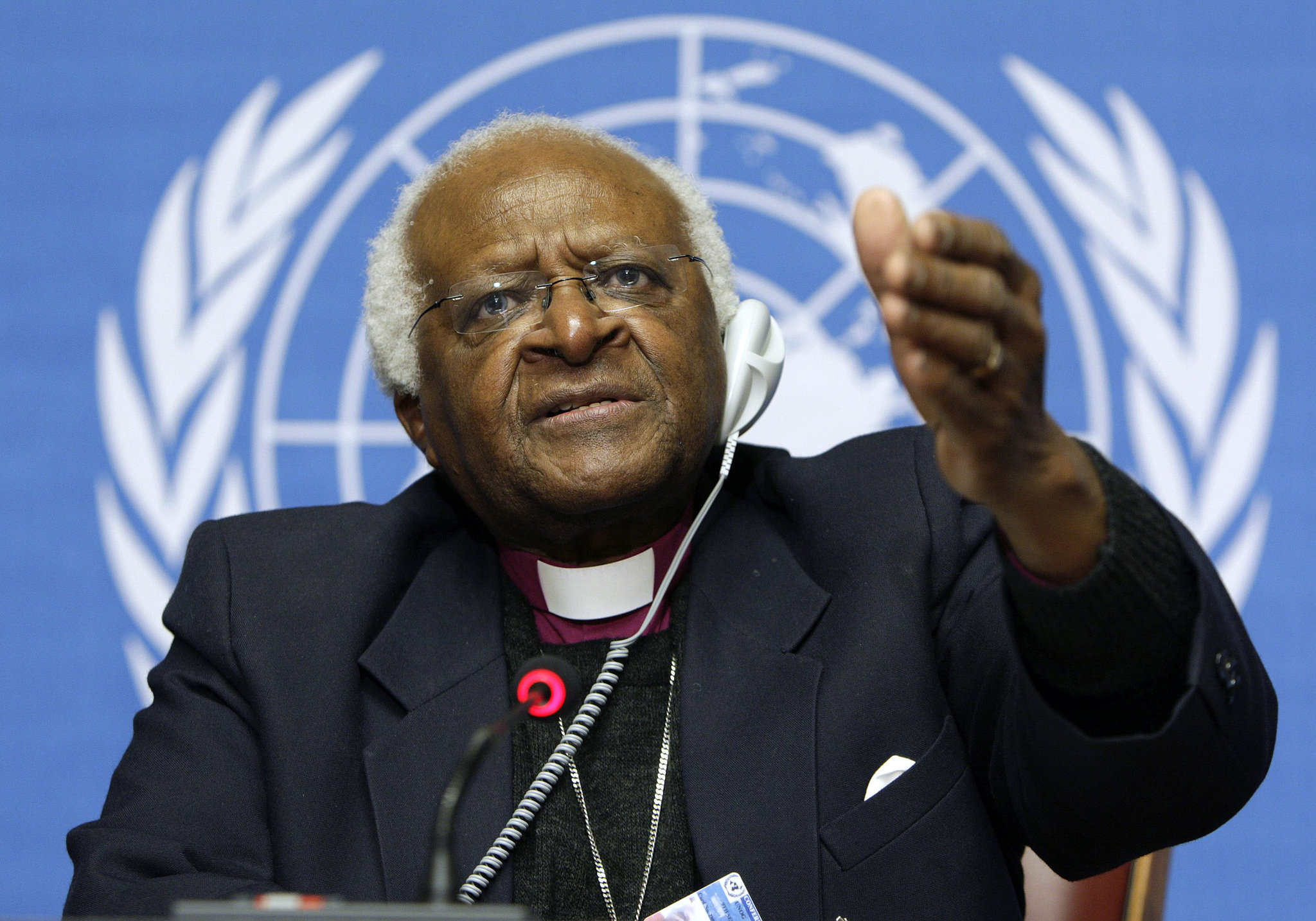
Retired South African archbishop and anti-apartheid campaigner Desmond Tutu has been admitted to a Cape Town hospital for a series of tests, his office said on Thursday.
“The Archbishop was in good spirits after settling into his ward. He hopes to be back home in a few days,” a statement from Tutu’s office read.
Tutu, who turns 87 next month, has had prostate cancer for roughly two decades and has largely withdrawn from public life.
He won the Nobel Peace Prize in 1984 for his non-violent opposition to the apartheid regime in South Africa.
Equity transactions on the Nigerian Stock Exchange (NSE) closed on a negative note on Thursday with Nestle leading the price losers.
The News Agency of Nigeria (NAN) reports that the All-Share Index dropped by 199.92 points or 0.61 per cent to close at 32,763.35 against the 32,963.27 achieved on Wednesday.
Also, the market capitalisation shed N73 billion or 0.61 per cent to close at N11.961 trillion against the N12.034 trillion achieved on Wednesday.
Nestle led the price losers’ table with a loss of N62.50 to close at N1, 432. 50per share.
GTBank trailed with a loss of 80k to close at N36.70, while PZ Cussons depreciated by 65k to close at N12.85 per share.
CCNN was down by 50k to close at N23, while Dangote Cement dipped by 40k to close at N14.20 per share.
On the other hand, Total Oil recorded the highest price gain of N1.90 to close at N183 per share.
Nigerian Breweries followed with a gain of N1.40 to close at N91.50, while Custodian appreciated by 24k to close at N5.28 per share.
Zenith Bank added 10k to close at N21.50, while FBN Holdings went up by 5k to close at N8.60 per share.
Fidelity Bank was the investors’ delight, trading 23.304 million shares worth N298.31 million in 156 deals.
GTBank followed with 16.76 million shares valued at N500.25 million traded in 185 deals, while UBA traded 16.223 million shares worth N112.61 million in 171 deals.
Access Bank exchanged 15.50 million shares valued at N12.22 million in 137 deals, while Zenith Bank sold 11.43 million shares worth N10.41 million in 220 deals.
In all, investors exchanged 154.290 million shares valued at N2.70 billion in 2,715 deals.
This is against the 172.196 million shares worth N2.05 billion achieved in 2,866 deals on Wednesday.
South Africa unveiled a new regulatory charter for its mining industry on Thursday to attract further investment to a sector encumbered by depressed prices, soaring costs and murky policy.
It is part of an affirmative action to reverse black people’s exclusion from the mainstream economy under apartheid and pointedly targets the mining industry.
The sector accounts for about 8 per cent of the country’s gross domestic product now, but laid the foundations for Africa’s most industrialised economy.
Presented by Resources Minister Gwede Mantashe, the third version of the charter requires miners to provide their local communities and employees with a free 10 per cent stake.
This is a policy some companies may be pressed to bear but which unions say is needed to secure social peace.
“Regulatory and policy uncertainty is removed. We have a duty now to mobilise investment into mining,” Mantsahe, a former trade unionist said.
The charter raised the level of black ownership as expected to 30 per cent from 26 per cent.
The stake would be divided with 20 per cent for black business interests and five per cent each for communities and employees.
“The community/employee stake is a 10 per cent investment in peace and stability. Current levels of mining community unrest and high number of industrial action creates a high level of instability,” Gideon du Plessis, the head of the Solidarity trade union which represents skilled workers said.
Mining operations in the world’s top platinum producer which also exports gold, coal, diamonds and iron ore are flashpoints of social and labour unrest amid perceptions that the wealth flowing from the shafts does not benefit local communities.
For example, between the start of 2016 and April 2018, the eastern limb of the platinum belt was hit by over 400 incidents of social unrest impacting mining operations, according to data compiled by Anglo American Platinum.
The Minerals Council of South Africa, which represents most of the country’s mining companies, said it would comment later after it has studied the document.
Among the controversial provisions in previous drafts that were dropped was one that would have required companies to pay one per cent of earnings before interest, depreciation and amortisation to employees and communities if no dividends were paid for six years.
At the board level and among top management, the charter requires 50 per cent black representation and 20 per cent female representation.