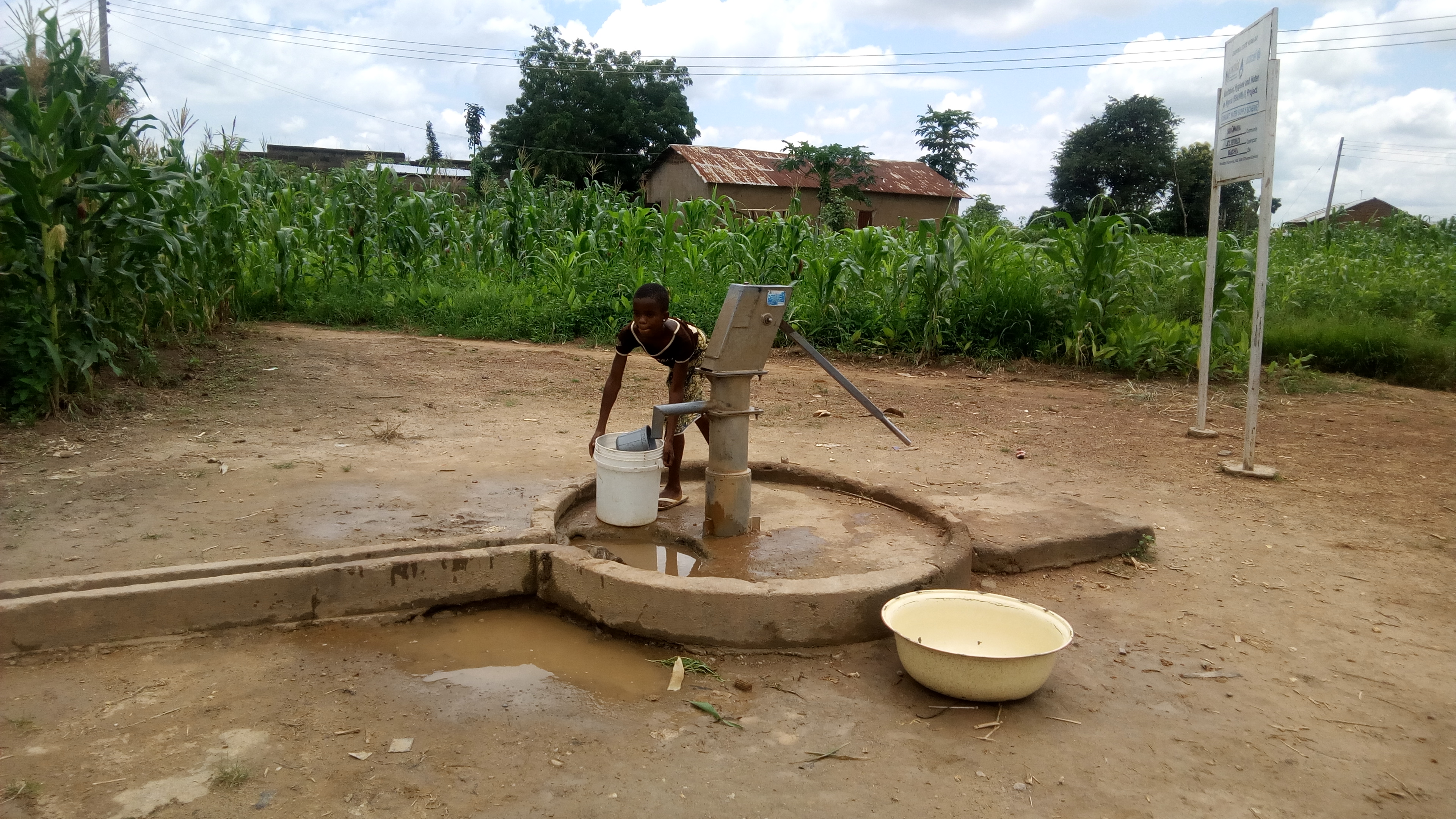
A girl fetching water from the borehole at Wawa rafi village in Kaduna State, Nigeria
A girl fetching water from the borehole at Wawa rafi village in Kaduna State, Nigeria
WaterAid-Nigeria says about 60,000 children below the age of five years still die every year in Nigeria, owing to diarrhoea infections.
Miss Oluseyi Abdulmalik, Communications and Media Manager of WaterAid Nigeria, disclosed this in a statement on Sunday in Bauchi, to mark the Global Hand washing Day, celebrated annually on Oct. 15.
“We already know progress is not fast enough; about 60,000 children under 5 years in Nigeria still die each year because of diarrhoea.
“That is linked to dirty water, poor toilets and poor hygiene, pointing out that everyone has a right to water and our leaders must act to leave no one behind.”
According to her, washing hands with soap and water reduces cases of diarrhoea by almost 50 percent, yet on average, around the world only 19 per cent of people wash hands with soap after defecation. She urged governments to prioritise the promotion of hand washing, along with water and sanitation to save lives. She said the WaterAid Nigeria Country Director, Dr ChiChi Aniagolu-Okoye, also advised on personal hygiene and an intake of good diet as health boosters.
“Hand washing with soap and good food hygiene brings health and economic benefits. “Hand washing with soap is essential for health workers, improving quality of care and reducing risk of cross-infection. It also makes children healthier. “We are advocating alongside our partners, Action Against Hunger, to demand that governments should develop cross-ministerial coordination mechanisms between the WASH and nutrition sector championed at the highest level to support sharing of information and joint planning and implementation of policies. Abdulmalik urged policy makers to prioritise nutrition-sensitive WASH interventions and include specific objectives to improve WASH within nutrition plans and policies.
“Clear entry points to integrate WASH and nutrition include behaviour change promotion and improvement of provision of WASH in healthcare facilities and schools,” she said.
The WaterAid Communications Officer, also advocated more investments to improve hand washing practice and access to basic hand washing.
“For citizens to join in making this happen by using the power they wield in their hands to vote in the coming elections for leaders, who pledge commitment to improving WASH access, ” she said.
Abdulmalik, however, enjoined all citizens to participate in the WASH project, to achieve a healthier environment and country.
The International Committee of the Red Cross (ICRC), has expressed concern over the 24 hours deadline given by Boko Haram to eliminate another female staff held captive by the insurgents.
Head of ICRC’s Operations in the Lake Chad Basin, Mamadou Sow, in a statement on Sunday appealed to Nigerian Government, communities and individuals to urgently work towards the release of two medical workers – Hauwa Mohammed and Alice Loksha.
According to Sow, speed and urgency are critical. A deadline that could result in the killing of another health care worker is less than 24 hours away.
“To the holder of these kidnapped women, we urge you for mercy. We urge you not to kill another innocent health care worker, who was doing nothing but helping the community in north-east Nigeria.’’
Sow noted that Hauwa worked in a hospital supported by the International Committee of the Red Cross (ICRC), when she was abducted March 1, 2018 with Alice, a nurse who worked in a centre supported by UNICEF.
“Hauwa and Alice are medical workers, who chose to work and help vulnerable communities in Rann, an area heavily affected by violence.
“The town’s population has more than doubled because of the conflict, while most local health care staff have fled. These women were providing essential and life-saving services to thousands of people, displaced and residents alike. All they sought to do was help,” he said.
According to him, the third health care worker abducted alongside Hauwa and Alice was ICRC colleague, Saifura Hussaini, who was killed by her abductors in September.
Sow urged those involved with this case to do everything they could to avoid a repeat of that devastating outcome.
He noted that Leah Sharibu, a 15-year-old school student, was taken from her school in Dapchi, in a separate abduction incident in February.
He, however, added that she was also being held by the same armed group and everything must be done to ensure her prompt and unharmed release.
The Director of ICRC Operations in Africa, Patricia Danzi, also urged the Federal Government to work towards the release of the innocent spirited individuals.
“We urge you to spare and release these women. They are a midwife, a nurse and a student. Like all those abducted, they are not part of any fight.
“They are daughters and sisters; one is a mother, women with their future ahead of them, children to raise, and families to return to,” She said.
To make trading between African countries easier, West African countries have joined forces to interlink their payment system.
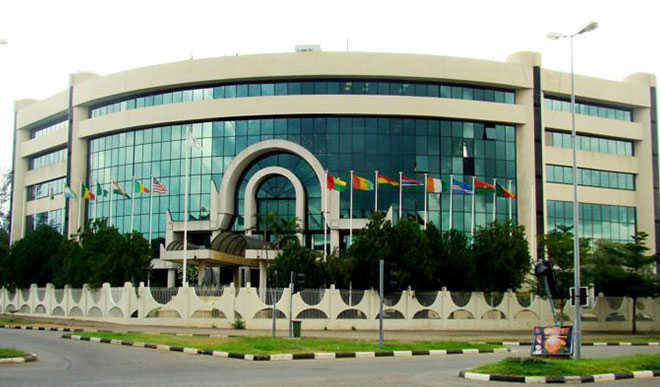
The Director-General, West African Monetary Institute (WAMI), Mrs Ngozi Egbuna made this known on Sunday in an interview with the News Agency of Nigeria (NAN) on the sideline of the IMF/WB Annual Meetings in Bali.
She revealed that with funding from the African Export-Import Bank, the Institute was currently working to link the payment system of Gambia, Guinea, Ghana, Liberia and Nigeria.
She said that once the linkage was done, West African States would be closer to achieving their dream of migrating to a single currency, known as the ECO.
Egbuna said that the linkage was the second phase of the Institute’s payment systems infrastructure project in the region.
She recalled that between 2012 and 2016, the African Development Bank funded the creation of payment systems in Sierra Leone, Guinea, Liberia and Gambia, who at the time, did not have.
“The West Africa Monitoring Zone which is made out of six countries; The Gambia, Guinea, Ghana, Liberia, Nigeria and Sierra Leone will be used to pilot the Payment Systems Infrastructure.
“Interlinking our payment systems will make it possible for us to quote and trade in our local currencies.
”So if you have Naira and you want to buy in Guinea or any of these countries you can buy and settle in Naira.
“We are working in conjunction with the Central Banks as co-settlement and payment institutions, not that Central Banks will bring their money, but they will only oversee the trading platforms,” she said.
Egbuna said that the success of the West African linked payment system would also convince countries that were still cautions of the single currency plan, of its importance in boosting intra-trade.
The Director-General gave reasons why for so many years, West Africa was still unable to have a convergence of its Monetary indices, which is a core criteria for the establishment of a single currency in the region.
“Since the convergence criteria was set up, each of our countries sometimes meet or miss some, but we have not been able to meet them consistently on a sustainable basis.
”But before the global financial crisis, we met them and then the crisis came and the second round effect of it which is the fall in commodity prices hit all of us.
“As we were about to get settled, the Ebola hit almost all the countries except for Ghana and for about three years the world was shut out of all our countries.
“Nothing was moving and there was no economic activity. As if that wasn’t enough, in August 2017 we had the flooding in Sierra Leone.
“So you see a series of shocks have made it impossible to meet those criteria.”
On the fiscal side, she said that the habit of over spending during election was having negative impact on the West African states.
“On the fiscal side, we have not been able to meet it on a sustainable basis.
“This is mainly because most of our countries over-spend when on election.
“We just had an election in Sierra Leone and Liberia and the Nigerian election is on the way.”
NAN reports that WAMI is an institution of the West African monetary zone set up to ensure the economic and financial integration of the zone.
NAN recalls that West Africa currently have the goal of creating a common currency for the region by year 2020.
For the currency to be implemented, 10 convergence criteria was set out by WAMI must be met.
The four primary criteria to be achieved by each member country include single-digit inflation rate at the end of each year and fiscal deficit of not more than three per cent of the GDP.
Also a central bank deficit-financing of not more than 10 per cent of the previous year’s tax revenues and gross external reserves that could cover a country’s import bill for a minimum of three months were proposed.
There are also six secondary criteria which had to be achieved by each member country.
They include the prohibition of new domestic default payments and liquidation of existing ones, tax revenue should be equal to or greater than 20 per cent of the GDP.
Also, wage bill to tax revenue should be equal to or less than 35 per cent, public investment to tax revenue equal to or greater than 20 per cent and a stable real exchange rate as well as a positive real interest rate.
Central Bank of Nigeria (CBN) says maintaining stable exchange rate to avoid depreciation of the Naira is better than building foreign reserve buffers.
Governor of the CBN, Godwin Emefiele, told newsmen on Sunday that this was part of the outcome of the Nigerian delegation’s meetings with investors and institutions at the International Monetary Fund (IMF) and World Bank Group (WBG) Annual Meetings in Bali.
He said that all frontiers and developing markets have suffered not just depreciation, but had also lost reserves.
“We are very conscious of the need to build buffers, but unfortunately I must say that we are in the period where it will be difficult to talk about building reserve buffers.
“We can only build reserve buffers if we want to hold on to the reserve and then allow the currency to go, and wherever it goes is something else.
“So it is a choice we have to make and at this time the choice for Nigeria is to maintain a stable exchange rate so that businesses can plan and we do not create problems in the banking system assets.”
According to him, like other emerging markets nations, Nigeria has also lost reserves but only marginally because it had managed to sustain stability in its foreign exchange market.
The CBN governor said that the IMF and the World Bank advised that nations should build country specific policies and fiscal and structural reforms that would boost economic growth.
Mrs Zainab Ahmed, Minister of Finance, said the World Bank’s Human Capital Development Index (HCI) ranking, which placed Nigeria low at 44 per cent on stunting, was disheartening and depressing.
She, however, said that the Federal Government saw the rating as a wake-up call.
“We admit that this pervasive action was due to long years of under-investment in human capital, which we have before now realised and for which we have been addressing.
“Apart from major policy actions, some decisive actions are being taken to address the situation.”
According to her, the delegation held meetings with the two rating agencies-Fitch and Moody’s and presented to them the summary and synopsis of the recent economic and financial developments in Nigeria.
She added that it was an opportunity for the rating agencies to be able to objectively evaluate Nigeria’s credit.
Ahmed said she also met the IMF Managing Director, Ms Christine Lagarde and discussed Nigeria’s economy in view of the 2019 general elections.
She assured Lagarde that the election year would not pose any threat to the nation’s economic prospects.
Mr Udoma Udo Udoma, Minister of Budget and National Planning, said that to improve HCI, the nation had improved budgetary allocation to health and education.
He said that allocation to education moved from N22.5 billion in 2015 to N102.9 billion in 2018.
He added that allocation to health was reviewed from N26.6 billion in 2015 to N86.49 billion in 2018.
He said also that N55.19 billion had been added to the health budget in 2018 through the National Health Act.
The News Agency of Nigeria (NAN) reports that the 2018 Annual Meetings of the IMF/WBG which began on Oct. 8 ended on Oct. 14.
The wind of politics is blowing heavily across the country, with alignments and re-alignments as daily occurrences, depending on the interest of individual politicians, groups and associations. In Imo State, the wind is so heavy that the state is up for grabs, as no particular political party or structure can confidently claim that Imo is in its hands.
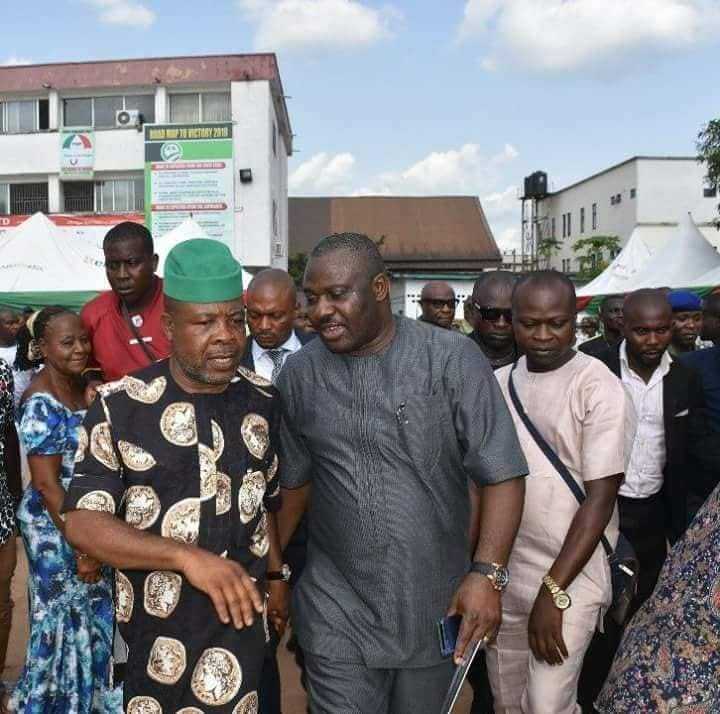
A look at the major political parties in the state shows that they are all crises-ridden, but for the Peoples’ Democratic Party-PDP, which gubernatorial primary is adjudged most transparent and peaceful, both in Imo State and at the National stage; particularly, the governorship (Imo) and Presidential primaries that produced Hon. Emeka Ihedioha and Alhaji Atiku Abubakar, respectively.
One of the aspirants for the Imo PDP gubernatorial ticket, Senator SamDaddy Anyanwu is said to have approached the Court to challenge the outcome of the primaries, even after allegedly congratulating and pledging to support the flagbearer, Hon. Emeka Ihedioha; a move pundit describe as being done in bad fate. As at today, former Deputy Speaker of the House of Representatives, Rt. Hon. Emeka Ihedioha remains the authentic flag bearer of the Peoples Democratic Party in the state.
The other two main political parties in the state: the All Progressives Congress- APC and the All Progressives Grand Alliance appear to be in an unending internal battle for control of the parties. While the APC presently has two of her aspirants- Chief Uche Nwosu and Senator Hope Uzodimma claiming to be candidates of the Party; the All Progressives Grand Alliance broke the hearts of millions of people, who were hoping that the party would elect an acceptable gubernatorial candidate through a peaceful and transparent process. Some of the party’s gubernatorial aspirants are already pitching their tents with other political parties. No doubt, the internal wrangling of the APC and APGA may still linger and will certainly not end well. The rest is history.
One other candidate that many expect would make a serious impact in the election is that of the Young Progressives Party-YPP, Mr. Linus Okorie. Okorie would have been a good candidate, but for his political party, which many see as not having the required structure and network to take over Imo in 2019. The YPP has so much to do to enhance its visibility, position itself as a strong and identifiable brand, while strengthening its structures for greater impact. Who knows? There is nothing God cannot do.
The Peoples Democratic Party appears to be the shinning star of the moment in Imo. It has gone beyond primaries and already positioning itself for the main election, hence, the thrust of this piece. Hon. Ihedioha’s chances of becoming Imo Governor have never been this bright. If he fails to win in 2019, he might as well forget governing Imo forever. Whatever decisions he takes at this stage will go a long way in determining if he will win; and if he does, whether he will enjoy a peaceful reign as governor. The crux of this piece is not to set an agenda for him yet. That is for another day. The idea behind this is to ensure he gets conscious of the banana peels around.
Any moment from now, a Deputy Governorship candidate will emerge. What should be the considerations for Hon. Emeka Ihedioha’s choice of a Deputy? If he fails to get it right at this point, then, his major problem has started.
The recent betrayal of the Lagos State Governor by some of his aides, especially, his Deputy is still very fresh in our minds. The first consideration in choosing a Deputy Governor must therefore be trust. Such a person must therefore be someone he has known and possibly worked with in the past.
Next in order of importance is capacity. Having one with no experience in governance and public service is a recipe to failure. The state of affairs in Imo as at today is so bad that putting a green horn in certain positions might spell doom for the next administration. The Deputy Governor must be one that has capacity to support and guide his principal. Such a person must also be one that will have the ability to guide and advise the Governor sincerely. This is very important because one of the major reasons behind the failure of leaders is that they are usually surrounded by sycophants who do not tell them the true state of things, thereby making them continue in error.
Again, such a person must not be tainted with corruption and will have the ability to suggest initiatives that will promote transparency in governance. One of the major problems of the present administration in Imo is the complete absence of transparency and accountability. Having one that has no baggage of corruption, with capacity to drive good governance initiatives will certainly make the business of governance easy for the incoming governor.
More so, political consideration is a very important issue that must be given serious consideration. The PDP Governorship candidate is from Owerri senatorial zone of the state, with nine local government areas. The disputed candidate of the All Progressives Grand Alliance – Senator Ifeanyi Araraume is from Okigwe zone, with only six Local Government Areas. The two individuals jostling to have the ticket of the APC- Chief Uche Nwosu and Senator Hope Uzodimma are both from Orlu zone. Orlu is the largest/biggest senatorial zone in Imo State, with twelve Local Government Areas.
Strategically, the only option the PDP candidate has is to pick a running mate from Orlu zone. Apart from being the largest senatorial zone, the two candidates of the APC have serious baggage working against them. The gist is for another day.
In Orlu zone, one must look inwards, to ensure that historic and landmark decisions are taken. There are four Federal constituencies in Orlu zone. The first is Ideato Federal constituency, made up of Ideato North and South. This constituency produced the incumbent Governor of Imo State, Owelle Rochas Okorocha, who is about completing his second tenure in office. It is therefore completely out of it.
Next is Orlu, Orsu and Oru East Federal constituency. This constituency produced two-time Governor of Imo State, Chief Achike Udenwa, who ruled the state for eight years. It also produced a former Deputy Governor of the state, Dr. Douglas Acholonu. It is also instructive that one of the two main contenders for the governorship ticket of the All Progressives Congress- Senator Hope Uzodimma is from this constituency.
The third is the Nwangele/Nkwerre/Isu and Njaba federal constituency. The Orlu zonal senatorial candidate of the Peoples Democratic Party, Rt. Hon. Jones Onyereri is from this constituency. Can the Senator and Deputy Governor come from the same place? More so, one of the two APC Gubernatorial hopefuls, Chief Uche Nwosu is from the same area.
The last, but most marginalized federal constituency in the area is the Ohaji/Egbema/Oguta/Oru West federal constituency. In spite of contributing over eighty (80) percent of Imo crude oil earnings, as well as being the food basket of the state, this federal constituency remains the most marginalized in the state. This is the only oil producing federal constituency in the state. It is the same area that Adapalm is situated. Sadly also, it is currently ravaged by flood, with the attendant oil pollution. The federal constituency has neither produced a governor nor a deputy, since the creation of the state.
Interestingly, Hon. Ihedioha is from Owerri zone of the state which has also been crying over marginalization. He therefore has an idea of how it feels to be marginalized. If Ndi Imo agree that it is the turn of Owerri zone, will he not agree that the marginalized people of Ohaji/Egbema/Oguta/Oru West federal constituency be considered for at least, a Deputy Governorship slot?
Rt. Hon. Emeka Ihedioha will be writing his name in gold as an apostle of justice and fair play if he looks in the direction of Ohaji/Egbema/Oguta/Oru West federal constituency in selecting his running mate for the 2019 general election. This decision will portray him as one that does not accept injustice in any form. Even stakeholders from other constituencies agree that it is the turn of the oil producing federal constituency to have a shot at the deputy governorship position. Doing this will simply mean implementing the wish of the people and this will endear him more to the masses.
In all of these, one candidate that appears to fit into all the earlier listed criteria and most importantly, has the electoral value and capacity to secure victory for Hon. Ihedioha in the zone is a former member of the House of Representatives, Hon. Gerald Irona. If you have him, then, you are sure. An Ihedioha/Irona ticket will give hope to the people. Irona is transparent, credible, experienced, reliable, competent, independent-minded and trustworthy.
Imo people appear determined to vote out the APC in the next general elections. APGA has also broken the people’s heart. It is not about partisanship at this stage, but about patriotism. The hope of the people of Imo state for 2019 is the PDP’s candidate. Don’t dash it. Hon. Ihedioha’s chances are very bright. Let’s collectively fight injustice, as injury to one is injury to all. It is the turn of Ohaji/Egbema/Oguta/Oru West federal constituency to produce a deputy governor. Be an instrument of honour and give the people justice.
Irona as deputy governor will nail it!
Dr. Walter Duru is a Communication expert and Public Relations Strategist. He can be reached on: walterchike@gmail.com
As a way of showcasing businesses and entrepreneurs for the purpose of achieving sustainable economic development in Nigeria and Africa at large, the African Legacy International, is to hold 2nd emerging business summit in Abuja, Nigerian capital.
The two – day summit which begins on the 24th October, 2018 will be held at the International Conference Centre.
Briefing newsmen in Abuja, President, African Legacy International, Innocent Ogu, said that the summit would attract relevant investors and investments into Nigeria and other countries around the world.
Ogu, who declared that Nigeria remained Africa’s commercial hub, asserted that the 2-day summit will expose Nigeria business environment and natural potentials to investors where average entrepreneurs in Africa will be connected internationally.
He emphasised that the summit will bring together entrepreneurs of diverse business interest across the globe to exchange ideas and values that would strengthen individual businesses in Nigeria and other countries in the world.
According to him, “Nigeria with a population of over one hundred and eighty million has great trade advantage as it remains the average entrepreneurs dreamland in Africa and globally. It is very obvious that Nigeria offer great investment opportunity because of her abundant natural potentials, with a strong economic base.”
“The 2nd Emerging Business Destination Summit was specially designed to highlight the perennial issues of Nigerian developmental history, political leadership, economy and other social challenges that were militating against the advancement of the Africa continent and as well proffer solutions to attract relevant investments into Nigeria.
“We are also using this summit to stimulate support amongst cross spectrum of African Heads of Government, Captains of Industry, members of the Diplomatic Corps, International Business Executives, Management Specialists, Investors, Consultants, Scholars, Researchers and other stakeholders on the need to attract investments and business opportunities to preserve and sustain the Nigerian economy and development process” he said.
Ogu stated that the summit will provides opportunity for heads of Government institutions/agencies in Nigeria to network and interact with international business executives and multinational companies, adding that emerging issues in the continent that will inform decisions by donor agencies and influence development assistance to Nigeria and Africa will be discussed.
He affirmed that at the end of the summit, prospective investors will get an in-depth knowledge of the business environment and access to heads of national MDA’s to discuss investment proposals, create opportunity for collaboration that will strengthen bilateral agreement and trade relationships amongst Nigeria government and their foreign counter-parts.
“Our commitment is to serve as an alternate source of wealth creation and human capacity development in Nigeria and by extension Africa. We are of the view that the consistent progression in human needs based on the complex nature of the modern society has invariably increased the responsibility of government which require synergy and support of the private sector” he stated.
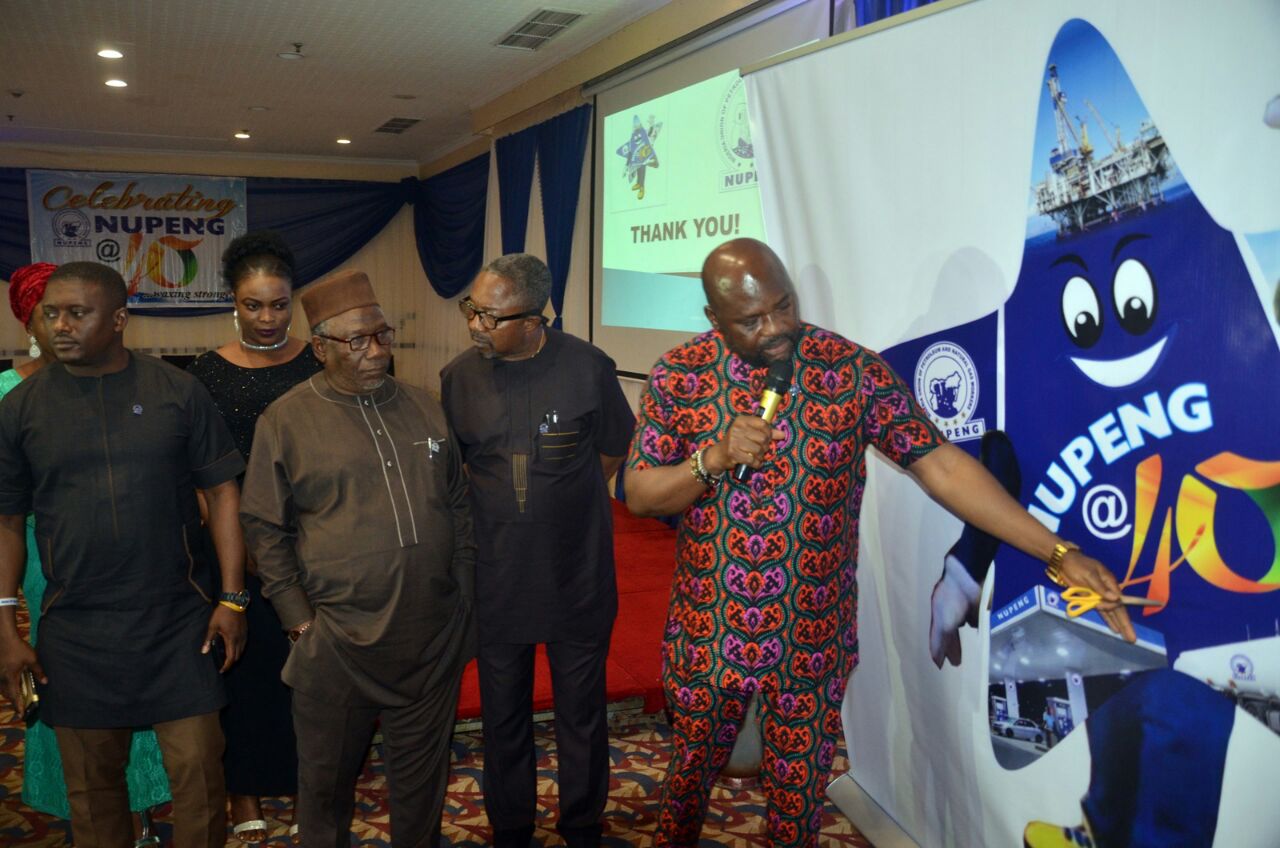
NUPENG President, Williams Akporeha flagging off the union’s 40th anniversary mascot in Lagos
NUPENG President, Williams Akporeha flagging off the union’s 40th anniversary mascot in Lagos
The President of the Nigerian Union of Petroleum and Natural Gas Workers (NUPENG), Williams Akporeha has vowed to frustrate attempts by some oil companies to phase-out the union through casualisation of workers.
Akporeha stated this at a dinner to celebrate media practitioners as well as unveiling the union’s plans to celebrate its forthcoming 40th anniversary, on Saturday in Lagos.
According to him, the union has embarked on various strategies to ensure it continued to remain relevant to workers in the oil and gas sub-sector as well as Nigerians.
“Management of oil companies are coming up with various policies to phase out NUPENG and we have embarked on a lot of struggles to ensure that those plans do not come to fruition.
“We have situations where oil management, today, puts policies to ensure that workers who are supposed to be under NUPENG cadre are not employed.
“When they are employed they must be under contract and they ensure that they are not unionised, and that’s the challenge we continue to face.
“And if as a leader today, I don’t up my game or realise that those are the challenges I must face then I am very sure it will get to a time where you will not have NUPENG anymore.
“So these are the challenges that are before me and I want to tell you that those are the challenges I want to fight with my last blood.’’
Akporeha, who had been a member of NUPENG since 1992, added that several campaign strategies to combat those challenges had been designed, saying, “the campaigns will be to say that NUPENG cannot go under.
“We will continue to stand tall and one of those ceremonies is what we are starting today.
He expressed his appreciation for the media for their relentless effort to ensure that the union’s activities were conveyed to the public.
He, however, dispelled insinuations that the union embarked on industrial action for self gains.
“It’s not like we appreciate strike or we enjoy it. Of course, I don’t think there is anybody that wants to be on the street under the scorching sun to be protesting.
“But clearly when the foundation of your existence is being threatened you cannot go to bed.
“And each time you see us on the street also know that this great union which has been in the forefront of so many struggles, both for the common man and the oil and gas workers, existence is being threatened,’’ he said.
He said his leadership would continue to protect the ordinary Nigerians in addition to performing the duties associated with being a trade union, pressure group, and a civil society organisation.
On its forthcoming 40th anniversary, themed: “NUPENG Yesterday and Tomorrow,’’ Akporeha, said the two-day event would hold in Abuja on Dec. 5 to 6.
According to him, the event will feature paper presentation, cultural competition, talk show and award presentation, among others.
“We are going to recognise all spectrum of the society – players in the industry, ordinary people that also believe in our struggle, organisations and civil societies, former leaders and captains of the industry.
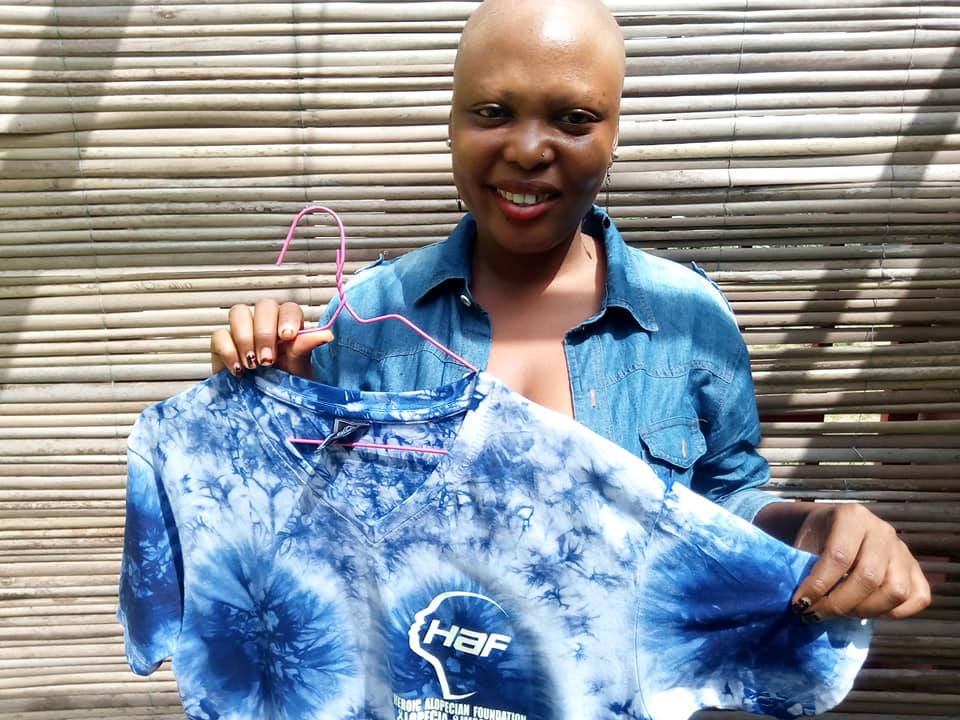
Jasmine Tolulope is a young Nigerian who chose to show courage in the face of stigmatization which thousands of Nigerians face due to alopecia. Alopecia is an auto-immune condition which results in unpredictable loss of hair in its victims.
It means that Alopecia is a condition which leads to partial or total loss of hair and it can occur at any point in time in the life of the victim irrespective of the victim’s age. At times, it can lead to complete loss of hair on the scalp –it called Alopecia totalis and in some cases, the loss of hair occurs throughout the entire body -meaning all the eyelashes, hair in the armpit, hair on the hands, legs and chest would fall off.
This condition is called alopecia universalis That is the worst-case scenario and that was the condition that young Miss Jasmine Tolulope Oguns finds herself in. There are over 100,000 persons living with Alopecia in Nigeria and there are looked upon with suspicious, disdain and rejection.
Some are seem as afflicted with demons while others are seen as possessed with evil spirits. Most of the victims becomes withdrawn and at times contemplates or committee suicide.
MY HAIR CAMES OFF 13 YEARS AGO Jasmine told me how she got to know that she was afflicted with the condition.’ Anytime, I braid(plait) my hair, I noticed that a patch would go off, but I thought it would grow back, however the hair did not grow back’. It got to a stage that she had to shave her hair off totally hoping that it r would regenerate but it did not.
She was taken for spiritual counseling by her mother who thought that Jasmine was under spiritual attack. When prayers did not suffice, she was taken to the hospital. At the hospital, she was told that it was a condition called alopecia and that her hair may and may not grow again. Her dermatologist placed her under medication which cost over N18000.00 in a month and the treatment took her nine months yet nothing came out of it, Perhaps, pushed the stigma, jeers and taunts she Was subjected to, Jasmine consulted a new dermatologist who promised her that her hair would grow back in no time.
The dermatologist then prescribed a drug called Dexamatazone which should be administered as follows :10 tablets of 0.5mg should be taken at once or 5 tablets of 1mg should be taken at once.
After a few weeks of taking the medication, Jasmine told me that she started going insane ..Forgetting names of friends ,dates of birthday of loved ones and started having fits of tantrums and getting violent too .So at some point ,she had to stop using the medication.
REJECTION, DEJECTION AND SUICIDE CAME CALLING In Nigeria it would amount to sacrilege for a woman or a young girl to go outside her house with her scalp totally devoid of her. she would be openly ridiculed, despised and she may lose her friends. And all these was Jasmine ‘s lot . In the higher Institution, many students would come from other departments to see the lady with the bald hair, taunt and mock her. And it got to the point where she had to stop going out for any social meeting .She became a recluse.
Jasmine recalled that during her National Youth service in Kano, she met a young man and felled in love and planned on getting married after their service year. Three months to the traditional marriage, the mother of the bride to came to her house and told her mother that her son was no longer interested in getting married to someone with alopecia. The world came crashing for her on that day and it was in that state that Jasmine thought of ending her predicament.
She calmly walked in to the kitchen when no one was watching her, grabbed a naked water heater which was plugged and whoosh…. she was.
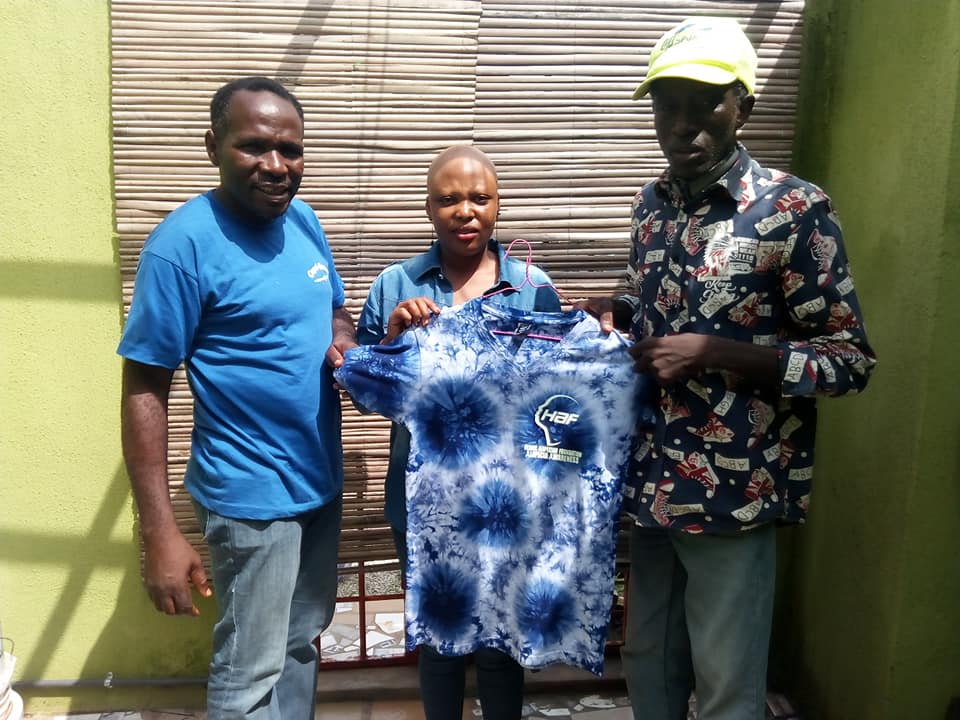
Today, Jasmine is alive, strong and waxing stronger. She has a foundation that raises awareness and counsels people living with Alopecia in Africa and Nigeria.