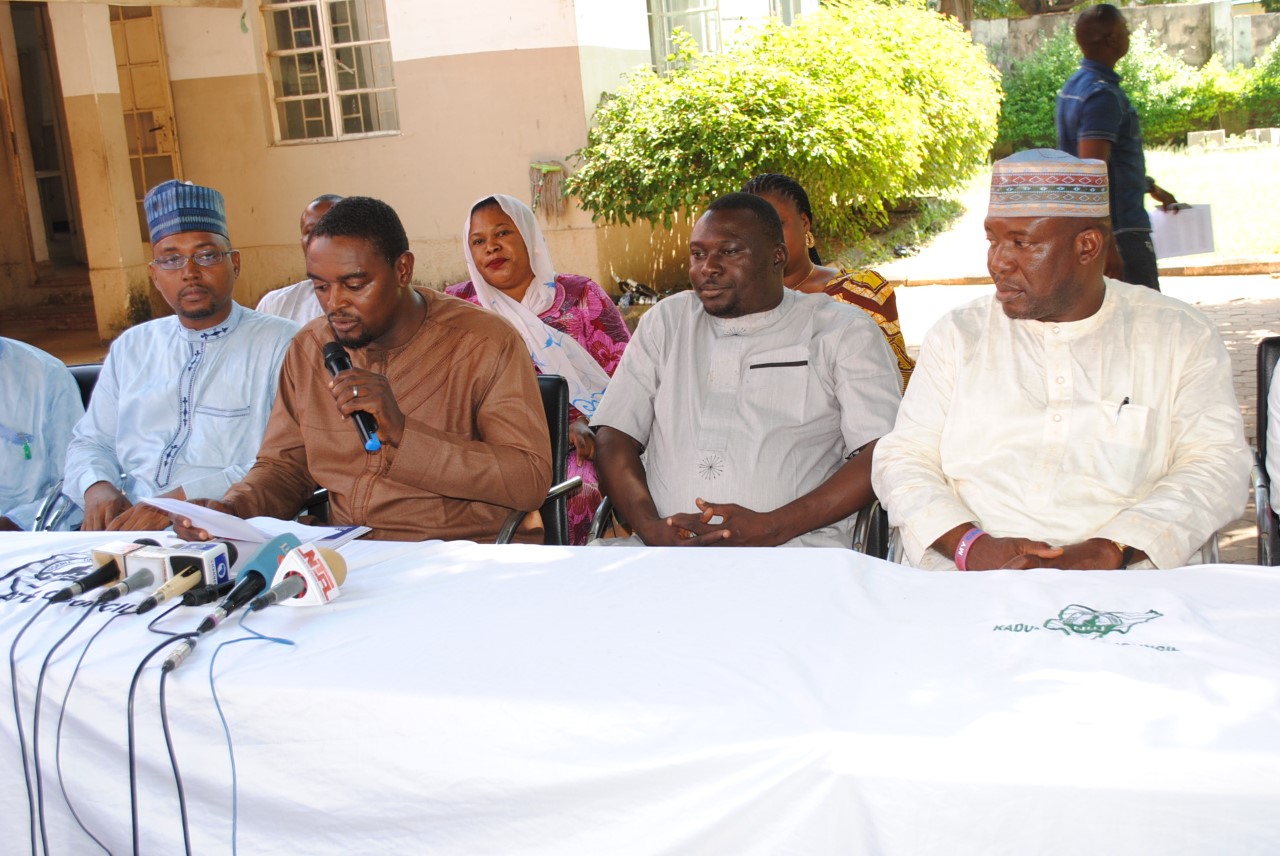
The Nigeria Union of Journalists (NUJ), Kaduna State Council, has condemned in strong term the killing of three police men on Wednesday by bandits in Kaduna, Northwest Nigeria.

The Nigeria Union of Journalists (NUJ), Kaduna State Council, has condemned in strong term the killing of three police men on Wednesday by bandits in Kaduna, Northwest Nigeria.

The nomination of a member of the House of Representatives, Sunday Marshall Katung as the Deputy Gubernatorial candidate of the PDP in Kaduna has been described as the right choice.

Participants at a 2-Day Coalition and Capacity Building workshop for Improved Financial and Implementation of Primary Health Care Under One Roof in Kaduna State , have identified a number of shortcomings in the system.
In a communique issued at the end of the workshop in Kaduna, Northwest of the country, the participants listed the shortcomings to include, insufficient funding, unclear rules and responsibilities among Primary, Secondary and tertiary health system, dilapidated infrastructures and weak referral.
Others are, inadequate accountability mechanism, absence of Civil Society Organizations to monitor and report back as well as suffocation of health care for over 30 years.
The participants therefore called for an enabling legislation and con committal regulations , integrated supportive supervision in the system as well as complete decentralized authority, responsibilities and accountability.
Apart from encouraging inter State study tours and peer reviews, the participants want enhanced focus on service delivery with Improved funding , increased efficiency , and coordination .
Primary Health Care policy makers, managers and frontline health workers , the communique said , could be held accountable for successes and failures in the system.
The communique wants CSOs to continue to generate evidence for advocacy and also encourage coalition building and liaison , as catalyst to stimulate change.
Organized by APHPN-PACFaH@Scale, the workshop featured overview of the organizer’s project, developing advocacy strategic plan for PHCUOR, Roles and Responsibilities of CSOs in advocacy for Improved accountability and Implementation of PHCUOR , Generating advocacy messages on identified priority PHCUOR issues and Developing PHCUOR advocacy strategic work plan among others.

Morocco has tripled its budgetary allocation to the education sector in its 2019 appropriation from 700 million dirham to 2.1 billion dirham, Mr Mustapha El-Khalfi, the spokesman for the Moroccan Government and Parliament, has disclosed.
El-Khalfi made this known on Thursday in Rabat during a welcome meeting with participants attending the maiden News Directors’ Forum shortly after briefing the Moroccan media on the decisions reached by the central government.
The forum was organised by the Rabat-based Atlantic Federation of African Press Agencies (FAAPA).
The spokesman said that the government made far reaching decisions and policies on issues that directly affected the lives of ordinary people in areas such as education, health and youth matters.
He said that the government considered the fact that many children had dropped out of school and therefore, decided to take concrete measures to address the trend.
“For example, government decided today to triple the amount of money earmarked to developing a system of financial aid as a condition to bring their kids to school from 700million dirhams to 2.1billion dirhams.
“For university students, government decided to add almost 100,000 new scholarships and to recruit 15,000 teachers.’’
Furthermore, he said that the government also increased the budgetary allocation to the health sector in order to upgrade the capacity of the 4,000 doctors and nurses working in the country’s health ministry.
On the issue of job creation, the spokesman said that the government was poised to create 40,000 jobs in 2019 which was the same figure created in the past five years.
“Now in this budget, we have allocated the necessary resources that will enable us to create 40,000 jobs in one year; we used to provide 40,000 jobs in five years.
“By focusing on education, health and youth, it will spur them to help and join in job creation.’’
NAN


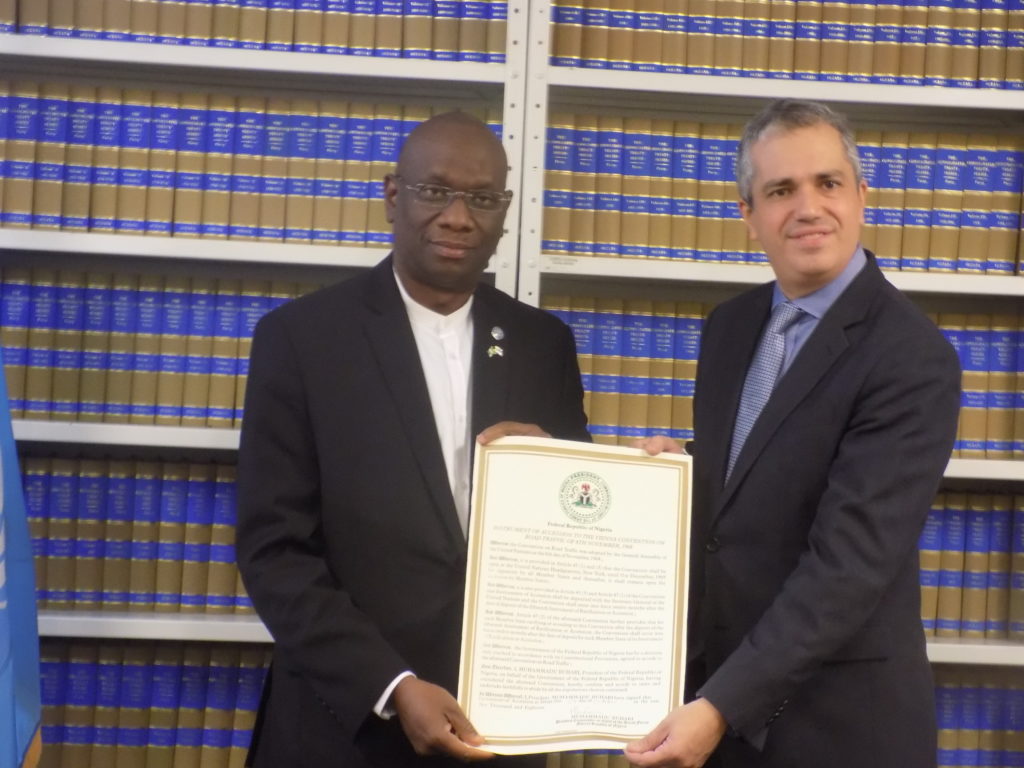
The UN says Nigeria is the 78th country to assent to the ‘Vienna Convention on Road Signs and Signals’ as the country presented its endorsement on Thursday.
Chief of the Treaty Section of the UN, Mr Santiago Villalpando, stated this at the presentation of the Instrument of Accession to the Vienna Convention by the Corps Marshal of Nigeria’s Federal Road Safety Corps, Dr Boboye Oyeyemi.
The News Agency of Nigeria (NAN) reports that the Convention is a multilateral treaty designed to increase road safety and aid international road traffic by standardising the signing system for road traffic in use internationally.
Nigeria is also among the few countries in Africa to have assented to the Vienna Convention adopted by the UN General Assembly on Nov. 8, 1968, and entered into force on May 21, 1977.
NAN also reports that by presenting its assent to the UN, Nigeria has deposited its instruments of ratification, acceptance, approval or accession with the depository.
Villalpando, at the historic event in New York, commended Nigeria for taking the bold decision and for its commitment to implementing the Vienna Convention on Road Signs and Signals.
Speaking with NAN after the presentation, Oyeyemi described it as a great achievement for President Muhammadu Buhari, who ensured that Nigeria lived up to its commitment to the UN and other international obligations.
Oyeyemi said the UN Secretary-General’s Special Envoy for Road Safety, Jean Todt, visited Nigeria in 2017 and observed that the country had not assented to the relevant UN Transport Conventions and Agreements as well as the implementation of same.
These Conventions are the Geneva Convention on Road Traffic of 1949, Vienna Convention on Road Signs and Signals of 1968, and the Convention concerning Customs Facilities for Touring of 1954.
Others were Additional Protocol to the Convention concerning Customs Facilities for Touring, relating to Importation of Tourist Publicity Documents and Materials of 1954, and Customs Convention on the Temporary Importation of Private Road Vehicles of 1954.
Boboye said Todt wrote to the then Acting President Yemi Osinbajo, who asked for necessary information before it was passed to the Ministry of Justice, which prepared the gazette and passed to the Federal Executive Council, which gave approval.
“The implication of this now is that Nigeria has acceded to the six Conventions on Road Traffic and Road Safety, which is a landmark in the history of the country.
“All these have been pending but with the passion of Mr President towards road safety management in Nigeria, we are happy that the country has fully complied with the United Nations resolution for Member Nations to assent to this Convention.
“And Nigeria became today the 78th country that is signatory and acceded to the United Nations Conventions on Road Traffic and Road Signs,” Oyeyemi told NAN.
The Corps Marshal assured the UN and the international community that Nigeria would fulfil its own part of the agreement
NAN reports that Buhari had signed the Instrument of Accession on Oct. 4, 2018.
NAN

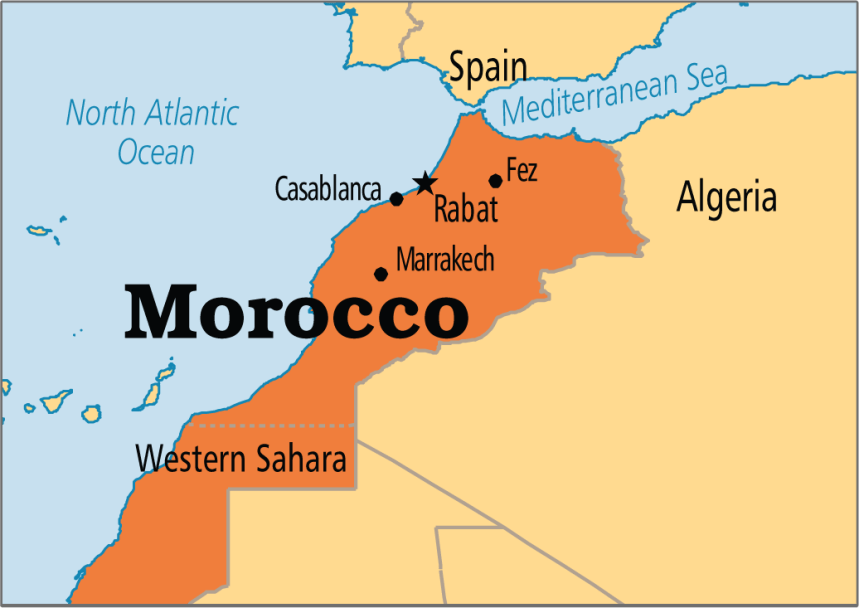
Spokesman for the Moroccan government and Parliament, Mustapha El Khalfi, says the country’s interest in joining ECOWAS stems from its desire to build strong South-South partnership.
Khalfi disclosed this on Thursday while briefing participants of the maiden News Directors Forum of the Atlantic Federation of African Press Agencies (FAAPA) in Rabat.
Asked by the News Agency of Nigeria (NAN) participant why Morocco, located in North Africa, should apply to join ECOWAS, he said: “It reflects the vision of His Majesty, the King, to build strong South-South partnership and to bring our efforts together to deal with economic and social challenges.’’
He described the move as “a project still ongoing within the institutions’’, stressing that the vision behind the move was to “enhance our capacities to deal with economic and social challenges of the 21st century’’.
NAN recalls that Morocco’s application to join ECOWAS came after it re-joined the African Union (AU) in January 2017.
The country had left the continental body in 1984 following AU’s recognition of Western Sahara, a territory that Morocco regards as part of its historic region.
The West African leaders, at the 51st summit held in June 2017 in Monrovia, Liberia’s capital, had agreed in principle to Rabat’s request to join the sub-regional grouping.
They, however, requested the ECOWAS Commission to consider the implications of such a decision pursuant to the provisions of the Revised ECOWAS Treaty and submit their findings to the 52nd session.
Morocco’s efforts to join ECOWAS included 23 royal visits to 11 countries in West Africa by King Mohammed VI, with the signing of hundreds of investment contracts.
Morocco said these efforts had given a strong impetus to its bilateral cooperation with the sub-region.
ECOWAS comprises 15 West African Nations but none shares a border with the North African country.
Meanwhile, Rabat drew criticisms from diplomatic veterans, activists and lawyers, who argued that the economic implication of Morocco’s admission would be enormous.
They believe that Morocco’s admission into ECOWAS would erode Nigeria’s diplomatic influence not only in the sub-region, but also in the international community.
A study on the impact of Morocco’s membership was carried out and the outcome was submitted to the West African leaders at the 52nd summit in Abuja during which they failed to reach a conclusion after a long closed door session.
In a communiqué adopted at the end of the summit, they instead asked a committee of presidents of Togo, Cote d’ivoire, Ghana, Guinea and Nigeria to supervise the thorough study of the implications of Morocco’s accession.
NAN

The Nigerian National Petroleum Corporation (NNPC) on Thursday said the fire incident that happened on System 2E pipeline network in Umuaduru and Umuimo communities in Abia state was caused by suspected oil thieves.
The Corporation disclosed this in a statement signed by its spokesman, Mr Ndu Ughamadu, in Abuja.
He said that the allegation that negligence on the part of the corporation caused the fire incident Friday last week, was false.
He affirmed that the incident was triggered off by suspected oil thieves who had hacked into System 2E pipeline network with a view to intercepting the flow of petrol from Port Harcourt to Aba.
Ughamadu said the clarification became necessary in view of the recent statement by a legislator indicting NNPC on the fire outbreak, which had claimed lives and valuable property .
The NNPC spokesperson explained that the presence of items such as jerrycans, among others, at the scene of the incident as contained in the preliminary report on the matter indicated that the activities of vandals in the area ignited the flame.
He regretted that incessant vandalism of pipeline facilities along System 2Ex Pipeline Right of Way (PROW) has led to the under-utilisation of the Enugu Depot, saying that the breaches have prevented the corporation from pumping fuel into it.
He called on relevant government agencies to collaborate with the corporation to appropriately criminalise vandalism of oil facilities across the country, adding that host communities should also partner the NNPC to tame the scourge.
Ughamadu prayed that God reposes the souls of the innocent ones that perished in the incident and warned members of the public against tempering with oil facilities which he described as inflammable.
NAN

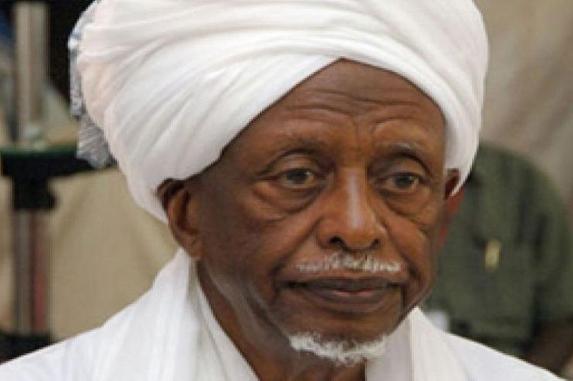
Former Sudanese president, Abdulrahman Suwar Al-Dahab, has died in the Saudi Arabian capital Riyadh, Sudan’s state news agency, SUNA said on Thursday.
He died in Riyadh Military Hospital, the agency said, providing no further details.
Dahab, a former military officer, was Defence Minister before he led a coup in 1985 to overthrow Jaafar Nimeiri, who had been president since 1969.
Nimeiri was also a former military officer.
When Al-Dahab took power, he promised to hold elections in a year’s time, a pledge few believed in a country exhausted by civil war.
However, in 1986 Africa’s largest country by land area held multi-party elections and a civilian government took office.
Sudan’s current President, Omar al-Bashir, who has been in power for nearly 30 years and is wanted by the International Criminal Court (ICC) for war crimes, has previously said he will step down in 2020 and has not explicitly stated his intention to run again.
Reuters/NAN