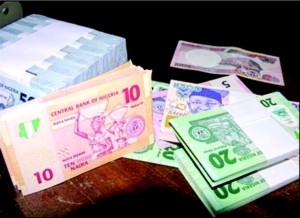
The Naira on Monday lost 50 kobo to close at N360.5 to the dollar, weaker than N360 posted on Friday at the parallel market in Lagos.
The Pound Sterling and the Euro closed at N480 and N417, respectively.
At the Bureau De Change (BDC) window, the Naira was sold at N360 to the dollar, while the Pound Sterling and the Euro closed at N480 and N417, respectively.
Trading at the investors’ window saw the Naira closed at N364. 09, while the market turnover stood at 168.96 million dollars.
Currency traders opined that the build up to the 2019 general elections made the market vibrant due to increase in patronage.
The United States sent two warships through the Taiwan Strait on Monday in the second of such operation this year, amid China tensions.
The warships passed through Taiwan Strait as the U.S. military increases the frequency of transits through the strategic waterway despite opposition from China.
The voyage risks further heightening tensions with China but will likely be viewed in self-ruled Taiwan as a sign of support by President Donald Trump’s government, amid growing friction between Taipei and Beijing.
Reuters was first to report U.S. consideration of the sensitive operation on Oct. 20.
“The ships’ transit through the Taiwan Strait demonstrates the U.S. commitment to a free and open Indo-Pacific,” Commander Nate Christensen, deputy spokesman for U.S. Pacific Fleet, said in a statement.
“The U.S. Navy will continue to fly, sail and operate anywhere international law allows,” he added.
Taiwan’s defence ministry said it closely monitored the operation and was able to “maintain the security of the seas and the airspace’’ as it occurred.
There was no immediate comment from China.
The U.S. Navy conducted a similar mission in the strait’s international waters in July, which had been the first such voyage in about a year.
The latest operation shows the U.S. Navy is increasing the pace of strait passages.
Washington has no formal ties with Taiwan, but is bound by law to help it defend itself and is the island’s main source of arms.
The Pentagon says Washington has sold Taiwan more than 15 billion dollars in weaponry since 2010.
China views Taiwan as a wayward province and has been ramping up pressure to assert its sovereignty over the island.
It raised concerns over U.S. policy toward Taiwan in talks earlier with U.S. Defence Secretary Jim Mattis in Singapore.
As the United States prepared for a fresh passage through the strait, it told China’s military that its overall policy toward Taiwan was unchanged.
Mattis delivered that message to China’s Defence Minister Wei Fenghe personally on Oct. 18, on the sidelines of an Asian security forum.
“Minister Wei raised Taiwan and concerns about our policy. The Secretary reassured Minister Wei that we haven’t changed our Taiwan policy, our one China policy,” Randall Schriver, a U.S. assistant secretary of defence who helps guide Pentagon policy in Asia, told reporters traveling with Mattis.
“So it was, I think, a familiar exchange’’.
Taiwan is only one of a growing number of flashpoints in the U.S.-China relationship, which also include a bitter trade war, U.S. sanctions, and China’s increasingly muscular military posture in the South China Sea.
Taiwan’s relations with China have deteriorated since the island’s President Tsai Ing-wen from the independence-leaning Democratic Progressive Party swept to power in 2016.
Beijing, which has never renounced the use of force to bring Taiwan under its control, responded to the July passage with a warning to the United States to avoid jeopardising “peace and stability’’ in the strategic waterway.
It has also viewed U.S. overtures toward Taiwan with alarm, including its unveiling a new de facto embassy in Taiwan and passage of the Taiwan Travel Act, which encourages U.S. officials to visit the island.
Military experts say the balance of power between Taiwan and China has shifted decisively in China’s favour in recent years, and China could easily overwhelm the island unless U.S. forces came quickly to Taiwan’s aid.
China has also alarmed Taiwan by ramping up military exercises this year, including flying bombers and other military aircraft around the island and sending its aircraft carrier through the narrow Taiwan Strait separating it from Taiwan.
Global HIV Vaccine Enterprise has launched a five-year strategy to accelerate the development of safe and effective vaccine toward preventing HIV infection.
The strategic plan was unveiled on Monday at the opening of HIV Research for Prevention (HIVR4P 2018) conference in Madrid, Spain.
The News Agency of Nigeria (NAN) reports that HIVR4P conference is the world’s only scientific conference dedicated exclusively to biomedical HIV prevention.
The Global HIV Vaccine Enterprise is hosted by International AIDS Society (IAS).
Anton Pozniak, IAS President, said the new strategic plan was developed through an IAS-led consultation involving HIV vaccine research and funding stakeholders, the Enterprise Strategic Advisory Group and the IAS Governing Council.
Pozniak said the new strategy presented the opportunity to address some of the most significant challenges in HIV vaccine development.
He added that the new strategy would evaluate current opportunities, challenges and obstacles in HIV vaccine research and development and recommend series of steps.
The IAS president said that the plan advanced the ongoing partnership between the IAS, the world’s largest association of HIV professionals and Global HIV Vaccine Enterprise.
He explained that “the new strategy builds on more than a decade of work by Global HIV Vaccine Enterprise to identify critical gaps in systems and knowledge, promote collaboration and address one of the greatest scientific challenges.
“While the HIV vaccine landscape offers greater scientific promise than ever before, the field also faces real challenges in terms of aligning scientific priorities as well as developing the smartest and most effective research studies.
“It also helps maintaining funding, engaging and maximizing the contributions of all global stakeholders in the search for a vaccine,” Pozniak added.
He added that the strategy would propel the vaccine pipeline by strengthening strategies to align, amplify and accelerate development of candidate vaccines
“It will also prepare for success by tackling priorities essential to clarifying the road map for future access to a vaccine.
‘”As well expands resources and engagement by enlisting a diverse community of partners to support and contribute to the field,” he said.
He said that scientific discoveries led to promising new approach to HIV vaccine development and with several large-scale vaccine efficacy studies underway.
Pozniak said the new strategy would also take a fresh look at the major challenges confronting the HIV vaccine paradigm.
Glenda Grey, President, South African Research Council (SRC), said the IAS/Enterprise plan proposed series of near-term activities to address critical and of-the-moment challenges.
Grey said that it would also address long-term goals and guideposts to measure achievements as well guide adjustments in the strategy as the field evolves.
“The plan’s activities will be sequenced strategically and guided by annual implementation plans with detailed activities, timelines and deliverable.
“This plan captures the promise and challenges of a unique and exciting moment in HIV vaccine development and offers a road map for action to bring us closer to the end of this epidemic.
“With the support, expertise and convening power of IAS, this new strategic plan will build on the Enterprise’s longstanding role as both neutral convener and facilitator of collaboration in the HIV vaccine field.
“It will also propel the realisation of our shared vision to develop a safe, effective and globally available HIV vaccine,” he said.
Nigeria has been ranked 115th out of 140 countries assessed in the 2018 Global Competitiveness Report (GCR) of the World Economic Forum (WEF), a statement has said.
The statement issued by Dr Jumoke Oduwole, Senior Special Assistant to the President on Industry, Trade and Investment, Office of the Vice President, on Monday in Abuja said that the report was released on Oct. 17.
She said that the report showed improved performance across key enabling business environment indicators and suggested an overall improvement in the country’s competitiveness.
The GCR is an annual ranking which compares the national competitiveness environment of 140 countries based on 12 pillars – four grouped under basic requirements, six under efficiency enhancers and two under innovation and sophistication factors.
Oduwole listed the insights that could be drawn from the 2018 report about Nigeria’s improving competitiveness.
“Nigeria improved in the area of `Enabling Environment, the country improved in three out of four pillars classified as Enabling Environment pillars — Institutions, Infrastructure, ICT adoption and macro-stability pillars.
“This recognises the enabling business environment reforms of the Federal Government in making Nigeria an easier place to do business in.
“Nigeria is ranked top 100 in terms of `Business Dynamism’.
“The report further acknowledges the positive perception of the private sector for the government’s Doing Business reforms, by scoring improvements in the time and cost of starting a business in the country.
“Nigeria’s inflation rate has steadily declined to near single-digits since 2017.
“Although the report records Nigeria’s annual inflation rate at 16 per cent in 2017, it is important to note that inflation has progressively declined in 2018 to a current rate of 11.28 per cent as at September.
“Nigeria’s competitive environment is one of the most entrepreneurial in the world.
“The feedback from the private sector as surveyed by WEF ranks the attitude of Nigerians for taking entrepreneurial risk as the 13th in world among the likes of Israel and the U.S., which are currently in first and second positions respectively.’’
She said that the report aligned to the broader private sector-led growth model of the Federal Government stemming from the Economic Recovery and Growth Plan (ERGP) launched in April, which prioritises investing in the people.
According to Oduwole, who is also the Secretary of the Presidential Enabling Business Environment Council (PEBEC), Nigeria’s market size remains an increasing source of competitive advantage in the global economy.
She said that the report ranked the Nigerian market as 24th largest in the world.
Quoting the National Investment Promotion Commission (NIPC), she said that between 2017 and the first half of 2018, about 154 investment projects had been announced across the country with an estimated value of about $112 billion.
The Kaduna State Emergency Management Agency (SEMA) has disclosed that 23 people were killed and 17 injured in various parts of Kaduna metropolis during the violence that took place on Sunday.
The Executive Secretary, SEMA, Ben Kure, disclosed this on Monday, during an assessment tour of affected areas.
According to him, no society can progress without peace which is an essential ingredient of development and harmonious coexistence.
The executive secretary commiserated with the injured, while extending condolences to the families of the bereaved.
He said the state government was committed to providing security for all and ensuring conducive environment for all to live peacefully.
Kure thanked the State Governor, Malam Nasir el-Rufai, for his unflinching support to the agency.
After touring Kaduna metropolis, the SEMA boss also visited Kasuwan Magani, where 55 people were reportedly killed on Thursday, to present relief materials to the affected families.
Kure called on the people of the state to embrace peace and shun violence.
In order to attain stable, strong and effective governance in Nigeria, the National Assembly must receive priority in terms of capacity building, Speaker of the House of Representatives, Yakubu Dogara, has said.
He stated this while delivering an address on the topic, “Parliamentary Institution Building in Africa”, at the convocation ceremony of the National Institute for Legislative and Democratic Studies (NILDS)/University of Benin Post Graduate Programmes for the 2015/2016 and 2016/2017 Academic sessions, held at the National Assembly.
The speaker explained that because the Legislature is the true face of democracy, especially in maturing democracies such as that of Nigeria, where it serves as the stabilising force with robust constitutional powers to check-mate the Executive misuse and abuse of power which occasionally rears its head.
Making a case for strengthening in institutions to produce good governance, Hon Dogara added that the imperative of building healthy and strong institutions, like the legislature, in place of strong personalities, has been the bane of our democratic experience in Nigeria.
Going further, he stated, “Time has come to reverse this trend in order to achieve the goals of a robust and sustainable economic, social and political development, not only in Nigeria but in Africa as a whole.
“It is our considered opinion that if there is any institution of government that should receive priority attention in terms of capacity building, it is the Legislature. This is because the Legislature is the true face of democracy. In our maturing democracy in this country, the Legislature is the stabilising force as it has robust constitutional powers to check-mate the Executive misuse and abuse of power which occasionally rears its head. Credit must be given to the Nigerian Parliament, which has continued to make Laws, perform its representative functions and make robust use of the power of oversight in order to preserve our hard-won democracy and achieve good governance.”
Elucidating further on the topic, he said a key factor in moving from a nominal democracy to democracy that delivers development results for people is an effective legislature that holds the executive to account, especially in developing countries burdened by weak governance structures like Nigeria and lamented that whereas much work has been done on strengthening Executive leadership, not much attention has been paid to systematically building the capacity of the legislature to effectively contribute to national development.
Speaking of efforts made in the last two decades by the legislature to provide better governance in Nigeria, he said the National Assembly, among other things, has set unprecedented record in the area of law making, which has translated to stimulating economic growth and prompting competition.
“What is expected of modern legislatures goes beyond the traditional role of representation, law-making and oversight. The legislature in Nigeria must serve a greater purpose within wider national democratisation processes. Over the last two decades, the National Assembly has transitioned from being the weaker institution to becoming a strong and capable agent of change. Our activism in the area of law-making is attested to by the unprecedented record we have set in the area of law-making. Some of these laws are specifically designed to stimulate economic growth and promote competition. We have also successfully intervened in crises situations to save the country from avoidable collapse.”
While commending the bond between National Institute For Legislative and Democratic Studies (NILDS) and University of Benin (UNIBEN) for collaborating on the academic programmes, he congratulated all the graduands on the successful completion of their programmes and urged them to be great ambassadors of the institution of the Legislature.
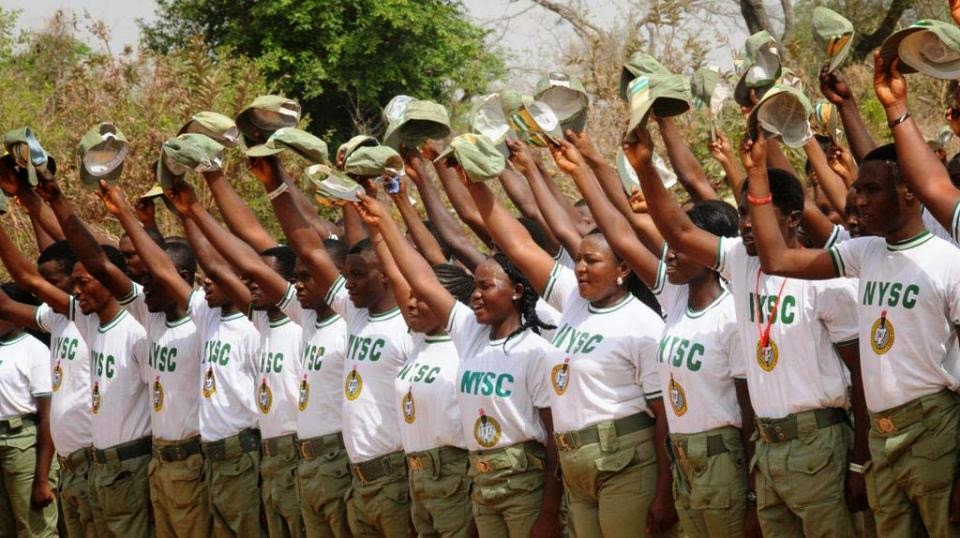
The Orientation Course for the 2018 Batch C prospective Corps Members scheduled for Tuesday, 23rd October, 2018 has been suspended till further notice.
This is due to the current security situation in Kaduna, Northwest Nigeria and consequent curfew imposed by the state government.
The Management of National Youth Service Corps in a statement advised all affected prospective Corps Members to remain at home until further notice.
“However, all other prospective Corps Members deployed to other States and FCT are to report at the various orientation camps on Tuesday, 23rd October, 2018 as scheduled.
“All inconveniences are regretted,” the statement adds.
The Organised Labour in Nigeria says it will embark on nationwide strike on November 6, if the Federal Government fails to meet its demand on the new National Minimum Wage of N30,000 agreed upon.
President, Nigeria Labour Congress (NLC), Ayuba Wabba, made this known in a joint statement on Sunday, alongside President, Trade Union Congress (TUC), Bobbio Kaigama, and President, United Labour Congress (ULC), Joe Ajaero, on Sunday.
The Organised Labour had said that the Tripartite Committee on the New National Minimum Wage had concluded its negotiations and agreed on N30, 000 following an appeal made by Organisation Private Sector (OPS) as what they could afford.
But the Minister of Labour and Employment, Sen. Chris Ngige at the end the Federal Executive Council meeting, while briefing newsmen, had said that the Tripartite Committee on the National Minimum Wage was yet to conclude its negotiations.
Nigerian Governors had made a proposal of N20,000 while the Federal Government had offer of N24,000.
The Federal Government had also initiated a clause “No work, No pay” during strike.
According to Wabba, the organised labour in Nigeria have not seen any sign that the government was willing to demonstrate honour and integrity in relating with Nigerian workers and masses.
“So, we have resolved to organise a one-day of National outrage and mourning, which would be used to sensitise Nigerians on our plight and on the issues at stake.
“This shall take place in all states of the federation including Abuja on Tuesday, the 30th day of October, 2018 and a meeting of various organs of the Unions will hold as appropriate.
“On Friday, Nov. 2, a Joint Central Working Committee (CWC) meeting of all the Labour Centres in Nigeria shall hold to receive reports and make final preparations for our ultimate engagement with the Federal Government on this matter.
“This is the first time in the history of this nation in recent times that such meeting will take place and this goes a long way to show the seriousness with which Nigerian workers and its leadership hold this matter.
“If nothing is responsibly done by the Federal Government to meet our demands, on Monday, Nov.6 we shall embark on a nationwide strike,’’ he said.
He added that this would compel government to show more sensitivity to the plight of Nigerians and the suffering that is decimating our people on daily basis.
Wabba also called on Nigerians and workers not to be discouraged in the struggle for the new National Minimum Wage.
He explained that it was not true that organised labour had proposed N30,000 as the new national minimum wage.
“It is also not true that the committee did not agree on a figure during its last sitting. We accepted N30,000 as a compromise to demonstrate the willingness of Nigerian workers to make sacrifices towards nation building.
“Anything to the contrary no matter the quantum and character of the din or how well couched it may appear cannot be true.
“Resorting to Goebbelsianism at this time of national emergency, which requires men and women of integrity is rather unfortunate and cannot suddenly make the brazen falsehoods truths.
“We believe that it has become necessary for the Organised Private Sector (OPS) as represented in the Tripartite Committee to speak up on this matter.
“Keeping silent in the face of this apparent mischief does our nation no good. It can only help mischief, dishonesty and impunity to grow,” Wabba said.
The NLC president, however, said it was time for the OPS to rise to the occasion by telling Nigerians what transpired in that meeting.
Wabba added that they should tell Nigerians whether there was a motion that was seconded on a final figure.
“If there was a document signaling this agreement that had already been signed by some parties?
“If also the N30,000 figure was ours or a compromise figure based on proposed scenarios,”’ he said.