Home Blog Page 1094

Nigeria Denies Reports Of Deplorable Condition Of Troops Fighting Boko Haram

0
Nigerian Army
Nigerian Army battle ready
Nigerian Army
Nigerian Army battle ready


By Joseph Edegbo

Nigerian Government says the reported deplorable conditions of the Nigerian troops fighting Boko Haram in the North East, “is fake news.”

Addressing  a news conference in Abuja on Tuesday, the Minister of Information and Culture, Lai Mohammed, said in view of the grave security implication of the allegations contained in the publication, President Muhammadu Buhari ordered an investigation to determine its veracity.

The investigation, he said,  has since been concluded and that the summary of the findings is that there is no case of hunger, starvation or begging among the troops fighting in the North East, and in particular in the Armed Forces Special Forces Battalion that was referenced in the publication.

”Also, there is no irregular/short payment of allowances, while claims of poor equipment, inadequate kitting and accommodation are found to be ill conceived and unfounded,” he said.

Mohammed said contrary to the publication, the troops in question, deployed at Brig.-Gen. Maimalari Secondary School along Gubio Road, are being fed centrally three times a day, and are kitted immediately after  training before their deployment in the theatre.

The Minister  then wondered how soldiers who are fed centrally be starving or begging for food? Concerning the payment of allowances, the monthly allowances of troops of the AFSF Battalion are being paid directly into their various accounts from the Defence Headquarters, hence they cannot be shortchanged,” he said.

On the allegation of poor equipment and inadequate kitting, the Minister said it was found that the inflow of logistics into the theatre in the past six months showed an enormous quantity of materiel was distributed to troops in the theatre.

“If anything, the publication in question exhibited poor understanding of what obtains in the theatre of military operations. For example, the claim of poor accommodation in an operational environment. By their training, soldiers in theatres of war are usually in trenches, tents or other makeshift structures. Fighting insurgency is not a walk in the park and the gallant men and women in uniform who are engaged in counter-insurgency operation in the North East are not on a luxurious expedition. The battlefront is no playground,” he said.

Mohammed warned that engaging in fake publication about the troops is not only a great disservice to the nation, but a terrible downplay of the kind of sacrifices being made by the gallant troops in fighting the insurgency.

He said such fake reports amount to collaborating with fifth columnists and enemies of the nation to weaken the fighting spirit of our forces, and represent a clear and present danger to the nation’s security.

While restating the administration’s belief in the freedom of the press, the Minister appealed to the media to always commit to the highest standards of journalism by double checking with the government before publishing any information from the theatre of operation in the North East.

Nigerian Doctors Separate Conjoined Twins In Abuja Hospital

0
twin
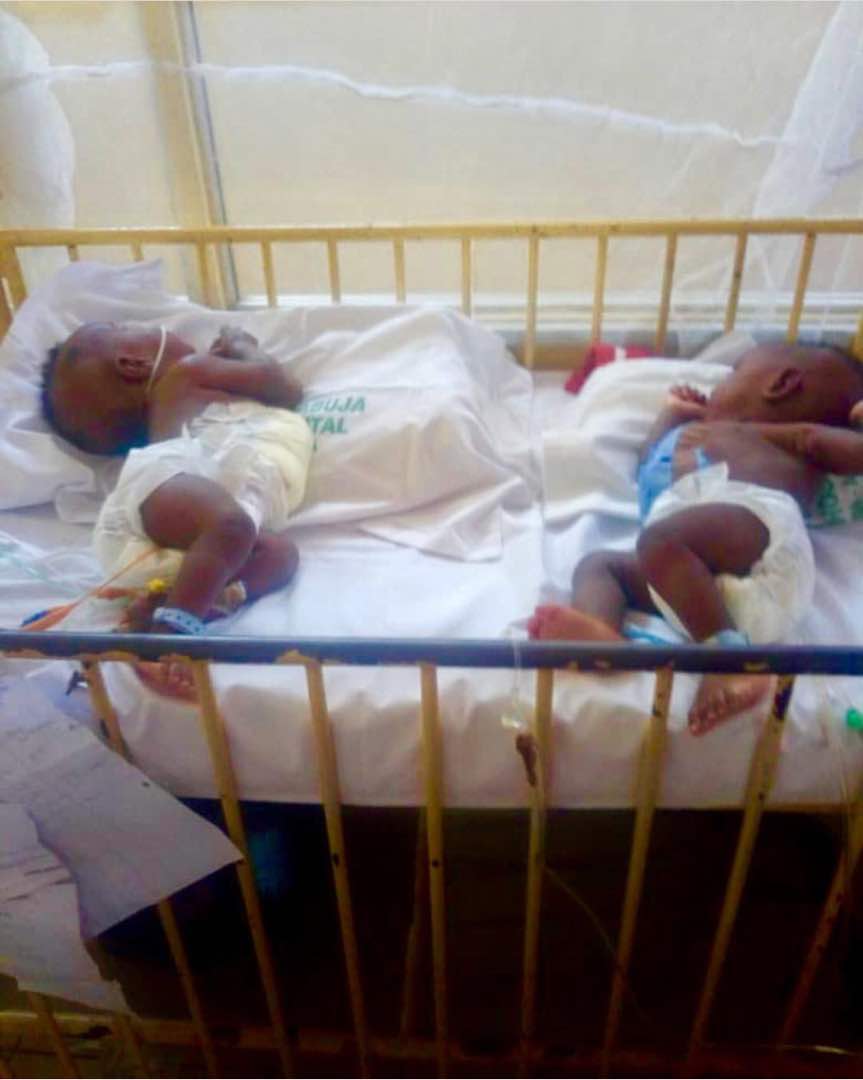
Conjoined twins prior to separation in Abuja
twins
The conjoined twins separated through surgery in Abuja


A team of Nigerian doctors Tuesday successfully separated a set of conjoined twins at the University of Abuja Teaching Hospital ,Gwagwalada.

The doctors led by Dr Nuhu Kwajafa of the Global Peace Initiatives confirmed the success of the operation that took them many hours in a post on his Instagram account @nuhukwaj.

“We wish to express our profound gratitude, as we say a massive thank you to Rt Hon Yakubu Dogara, for his kind hearted and extremely generous gesture to the successfully separated twins and their family…God bless you Sir”, Dr Kwajafa posted.

EU Withholds Support To Comoros Over Unsatisfied Judicial, Constitutional Reform

0
Comoros Map
Comoros Map
Comoros Map
Comoros Map


By Joseph Edegbo

The European Union (EU) has withheld the activation of the 2018 annual action program for Comoros saying it is not satisfied with President Azali’s government reform of the  judiciary and constitution.

“The services of the EU have decided to postpone the annual action program of cooperation between the EU and the Comoros Union for 2018 in light of strong uncertainties detected with regards to the preconditions that the government of Comoros agreed to to…in terms of the reform of the judiciary and the presence of an independent body that would take over the control of the constitution and the development of a strategy to fight corruption.”  the EU explained in a statement.

Welcoming the move, Mr. Abubakar Aboud, advisor to former President Sambi and in charge of communication of the leading opposition party, Juwa party said, “We see this move as a first serious warning to the government of Azali by a leading multilateral organisation. The European Union was quick to react by refusing to finance government projects related to justice and road networks. We hope this will encourage other multilateral organisations to follow suit. President Azali needs to understand that he will not be allowed to destroy the democratic institutions and human rights in the country with impunity.”

After almost a week of armed clashes between the national army and insurgents in the city of Mutsamudu, Anjouan, a precarious calm has settled. However, this was quickly followed by the arrest of the governor of Anjouan Dr. Abdou Salami Abdou. Decrying the arrest, Mr Aboud, said,  “The presumption of innocence no longer exists in Comoros. Whatever the government says, the justice system executes without question. There is no longer an independent justice system, just as there is no longer an independent National Assembly. That’s why I am pleased that the EU has raised the issue of judicial reforms.”

Colonel Azali is purging his political opponents, mainly from the Juwa party, the main opposition in the country. So far, key leaders including President Sambi, vice president Jaffar Ahmed Said Hassani, Deputy Chief of Staff of the Army Colonel Ibrahim Salim, the general secretary of Juwa Party Ahmed Hassane El Barwane, spokesman for the party Dr Ahmed Abdou Chakour, treasurer of the party Milano Henri Alphonse and the MPs of Mutsamudu and Itsandra have been arrested.

To diffuse the tensions and unrest in the country, the African Union  (AU) tried to initiate a dialogue between the opposition and the government by sending AU High Representative Ramtane Lamamra on September 14th. However, he didn’t meet any of the political prisoners including former President Sambi. The talks broke down and stalled as the government refused to revise the decisions of the referendum, calling it “ancient history”.

“The release of political prisoners was one of the main requests that were not respected by government authorities. The removal of the immunity of three opposition MPs followed by the arrest of the governor of Anjouan, can hardly facilitate the resumption of this inter-Comorian dialogue,” says Aboud.

“I am really worried about threats on President Samb’s life, he concludes. “Recently, I learned from reliable sources, that a plot could be put in place to physically eliminate President Sambi, which naturally makes me fear the worst. “

Nigeria: Laws Alone Can’t Stamp Out Human Trafficking, Modern Slavery, Dogara Says

0
Nigerian Constitution Cover


Speaker of the House of Representatives, Yakubu Dogara has stated that laws against the twin evils of human trafficking and modern slavery alone wouldn’t be able to cure the menace.

Speaking at the opening of a consultative meeting with Commonwealth Parliamentary Association (CPA) United Kingdom delegation to Nigeria and other stakeholders hosted by the House of Representatives Committee on Inter-Parliamentary Relations in Abuja Monday, 
Dogara said that justice must be seen to be done against perpetrators of the heinous crimes against humanity.

“We should not be unmindful of the fact that laws alone, no matter how well crafted cannot solve this evil. For instance, Britain is a world leader in modern slavery legislation but yet London is an international hub for modern slavery. Research conducted by the CO-OP in 2017 suggested that four out of ten people in the UK are not sure what modern slavery was. In most countries the figures are more appalling. We are not likely to succeed in the fight against this evil with near pervasive ignorance of its existence.

“To win this war we need to up our advocacy because with increased awareness comes increased determination to act. I charge us not to forget that survivors and victims of this evil are not entitled to pity but justice. Justice is best served in this case if we help to bring perpetrators to justice and mobilize resources with which to bring sustainable comfort to the survivors….”, the Speaker stated .

The Speaker while tasking stakeholders to ensure exhaustive discussion on how to address the challenges, noted that “We can make history if we don’t give up the fight”.

Dogara said; “The evils of the modern slavery/human trafficking/forced labour being perpetrated in Nigeria and several other countries are obvious to all of us.  They present one of the worst cases of inhuman treatment and wickedness of man to fellow human beings.  They also contribute to the high incidence of poverty, social distress and crimes generally in countries where they occur.  The global community have made efforts, particularly in the last two decades to stamp out this sore on humanity’s conscience with mixed results.

“Nigeria, as we know, occupies a central position in the West African axis as a country of origin, transit and destination for victims of human trafficking for forced labour, sexual abuse and other forms of exploitation.  Men, women and most especially children are trafficked from Nigeria to Western Europe, Middle East and some African countries.  Victims from neighbouring countries like Benin, Cameroun, Niger, Burkina Faso and Mali are also brought into Nigeria for forced and hard labour.

“In addition to these, there are prevalent incidences of rural to urban trafficking within Nigeria, in which women and children are trafficked for domestic, agricultural and industrial labour, as well as sexual exploitation and street begging.  Researches have also confirmed that parents, particularly from the northern parts of Nigeria, force their children to engage in sustained begging for economic survival or daily sustenance.

“The establishment of the National Agency for the Prohibition of Trafficking in Persons (NAPTIP) through the NAPTIP Enforcement and Administration Act, 2003, was one of the first decisive steps taken by the Nigerian government to curb the illicit human trafficking enterprise.  In 2015, the Parliament passed an Act to amend the Law, which increased the penalties for trafficking offenses to a minimum of five years imprisonment, among others.  However, in spite of the various improvements in the Law, the envisaged effective apprehension and conviction of offenders have not been achieved.

“This explains the need for the Trafficking in Persons Prohibition, Enforcement and Administration (Amendment) Bill, 2018.  The Bill, which seeks to amend the 2015 Act, will establish Special Trafficking Court, expand the composition of the Governing Board of NAPTIP by including members from the Economic and Financial Crimes Commission, (EFCC), increase penalties and criminalise certain offences, among other provisions.  It is hoped that this Bill, when passed into law, will help to tame the hydra-headed monster of human trafficking, sexual exploitation and related offences.

“I believe that the outcome of this Consultative Meeting will help to enrich the Bill and facilitate our victory in the war against trafficking in persons and other associated crimes.  I urge the stakeholders to be exhaustive in their submissions and deliberations so that together, we can fashion a statute that will meet our expectations and the desired end”.

Nigeria: Igala Community Mourns Death Of Kaduna Monarch

0
Galadima
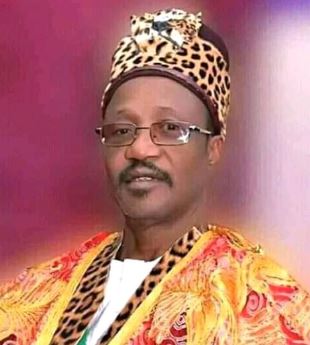
Late Agom Adara, Maiwada Galadima
Galadima
Late Agom Adara, Maiwada Galadima


The Igala community from Kogi State resident in Kaduna has consoled with the government and people of Kaduna State over the death of the Agom of Adara, Maiwada Galadima who was killed on Friday by his abductors.

In a condolence message, the Chief (Onu) of the community and Olimeneh Attah Igala, Chief Joseph Daikwo said the death of the traditional ruler was pathetic and utterly painful.
The community leader noted that the late Agom Adara was  not only an unequalled believer in peace but a saint in rulership
“We are sad in the loss of a Monarch who was not only a saint in rulership , but a believer in peace as manifested in the sincere way he responded to the Clash in part of his chiefdom.
” He deserve our recognition for his Commitment to peace and unity of his people and our praise for his efforts which was truncated  by the evil doers.
“His death is pathetic and utterly painful. It has brought us tears and pains , sorrow of grief “.
Chief Daikwo prayed Almighty God to guide the family , his subjects and the State   the strength of mind and heart to bear the sorrowful end.
The community leader also commended the State government for the proactive measure taken to  contain the crisis and  prayed for other reposed souls.

Part Worn Africa Calls For Regulation Of Second-Hand Tyres Across Africa

0
Part Worn Africa
Part Worn Africa Logo
Part Worn Africa
Part Worn Africa Logo


By Iliya Kure


A newly launched advocacy organisation, Part Worn Africa is calling on African governments and regulatory bodies across the continent to introduce and enforce stronger regulations governing the sale of second-hand tyres.


According to the organisation, Africa is plagued by inadequate legislative and regulatory frameworks and an absence of minimum safety and quality standards for what may constitute a safe to use second-hand or part-worn tyre.


Africa has the highest rate of road traffic deaths in the world, with 26.6 killed per 100,000 inhabitants.


The United Nations Decade of Action for Road Safety (2011 – 2020) called on African countries to implement concrete actions to improve road safety and half road deaths by 2020.


“Unscrupulous operators take advantage of porous tyre waste disposal processes to gather ‘stock’ for resale, while others resell tyres rejected from other countries outside Africa because they are no longer fit for use. This makes them dangerous, a fact further compounded by these tyres often being ill-suited to Africa’s climate and road conditions,” explains Abdul Waheed Patel, Director of Part Worn Africa.


“There is a need to protect road users by developing, enforcing and monitoring compliance with appropriate legislative and regulatory standards and specifications for second-hand and part-worn tyres, uniformly across Africa. Drivers who may be experiencing financial pressure often choose unverified cheaper tyres without being aware of the associated safety risks,” he adds.


The advised that once the limits of tyres have been reached, they should be safely disposed of in accordance with regulated tyre waste management practice, as against the trend where many of these unsafe tyres are returned into the African market, with unsuspecting and financially strapped drivers becoming the victims.


Part Worn Africa says it would work with governments, regulatory bodies and multi-sectoral interest groups across Africa to address policy, legislative and regulatory deficits that expose unaware consumers to this major hazard on Africa’s roads.


“Addressing these issues will also confront an unchecked illicit economy in the trade and sale of unregulated and unsafe tyres, which is also typically characterised by unfair competition, irresponsible business practices and dumping of these tyres on African roads from jurisdictions where they are no longer suitable for use elsewhere,” it said.

South Africa Tasks Campus Radio Stations To Explore Digital Platform

0
Campus Media
South African Communications Deputy Minister Pinky Kekana
Campus Media
South African Communications Deputy Minister Pinky Kekana


Communications Deputy Minister Pinky Kekana has encouraged campus radio stations to expand into the digital platform and continue to churn out dynamic and informative content.

Kekana made the call during a Campus Media Workshop and networking session held at the Government Communication and Information System (GCIS) headquarters in Hatfield, Tshwane, on Monday.

The workshop was hosted by the GCIS with an aim of fostering, nurturing and strengthening a relationship between government and campus radio stations.

Kekana said campus stations are not only platforms to engage with students, but they also play a vital role in communities as the majority of campus stations reach listeners in the communities surrounding the university premises.

The Deputy Minister said campus stations are a tool for social cohesion, a budding ground for talent and a critical medium of information sharing.

“We recognise that students are members of the community before they are students, and campus media are equally key and relevant to contribute to the promotion of social cohesion and nation building, as envisaged in the National Development Plan (NDP) vision 2030. The advent of the Fourth Industrial Revolution will continue to have an impact on the media sector at large.

“It is therefore critical for campus media to also embrace the emergence of the digital revolution. This revolution democratised access to news and information. For instance, nowadays, many of us are able to keep up to date with the breaking news through digital tools such as social media, podcasts or webcasts,” the Deputy Minister said.

Digital migration

She said government is committed to ensuring that the country makes a seamless transition from analogue television to digital terrestrial television (DTT).

The migration is in line with the NDP to create a robust, reliable, secure and affordable Information and Communications Technology (ICT) infrastructure.

“Broadcast digital migration presents an opportunity to develop the South African audio-visual policy for socio-economic development, wherein the content will not only be broadcast traditionally but also on digital platforms.

“The multichannel environment will also heighten demand for local content. This will ensure that cultural development; freedom of expression, national identity and promotion of social cohesion in South Africa is promoted and developed,” Kekana said.

Meanwhile, the Deputy Minister also urged community radio stations to get their houses in order so that when government wants to work with them, they are ready.

She said GCIS used to have a challenge with the majority of community radio stations who had issues of non-compliance, including SARS issues.

During the workshop, representatives from campus media also got an opportunity to learn more about GCIS, as officials shared the work of different media units within GCIS.

Kopo Ndhlovu, from Research and Knowledge Management Unit, advised stations to think about their target audience so that the content speaks to them.

“We [Research Unit] try to assists media planners to think about the content, who is it targeted to and for,” Ndhlovu said.

The stations also had an opportunity to ask some questions and share challenges they are facing, including the amount of time it takes to get permits and extensive documents to submit.

The workshop ended with a tour at the Union Buildings and Freedom Park Heritage Museum. 

SAnews.gov.za

South Africa: Drone Technology To Change Face Of Construction Sector, Mamabolo Says

0
Drone
A Drone
Drone
A Drone


Drone technology can turn around the fortunes of the construction sector, Gauteng Infrastructure Development MEC Jacob Mamabolo said on Monday.

Updating the media on progress made since the launch of the programme on 21 May, Mamabolo said drone technology can address challenges such as cost and quality issues.

Since the initial launch in May, the Department of Infrastructure Development (DID) has acquired an additional four drones bringing its fleet to five.

“We have one drone per region because since the launch we have taken position, that drones can make infrastructure delivery efficient and effective,” said Mamabolo.

Head of Department Bethuel Netshiswinzhe said the sector has historically been a rigid and averse to change.

Through drone technology, the DID is able to monitor building projects such as new schools, clinics, libraries and hospitals, among others.

“[Through the] work we are doing, we are trying to build a department that can sustain service delivery,” said Mamabolo, adding that government can be efficient.

He stressed that by improving the work of the department, the quality of life for residents will also improve.

“We still don’t have effective, efficient way of delivering infrastructure.”

The drone programme is a partnership between the DID and the University of Johannesburg which resulted in the department signing a Memorandum of Understanding (MOU) with the university in July to accelerate the delivery of public infrastructure through smart technologies.

Addressing media at a media briefing held at the Emoyeni Conference Centre in Johannesburg, Mamabolo said the objective of the partnership, is to build on infrastructure delivery analytics capability that uses drone data to monitor progress against plans, monitor the use of materials on site and project governance and safety controls.

Capabilities of the drones include 3D technology where through the drone, the DID can monitor and verify site activity without officials being on site through high quality transmission technology that allows high definition video streaming.

“Capabilities include a 3D model. We will be making it official policy where everybody  that works with DID, our professionals, they will have to join us in leveraging smart technologies. The 3D technologies embedded in the drone gives us the opportunity to check and verify site activity,” he said.

Through the technology, the department is able to check whether construction on site is in accordance with architectural designs.

Through the drone technology the department can also ensure that “every cent is accounted for” thereby also contributing to the fight against corruption.

“Once we bring in transparency, openness into construction sites, we are able to see what exactly is going on.”

Mamabolo said government is of the view that infrastructure can turn around Gross Domestic Product (GDP) rates while also creating much needed jobs.

“We must build capacity of the state, we will demonstrate. We are going to make it a policy that everyone who works with us will need to deliver all drawings to us in 3D models so we can track cost, quality and time beyond dispute.”

SAnews.gov.za

Currency Exchange Rates

USD - United States Dollar
ZAR
0.06
EUR
1.17
CAD
0.73
ILS
0.31
INR
0.01
GBP
1.34
CNY
0.14
Enable Notifications OK No thanks