The Independent National Electoral Commission (INEC) says it will begin display of voters’ register at various polling units across the state from Nov. 6 to 12.
Mr Emmanuel Alex-Hart, the Resident Electoral Commissioner (REC) for Edo made this known during a meeting with representatives of various political parties in Benin on Thursday.
He said the display would afford the general public the opportunity to make claims for inclusion of names and objection to lists of deceased, underage, multiple and those of foreign nationals.
He said the exercise would also give credibility to the voters’ register and guarantee the credibility of electoral outcomes.
He added that the exercise would be carried out by the staff of the commission and members of the National Youths Service Corps (NYSC).
“I urge you to partner with the commission and cooperate with our field officers for the success of the exercise.
“I also want you to help create the needed awareness to all and sundry on the need for all to validate the register ahead of the 2019 general elections,’’ he said
Alex-Hart revealed that about 473,476 unclaimed Permanent Voter Cards (PVCs) currently with the commission would be taken to the various polling units for collection.
“The commission has made the collection process much easier. So mobilise your people to go and validate the register and also use the opportunity to collect their PVCs,’’ he said.
Mrs Grace Eseka, the State Director, National Orientation Agency (NOA) in her remarks said the agency had concluded plans to embark on a door-to -door campaign on the importance of collecting the PVCs.
Oil fell on Thursday on course for its fourth consecutive week of decline, as rising crude supply met the bearish combination of concern over global growth and weak equity markets.
Russia is pumping oil at a post-Soviet high, U.S. crude output has topped 11 million barrels a day and a Reuters survey of OPEC production shows the group more than made up for any declines in Iranian shipments in October.
Brent crude futures LCOc1 were down 79 cents at $74.25 a barrel by 1043 GMT, while U.S. futures CLc1 fell 53 cents to $64.78 a barrel.
“Given these (output) numbers, with Russia pumping hard and the United States and OPEC as well, and we are not really seeing a pickup in demand for another month … it could indicate we’re back to the good old $70-80 range that persisted through April and August,” Saxo Bank senior manager Ole Hansen said.
A Reuters survey on Wednesday showed the Organisation of Petroleum Exporting Countries raised oil production last month to its highest since 2016, led with gains by the United Arab Emirates and Libya.
Brent and U.S. crude posted their biggest monthly percentage decline since July 2016 in October, with Brent down 8.8 percent for the month and U.S. crude losing nearly 11 per cent.
Adding to the negative impact of the OPEC output figures, the U.S. Energy Information Administration on Wednesday reported a sixth straight week of builds in U.S. crude inventories.
Brent has declined from a 2018 high of $86.74 in early October amid growing concern over a possible slowdown in global growth as the U.S-China trade dispute heats up and hits emerging market economies in particular.
“Oil investors are now betting on the potential of a global slowdown,” said Bruce Xue, an analyst with Huatai Great Wall Capital Management.
China’s manufacturing sector in October expanded at its weakest pace in over two years, hurt by slowing domestic and external demand, in a sign of deepening cracks in the economy from the trade war with the United States.
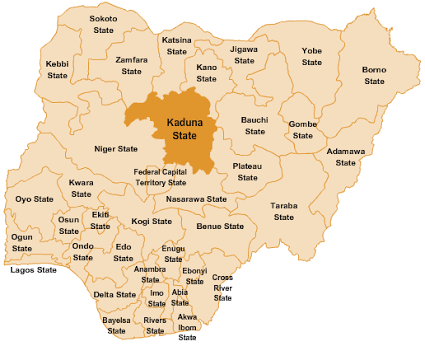
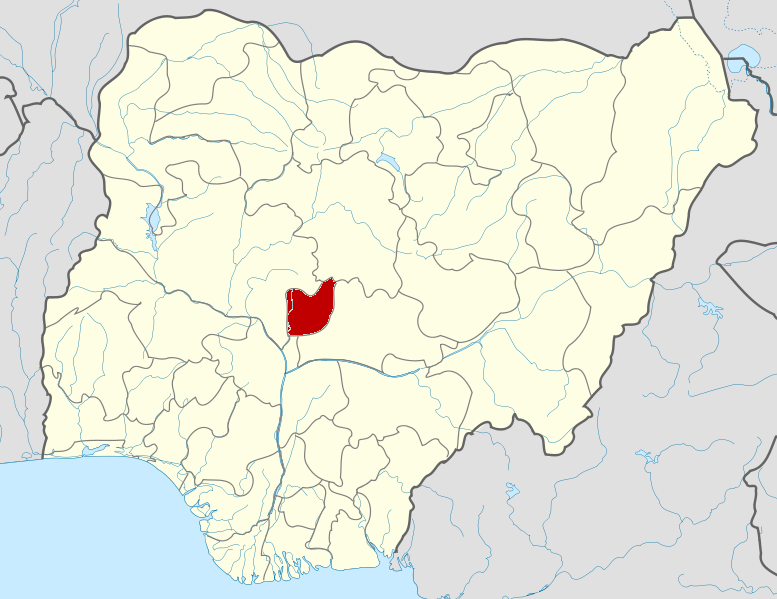
Stakeholders in Kaduna State have attributed the protracted crisis in the state to failure of governance, injustice and growing culture of hate among the people.
The News Agency of Nigeria (NAN) reports that more than 70 people were killed in recent violence in the state, a situation that has become a recurring decimal in the last 39 years in the state.
The stakeholders said in separate interviews with NAN that failure to punish perpetrators of violence in the last four decades has emboldened others to continuously resort to violence at the slightest misunderstanding.
They also identified rumour mongering, unemployment and unhealthy political rivalry among other causes of conflict in the state.
Sheik Jamilu Albani, Special Assistant to Gov. Nasiru El-Rufa’i on Religious Matters said: “The major cause of incessant crisis in Kaduna state is that no perpetrator has ever been brought to book in the last 39 years, hence the recurrence of the crisis.
“There is no single person that is brought to book. Some of these perpetrators were arrested and arraigned before a court of law and were found guilty and subsequently convicted, but later released by government, and some of them were even rewarded with traditional titles.
“Government must rise up to its responsibilities by dealing with anybody, group or groups found guilty in accordance with law irrespective of his or her position in the society and regardless of his religion or political affiliation.
“This action will serve as a deterrent to others who have similar intention.
“Let there be justice to all, whosoever deserves to die should die, whosoever deserves to be jailed for life should serve, who deserves years imprisonment should also be treated as such.
“Also, if a leader is found guilty, let government remove him or her from that position and ensure that he or she is punished according to the law no matter how highly placed. If this is not done, we are going nowhere.”
Also, Rev. Isaac Gbadero, the Pastor of First Baptist Church, Sabongari, Zaria, said religious intolerance, inequality in treating issues of religion especially by political leaders and lack of truth by religious leaders were factors fueling the crisis.
“We, religious leaders, don’t preach the truth to our followers, when we go for meetings before Governors or before other big people, we say peace-peace but we don’t tell each other the truth.
“What we say in the meetings is not what we do out there and some of us don’t choose our words during preaching, we instigate one religion against another.
“Even among the sects, some of us instigate one sect against the other and in that kind of atmosphere, there will never be harmony even within the same religion talk-less of interrelations harmony,” he said.
Gbadero said political leaders must also stop taking side during crisis.
“The moment you are elected as President, Governor, Senator, member House of Representatives or State Assembly, you are supposed to be for all people not only your sect or religion.”
He added that people must learn to respect the tradition and beliefs of one another.
“When you don’t respect my tradition, you should not expect me to respect yours too, tradition to some people is more or less like a religion, hence the need to respect it.
“Another thing is, there should be equal distribution of wealth to all citizens. When we say something is a national wealth or a state wealth, it should be distributed equally. ‘’
Gbadero also observed that the inequality also manifest in employment, where children from poor families are left to rot no matter their level of qualifications.
“Today, we say we celebrate Gamji, Sir Ahmadu Bello, the Sardauna of Sokoto and the rest of them, what does Gamji represents? He represents truth, justice, unity, love and concern for one another. Do our leaders today follow their footsteps?
“Our political and religious leaders today are they doing what Sir Ahmadu Bello did then? Are they portraying the justice, truthfulness, unity and love today, remember, the citizens of toady are wiser than that of yesterday.
“If as leaders, we will be just in what we do, it will go a long way in addressing some of our predicaments,” he said.
Malam Muhammad Sani-Is’haq, National Chairman, Hybrid for Positive Change, an amalgamation of different NGOs in Zaria, identified unemployment as a key factor responsible for the incessant crisis.
He said the best way to carry away the minds of youths from violence is to engage them in useful ventures.
“When the youths are properly engaged they will have no time to partake in violence and they will have no time to be carried away by evil minded persons.”
A historian, Dr Zwaghu Bonat, said marginalisation on the basis of religion and tribe also encouraged restiveness and violence in the state.
According to him, the failure of successive governments to deliver justice to victims and treat people fairly has entrenched a seed of discord among the people.
“Continuing injustices and the inability of the government to protect lives and property is a clear indication of leadership failure.
“This is what gave room for some misguided elements in the society to take law into their hands in search of justice or to primarily cause harm and injury to other persons,” he said.
Also, Dr Philip Hayab, a lecturer with Kaduna State College of Education, Gidan Waya, said that the problem of indigene/settler dichotomy in parts of the state must be properly addressed by government, to reduce the recurring crisis.
On his part, Zubairu Galadima-Soba, Director, National Orientation Agency (NOA) in the state, attributed the clashes to “clash of interest’’ of the different segments of people in the state.
Galadima-Soba emphasised the need for people to respect each others’ rights while fighting to protect their own rights and urged aggrieved persons against taking laws into their hands.
Mr Pius Gambo, a Sociologist with Kaduna State University said that the exploitation of religious and ethnic sentiments by political, community and religious leaders has “made Kaduna communities susceptible to violence.
“What is needed is mutual respects for one’s religion, values and culture.”
Rev. Enoch Bitiyong, the Secretary, Evangelical Church of West Africa (ECWA), Kaduna South, noted that hate speech by politicians, religious and traditional leaders have equally compounded the problem.
He said that politicians and religious leaders must shift their efforts to uniting the people rather than dividing them.
Dr Auwal Aliyu, Chairman, Civil Society Organisations Forum, stressed that deep social segregation had affected human relations in the state and increased likelihood of crises.
According to him, government must focus on interventions that promote social integration and value reorientation that inculcate respect for human lives and dignity.
On his part, Sheikh Kaseem, a member of Consultative Forum for Religious Harmony in the state, blamed the situation on abandonment of God, as people no longer adhere to the teachings of their religions.
Kaseem added that “modernity’’ has derailed age long culture of respect, compassion, and love, and has changed human behaviours such that people no longer value human lives.
He called on relevant stakeholders including traditional and religious leaders to wake up to their responsibilities on value reorientation to promote respect for human lives.
Mr Eric John, Administrative Officer of Generations For Peace, said that rather than promoting respect, the government was erroneously promoting tolerance.
According to him, people are merely tolerating one another, thereby making sustainable peace very fragile in the state because it has not addressed the anger in the minds of the people.
John described successive governments’ response to conflicts in the state as “simply surface dressing without addressing the root causes, which are largely driven by feelings of injustice and failure of governance.
“We are only managing fragile peace in Kaduna state, therefore, any little disagreement or misunderstanding leads to violent clashes at the slightest provocation.”
Malam Yusuf Arrigassiyu, Executive Director, Muslim League for Accountability, also blamed the situation on failure of government to enforce laws, thereby allowing people to resort to self-help.
Arrigassiyu noted that people arrested and convicted for igniting violence in the state were often set free by government while recommendations by various Commissions of Inquiry on past crisis were never implemented.
“When people believe that they can take lives anytime they want, and no one can do anything about it, what do you think will happen?
“Until Government shows its strength of authority, conflict will continue in Kaduna state,” Arrigassiyu said.
Rev. Sunday Ibrahim, Secretary of the state chapter of Christian Association of Nigeria (CAN), accused successive governments of partiality in handling “even security issues.’’
“The government is partial, even in handling security issues. Under such condition, people will continue to fight to protect their rights.
“What belong to people should be given to them and justice should prevail when any one felt unfairly treated,” Ibrahim said.
Mr Christopher John, a cleric, also said that government must be fair to all and ensure that victims of various attacks and injustices get justice to enhance public confidence in governance.
On his part, Mr Chris Nnoli, President General, Igbo Community Welfare Association, Kaduna State Branch, identified unemployment, poverty, illiteracy and rumour mongering among issues contributing to the crisis.
Sharing similar sentiment, Most Rev. Mathew Ndagosa, the Catholic Archbishop of Kaduna, particularly said that rumour mongering causes more deaths than guns in the state.
Dr Khalid Aliyu, Secretary General, Jama’atu Nasril Islam, said government and security agencies must track sponsors of the violence and bring them to justice.
According to him, the failure of government to be decisive in handling security breaches has allowed the crisis to continue.
Aliyu also blamed some religious leaders of stocking the embers of conflicts through their preaching.
“So called people of God instead of preaching peace are busy spreading hate to their followers and the government just keep quite allowing them to continue inciting people to violence.”
The JNI scribe also said that community leaders have failed in their responsibility of ensuring peace and brotherliness among people in their domain, as they also take side, thereby, perpetuating injustice and hate.
Dr Isa Sa’idu of Political Science Department, Federal College of Education, Zaria, also attributed the recurrence of the crisis to injustice by local leaders.
“Most times, these leaders aggravate the crisis, for example, when a Hausa man and a Kataf man get misunderstanding, instead of the leaders to put sentiment aside and deal with the situation, they will be one-sided.
“The leaders instigate their kinsmen to take revenge and this has been growing to the extent that a Kataf man looks at Hausa man as his enemy and a Hausa man looks at Kataf man as his enemy.
“This had not been happening before. In those days, you will find out that your best friend in school might not necessarily be from the same faith with you.’’
According to him, the situation has instilled a permanent culture of hate against people of different faith and tribe in the state.
Sa’idu advised government to provide job opportunities to the youths to enable them become self reliant, and for both government and community leaders to be just in addressing all problems irrespective of who is involved.
He also advised the youths to plant seed of love among themselves by embracing, tolerating and accommodating one another to give way for peace across the state.
“As youths, they should understand that they are the future leaders, therefore they must do everything possible to promote peace for a better tomorrow.
“They should understand that they don’t have anywhere to live as they want other than their own country, Nigeria, they have nowhere to live other than their own state, Kaduna.
“Wherever they go as refugees, they will have no freedom to live as they want, therefore, they should endeavour to live in peace with one another to make Kaduna great.”
Meanwhile, Mr Nuhu Shadalafiya, Deputy Speaker, Kaduna State House of Assembly, said that the state government has taken necessary measure to address the issues, including the establishment of a peace commission.
Shadalafiya added that the state government, with support from federal government, has established new security posts in strategic locations across the state to respond to security breaches more effectively.
“Steps are equally being taken to implement some of the recommendations of past commissions of inquiries to ensure lasting peace in the state,” he said.
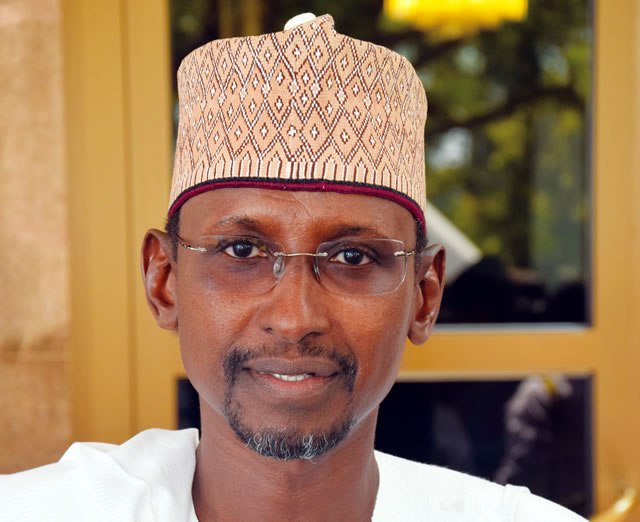
Minister of the Federal Capital Territory, FCT, Muhammad Musa Bello, has appealed to the Nigerian Electricity Regulatory Commission, NERC for an improvement in the supply of electricity to the Federal Capital City.
Malam Bello who made the plea when he received the NERC Chairman, Professor James Momoh during a courtesy visit to his office, said electricity supply is a major challenge in FCT because of the many roads and streets requiring streets lights and the poor allocation of power from the suppliers.
He suggested that one way out of this challenge could be the dedication of mini grids to power strategic roads and facilities, adding that it is critical that FCT has first class power supply system.
The Minister noted that there has been significant progress in power generation and supply, nationwide, since the onset of the President Muhammadu Buhari administration.
“No doubt about it, there is substantial improvement in power, which is a reflection of government policy, government direction and the drive in of the Discos, Gencos, Transcos and you the regulator”.
According to Bello, FCT records over 9 percent population growth rate annually and there is need to match infrastructure development with growth, regretting that funding is a challenge.
The FCT Minister recalled that before the unbundling and subsequent privatization of power industry, FCT had made substantial investment in power infrastructure. This, he noted, necessitated discussions on how investments done in the past could be refunded.
Bello explained that states that gave asset to Discos are also customers and should be on the board of NERC so that they are part of decision making.
He also said Discos are not doing much in terms of backroom support and maintenance and protection of these assets.
“There is need for Discos to invest in maintenance and fault resolutions. In the past in every neighbourhood there was a small fault office and there was always a pickup van with a ladder at the back such that even if it is 12 midnight and there is a fault, you will always get somebody to look at it. Now the case is different”, he said.
He consented to the request by Prof Momoh and the diaspora scientists to partner with FCTA to build a research institute, and offered to make space available for that purpose inside the Abuja University of Technology, Abaji.
Earlier, the Chairman had listed challenges faced by NERC in discharging its mandate, which include customers not enjoying reliable service with nearly 50 per cent not having metres and the prevalent estimated billing system,.
Prof. Momoh said the commission would not relent in its efforts to ensure that every home is supplied with affordable, accessible and reliable power.
“There are challenges in doing this. We know that. Also a sizeable part of the country’s population is not connected. As you go from Abuja to the villages you find a lot of people in total darkness. They are not connected to the grid. However the grid is passing by and nobody is connected.
People are living in darkness when they have energised network passing through the villages. Customers are billed wrongly. Licensees are complaining too. ‘I produced for 10 naira and I am being asked to collect two naira’. There is also inadequate revenue to efficiently operate and run the power sector, poor governance in terms of ownership”, he said.
Peoples Democratic Party (PDP) gubernatorialcandidate in Kaduna State, Isah Ashiru, Tuesday cut short his visit to the United Arab Emirate (UAE)to pay condolence to Adara Trational Council over the abduction and murder of the late Agom Adara, Dr. Maiwada Raphael Maiwada.
A statement by media aide to the gubernatorial candidate, Luka Biniyat, said, the late traditional ruler was kidnapped about 35km to Kachia, Headquarters of Adara Chiefdom, while his police orderly and three traditional guards were shot death.
His wife, who was also kidnapped with him was later freed two days after. An undisclosed sum was paid as ransom for his release, but his corpse was later found near Kateri, along Abuja-Kaduna Highway four days later.
An emotional Ashiru, spoke tersely after being received by the traditional council, led by Wazirin Adara, Bawa Magaji Kufana.
Ashiru who thanked the council for its warmth even in grief said: “I had some very useful discussion with him a day after I won the primary election. He gave very wise advice. He however said that he was looking forward to travelling out to take care of his health. He was a great leader. May he find a place in Paradise.”
Kaduna State Chairman of the PDP, Mr. Felix Hassan who also addressed the Traditional Council said: “The tragedy that has befallen the Adara nation is tragedy that has affected us all. This is far way beyond politics and we must collectively fine a solution to this.
“The PDP family in Kaduna State is here to mourn with the Adara nation because this chiefdom and even this palace that we are today seated in, is a creation of the PDP.
“But we mourn him not as a party member, but as a great man who thought us how to lead people; how to be loyal to our leaders and make peace the cornerstone of our relation with everyone.
“Let the death of our king give rise to sustainable unity of all the people on our lands so that we can form a united front to tackle this evil. May God provide for his widow and all his dependants,” he said.
The Wazirin Adara, Bawa Magaji Kufana said, “we are still mourning our late leader. But we have to follow tradition. Your coming coincided with our Traditional Council Meeting today. After today’s meeting, we shall come up with the date for his burial rites. But we shall not announce it yet. We shall first pass it to Kaduna State government and also to the Church. When a common date is agreed upon, we shall then announce it to the public.
“In conclusion I thank our visitors for their kind gesture and wished them safe journey back,” he said.
Shortly after, Ashiru and his team arrived the palace home of the late Agom where he condoled his widow, Mrs. Victoria Maiwada the children, relations and well-wishers.
He said: “I have come here as one who feels the death of your husband as a personal tragedy for me. I am also deeply mourning him. My prayers is that God will give you the strength to overcome this shocking loss and to give you the means to take care of the children. You can however count on me any time,” he assured her.
On her part, she said: “I have gone through a lot of trauma. I believe that he was killed so that no other person will go through the ordeals he went through. May his death be the last of its kind on our soil. Let it not be that he died for nothing. She thank Ashiru for coming and wished him and his entourage safe journey home.
Fielding questions after the visit, Ashiru said, “you can see that the security situation in Kaduna state has become a desperate issue. It is no longer a matter of ordinary people like you and I. Even those who are very refereed are not spared. Security should be given priory attention, followed by sustainable peace. In the absence of the two no progress can me made in our state,” he said.
On the entourage of Ashiru were his running mate, Hon. Sunday Marshall Katung, (Reps, Zangon Kataf/Jaba Federal constituency); former Group Managing Director (GMD) of the Nigeria National Petroleum Corporation (NNPC), Andrew Yakubu and former Chairman Kaduna State chapter of the PDP, Yaro Makama.
Minister, Federal Capital Territory, FCT Muhammad Musa Bello has lauded the UN and its agencies for their human development efforts in the Territory in particular and Nigeria in general.
Bello acknowledged the positive contributions of the United Nations Development Programme, UNDP through the UN Sustainable Development Goals, SDGs towards improving the living standards of the people.
“SDG programme has provided another window of opportunity to work on overcoming the challenges that were encountered during implementation of the MDGs.” he said.
Bello, was speaking during a meeting with the UNDP Country Director, Mr. Samuel Bwalya and the Senior Special Assistant, SSA to the President on SDGs, Princess Adejoke Orelope-Adefulire .
The Minister disclosed that FCTA was always prepared to work with these organisations and stakeholders to ensure that critical development projects that will improve the living conditions of FCT residents are actualised.
The Minister said efforts are ongoing to realize the very critical water project in Abaji Area Council in the FCT, that will provide clean and affordable water to the rural populace, in addition to other projects that were commenced during the Millennium Development Goals, MDGs period but were not completed.
He said serious attention is also being given to the SDG Goal 11 that is aimed at evolving a livable city, adding that resource persons have been engaged as follow-up to the Urban Thinkers Campus round table that was held recently in the FCT.
He called for passionate commitment across board to ensure continuity and sustainability of ongoing SDG projects in the FCT and other parts of the country.
Earlier in his remarks, the UNDP Country Director, Sameul Bwalya, emphasised the importance of ensuring that the SDG programme succeeds in the FCT considering the ripple effect it will have in other parts of the country.
He called for quick planning in order to have a roadmap that will achieve results.
Bwalya also called for more interaction with stakeholders to reinforce the efforts that are aimed at realising the SDGs in the FCT even as he pledged to work with the FCT Administration and office of the SSA on SDG to address the gaps in the FCT.
The UNDP Country Director stated that the agency was working very hard to get the private sector involved, especially in the areas of healthcare and education.
Senior Special Assistant on SDGs, Princess Orelope-Adefulire said the program is aimed at bringing development to the people that are challenged, especially those in remote parts of the country, to make life meaningful to them and ensure that they are not left behind.
The SSAP revealed that her office has made some interventions in the health sector in FCT, by providing critical hospital facilities like furniture and ambulance services for the National Hospital to safeguard the life of the new born and reduce infant mortality.
She disclosed that the agenda for its upcoming workshop is to sensitise the management team of FCT local authorities, religious bodies, educational institutions, the private sector and other stakeholders on how they could contribute to the achievement of SDGs, as well as the benefits therein.
She added that her office has developed a framework that will ensure that all the out of school children are brought back to school with more investment in the education sector.
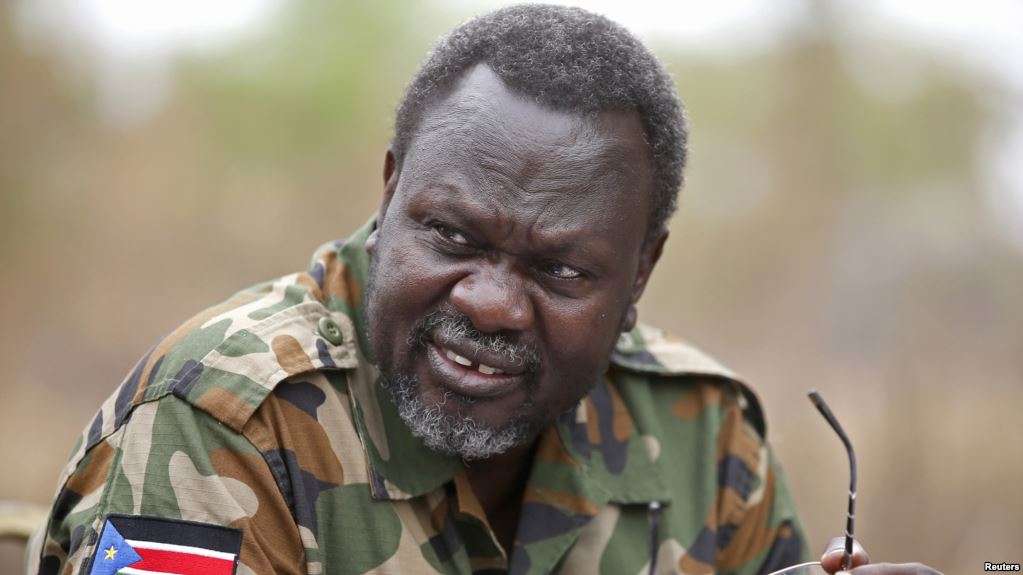
South Sudan rebel leader Riek Machar returned to the capital Juba on Wednesday, according to a Reuters witness, more than two years after he fled the country after the collapse of a 2016 peace deal.
Machar, the former vice president, fled to neighbouring Democratic Republic of Congo in 2016 after fierce fighting broke out in Juba, killing hundreds of people.
He later traveled to South Africa, where he was held under house arrest until earlier this year.
In September he and President Salva Kiir signed a new peace deal in the latest attempt to end the five-year war.
NAN reports that authorities on Tuesday beefed up security in Juba and its environs to ensure a crime-free environment during peace deal celebrations to be attended by regional leaders.
Lul Koang, the government army spokesman, said that the deployment of the joint security forces is to provide maximum protection to all residents, including the invited foreign dignitaries, regional Heads of States and government.
“All the military arrangements have been completed for the day as instructed by the leadership.
“A joint security has been set up and deployed in several areas of the town, including Juba airport, hotels and markets to provide safety,” Koang said.
He said the joint security patrols will also be enhanced around the capital to ensure a crime-free environment and urged members of the residents not to panic during the peace pact celebrations.
“The security is tightened. Every place in this country is secured.
“The South Sudan People’s Defense Forces will be deployed to supervise overall security in Juba and across the nation,” Koang said.
President Kiir, his former deputy and turned-foe Machar, and several other opposition groups signed a power-sharing deal in September in Ethiopia to end hostilities that claimed thousands of lives while creating one of the world’s biggest refugee crises.
NAN reports that South Sudan plunged into warfare two years after independence from Sudan in 2011 when a political dispute between Kiir and then vice-president Riek Machar erupted into armed confrontation.
A previous peace deal signed in 2015 fell apart a year later after clashes broke out between government forces and rebels.
Machar, leader of the main rebel group the SPLM-IO, and other insurgent factions signed the new agreement with the Juba government after assurances that a power-sharing accord would be honored.
The deal, mediated by Sudan, reinstates Machar to his former role as vice-president.
The stability of South Sudan is also important for Sudan and other neighboring countries, who fear a new flare up of the conflict could flood them with refugees.
The civil war started in 2013, fueled by personal and ethnic rivalries.
The conflict has killed at least 50,000 people, many of them civilians, according to the UN.
An estimated quarter of South Sudan’s population of 12 million has been displaced and its economy, which heavily relies on crude oil production, ruined.
The secession of South Sudan also hit Khartoum’s economy hard, taking with it most of the region’s oil reserves.
Khartoum and Juba agreed in June to repair oil infrastructure facilities destroyed by the war within three months to boost production and said a joint force would be established to protect oilfields from attacks by rebels.
The U.S., Britain and Norway, known as the Troika which back peace efforts, welcomed the signing of the deal.
“We hope discussions will remain open to those who are not yet convinced of the sustainability of this agreement,” they said in a statement.
“We must seize this broader regional momentum to secure peace for the people of South Sudan.”
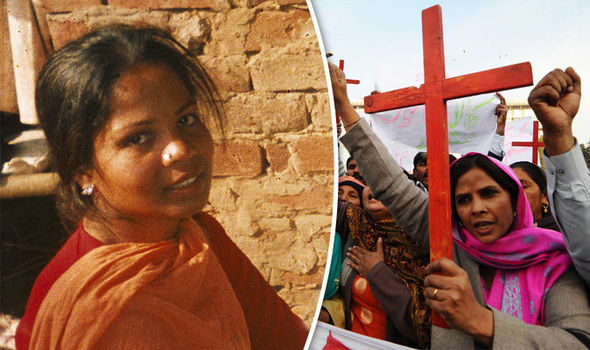
Asia Bibi, a mother of four, has been living on death row since 2010
Asia Bibi, a mother of four, has been living on death row since 2010
Pakistan’s Supreme Court on Wednesday overturned the conviction of a Christian woman sentenced to death for blasphemy against Islam and ordered her freed, a ruling that set off protests by hardline Islamists but was welcomed by human rights advocates.
Asia Bibi, a mother of four, has been living on death row since 2010 when she became the first woman to be sentenced to death by hanging under Pakistan’s draconian blasphemy laws.
She was condemned for allegedly making derogatory remarks about Islam after neighbours objected to her drinking water from their glass because she was not Muslim.
Bibi has always denied blaspheming.
Bibi’s case has outraged Christians worldwide and been a source of division within Pakistan, where two politicians who sought to help Bibi were assassinated.
Supporters of Islamist political party Tehreek-e-Labaik (TLP), which was founded to support Pakistan’s harsh blasphemy laws, immediately condemned the ruling and blocked roads in Karachi, the country’s largest city, and in the city of Lahore.
The TLP threatened to paralyses cities if Bibi’s conviction was overturned.
Chief Justice Saqib Nasir, who headed a special three-person bench set up for the appeal, cited the Koran in his ruling, writing “Tolerance is the basic principle of Islam” and noting the religion condemns injustice and oppression.
“It is great news for Pakistan and rest of the world,” Bibi’s lawyer Saiful Mulook told Reuters.
“Asia Bibi has finally been served justice. … Pakistan’s Supreme Court must be appreciated that it upheld the law of the land and didn’t succumb to any pressure.”
Bibi’s case has been high on the agenda of religious hardliners in Pakistan, many of whom are fiercely opposed to her release.
In November, TLP staged a crippling blockade of the capital, Islamabad, after small changes to a religious oath, which it claims was tantamount to blasphemy.
Seven people were killed and more than 200 wounded in clashes with the police and TLP’s supporters only dispersed after striking a deal with the military.
Insulting Islam’s prophet is punishable by death under Pakistani law, and blasphemy accusations stir such emotions that they are almost impossible to defend against.
Dozens have been killed following blasphemy claims, sometimes by mobs of men.
Rights groups say the blasphemy law is exploited by religious extremists as well as ordinary Pakistanis to settle personal scores.
The law does not clearly define blasphemy and evidence might not be reproduced in court for fear of committing a fresh offence.
Bibi’s representatives have claimed she was involved in a dispute with her neighbors and that her accusers had contradicted themselves.
In February, Bibi’s husband Ashiq Masih and one of her daughters met with Pope Francis shortly before Rome’s ancient Colosseum was lit in red one evening in solidarity with persecuted Christians, and Bibi in particular.
Pope Francis told Bibi’s daughter: “I think often of your mother and I pray for her”.
Christians make up only about two per cent of Pakistan’s population and are sometimes discriminated against.
“This is a landmark verdict. For the past eight years, Asia Bibi’s life languished in limbo,” said Omar Waraich, deputy South Asia director for Amnesty International.
“The message must go out that the blasphemy laws will no longer be used to persecute the country’s most vulnerable minorities.”