Labour leaders in Nigeria, who have called off a planned nationwide strike, have agreed a new national minimum wage at the end of negotiations with a Tripartite Committee, set up by the Federal government.
The agreed figure will be kept under wraps until 4.15 pm on Tuesday, when it will be revealed in a report to be presented to President Muhammadu Buhari.
President of the Nigeria Labour Congress (NLC), Ayuba Wabba, spoke to newsmen at the end of the Tripartite Committee meeting on the new National Minimum wage meeting on Tuesday in Abuja.
He said the National Minimum Wage Negotiating committee has concluded its assignment and agreement has been reached and also documents have been signed.
“The report will be submitted to Mr President by today and therefore, having reached this position, the Organised Labour also decided that the proposed strike is hereby suspended.
” Therefore, we thought this should be communicated appropriately without also divulging this information as mutual agreement has been reached,” he said.
Ms Amma People, Chairman of the Tripartite Committee also noted that the assignment of the committee has been concluded.
“We are going to present our report to Mr President today at 4:15 ,pm and he will reveal the figure that we have recommended, ” she said.
Mr Boss Mustapha, Secretary of the Government of the Federation commended members of the committee for their time and commitment on the processes of recommending the new minimum wage.
“I am confident that government will give expeditious consideration of the report when submitted tomorrow to Mr President. And very soon the processes will be put in place to truly actualise your recommendations so that the status of our working populace will be enhanced and they would receive appropriate and commensurate payments for the services they offer to our nation and to the different sectors of our economy, ” he said.
The News Agency of Nigeria (NAN) reports that the organised Labour had threatened to commence nationwide strike on Nov. 6 over government rejection of a N30,000 minimum wage. Government offered N24,000, which labour also rejected.
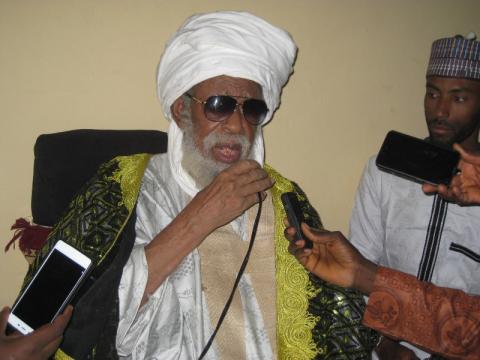
A renowned Islamic Cleric, Sheik Dahiru Usman Bauchi has urged Muslims to pray for peace and harmony in Nigeria.
Sheik Dahiru Bauchi made the call during the 3rd National Annual Maulud and 290th Anniversary of Sheik Ahmed Tijjani (RTA) in Gombe , North-east of the country.
“We should return back to Allah SWT and thanked him for his mercy”, he said.
Sheik Dahiru Bauchi thanked the Gombe State Governor, Ibrahim Dankwambo and the people of the state for their support to the sect activities in the state.
Also speaking ,Sheik Mahi Aliyu Sise commended members of the sect who converged at the stadium to grace the Maulud celebration.
He emphasised the need for Muslims to fear Allah in their activities
Governor Ibrahim Dankwambo pledged to support activities of the Tijjania Darika Sect in which ever position he found him self even after the expiration of his tenure as the state governor.
Governor Dankwambo thanked Sheik Dahiru Usman Bauchi for the 3 – day prayers for the state.
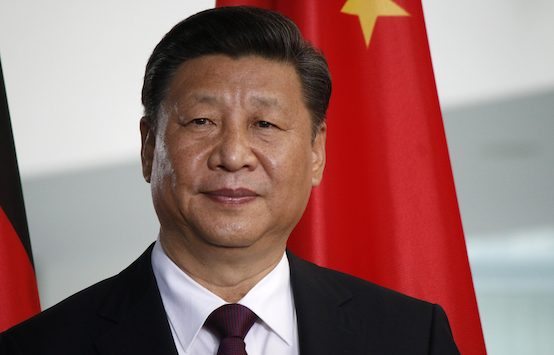
China on Monday expressed regret over the U.S.’ decision to re-impose sanctions on Iran, a Foreign Ministry spokesperson said.
According to reports, the Trump administration announced on Friday that it would re-impose sanctions on Iran that had been lifted under the historic 2015 Iran nuke deal, also known as Joint Comprehensive Plan of Action (JCPOA).
The sanctions, the second batch of its kind, have taken effect on Monday.
“China regrets that the U.S. made this decision, and society at large has shown widespread opposition to unilateral sanctions and long-arm jurisdiction Spokesperson Hua Chunying told a news briefing.
“The JCPOA is a multilateral agreement that is approved by the United Nations Security Council, which should be fully and effectively implemented.
“The JCPOA is helpful in safeguarding the international nuclear non-proliferation regime and the peace and stability of the Middle East,’’ Hua said.
She said that although the situation had changed a lot in the past six months, relevant parties of the JCPOA were still devoted to keeping the agreement and maintaining normal trade and economic cooperation with Iran.
Meanwhile, it was widely supported by the global society.
“The International Atomic Energy Agency (IAEA) had confirmed in 12 consecutive reports that Iran is abiding by its commitments under the agreement.
China hoped that all parties concerned could fulfill their responsibilities and obligations from an overall and long-term perspective,’’ she said, adding China commended Iran’s efforts.
China will continue to uphold a fair, objective and responsible attitude and continue to make unremitting efforts to maintain the agreement, while also firmly safeguard its legitimate rights and interests.
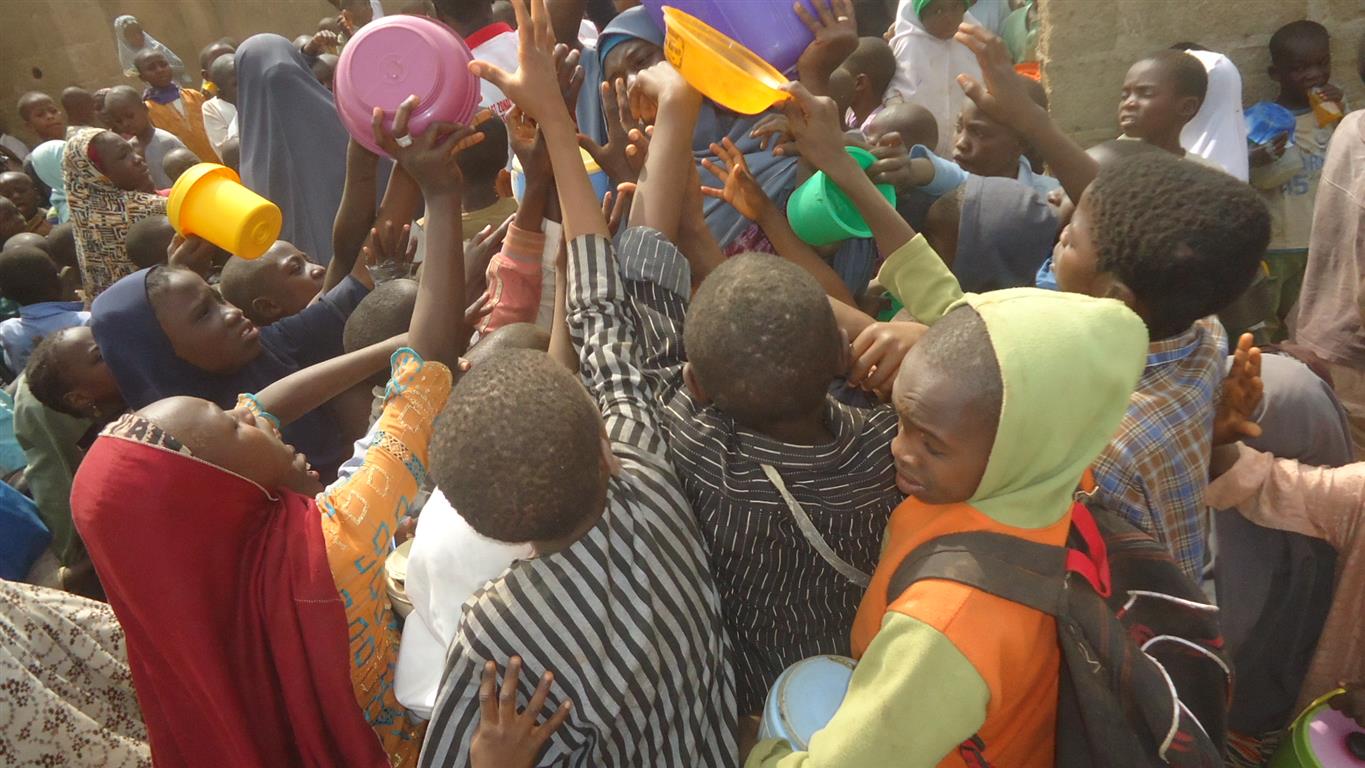
Rigasa primary school pupils in Kaduna state, collecting food under govt's school feeding programme
Rigasa primary school pupils in Kaduna state, collecting food under govt’s school feeding programme
Special Adviser to Nigerian president on National Social Welfare Programme, Maryam Uwais, on Monday says Federal Government feeds pupils with 6 million eggs and 594 cows weekly under its Home Grown School Feeding Programme.
Uwais disclosed this in Abuja, when she received a delegation from the Democratic Republic of Congo (DRC) on a study tour of Nigeria to learn from the social intervention programmes in the country.
She noted that 9 million children are currently being fed under the programme in 26 states as a way of encouraging schools enrolment.
She noted further that the programme had created a value chain in the agricultural sector and had also led to the employment of Nigerians thereby creating market for agriculture.
“Presently, each child eats at least an egg in a day, adding up to 6.8million eggs being consumed weekly by children under the programme in just 26 states.
“So, the poultry farmers are now doing so much to provide eggs for the schools because every meal is a balanced diet and every child must have at least one egg.
“We need to slaughter 594 cows every week for the pupils and 83 metric tonnes of fish is consumed weekly in just 26 states and more states are coming on board.
“Farmers are growing and requesting for rice meals now because they are saying I was growing 20 bags but because of the programme, I now provide more so I need a rice meal.’’
Uwais said that farmers were now calling on the government to support them to engage in mechanised farming. She added that the programme was helping the agricultural sector, by providing markets while women were also being employed as cooks and they in turn employ others.
“The cooks are employing people to wash and serve in class rooms ,so imagine a child being fed and the cook is the mother while the father is a farmer that provides the food stuff, ” she said.
Mrs Adesanmi Abimbola, Programme Manager; National Home Grown School Feeding Programme said 95,000 cooks had been employed so far.
Abimbola said mechanism had been put in place for the maintenance of quality standard, adding that the cooks were all trained on hygiene.
She said the programme was developing agriculture while nourishing the young minds and keeping them in school. She said that the programme had been running for three years now, adding that efforts had been put in pace for its sustainability even at the end of the administration.
Mr John Mugabushaka, Chief of Staff, Ministry of Social Affairs, DRC and head of the delegation said they were sent by the DRC government on an experience sharing tour.
“We have been sent by our Ministry of Social Affairs through the DRC government with the purpose of learning how Nigeria runs its social programme,’’ he said.
Mugabushaka explained that the purpose of the visit was to learn from the way Nigeria runs its social programme with a view to domesticating it in the DRC, adding that so far, they have learnt a lot.
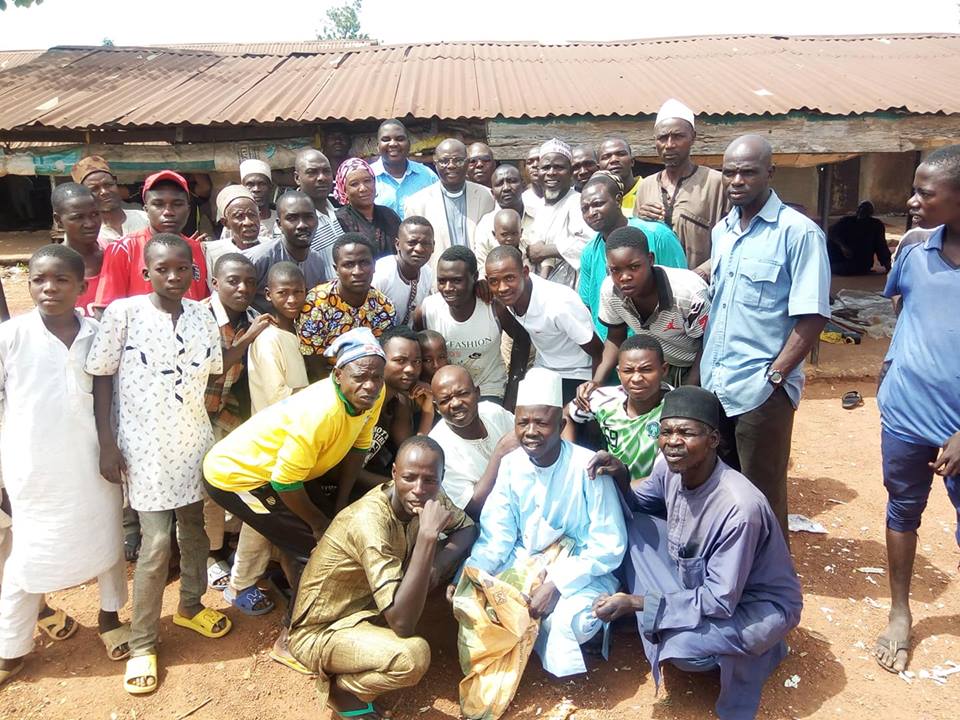
A team of Imams and Pastors has visited Maraban Kajuru community in southern part of Kaduna state, North West Nigeria as part of steps towards promoting peaceful co- existence among the residents irrespective of their religious and tribal differences.
Leader of the team, Pastor Yohana Buru told newsmen that the team comprising Islamic and Christian scholars was in the area to sensitise the people on the need to embrace Peace, while the youth should shun violence,
Buru explained that the peace campaign was targeted at Adara/Gbagyi/Hausa and Fulani communities following the recent crisis resulting in the loss of lives and destruction of property.
He spoke on the importance of forgiveness among members of the community and also tasked youth in the area to be law abiding .
“We came as a team of Muslim and Christian clerics to spread the message of peace and unity to all residents in the area including woman and children on the importance of peace,,”
Buru pointed out that Both Qur’an and Bible preach peace and unity, adding that both Islam and Christianity teach their followers how to live in peace with neighbours in order to have sustainable peace
“Remember we all are from one family Adam and Eve, we believe in one God,we all believe in Holy bible and Qur’an,, we are brothers and sisters, so therefore we must learn how to live in peace and unity among us”
“Our Holy scriptures guide us on how to accommodate each one,and be our neighbours best friends”
We must be united, so as to shun the evil that are generating crisis from one place to another”
He called on youth to shun all forms of ethno-religious, communal & political violence that have contributed in bringing the region backward for many years.
Pastor Buru appealed to residents in the area to embrace peace and unity while calling on religious and community leaders to redouble their efforts in praying for peace and unity of the country.
Buru noted that southern part of kaduna State, in the past years has experienced many crisis which have affected the region in many ways,
He then called on every stake holder in the region to support both the state and federal governments in promoting peace and tolerance
Responding, John Peter a resident in the area, thanked the team for visiting the community,
He called on NGOs/CSOs and other stake holders to be organising workshops on peace building for both youth and other residents in communities to promote better understanding
Members of the team pledged their Commitment to promoting peace and unity among Nigerians.
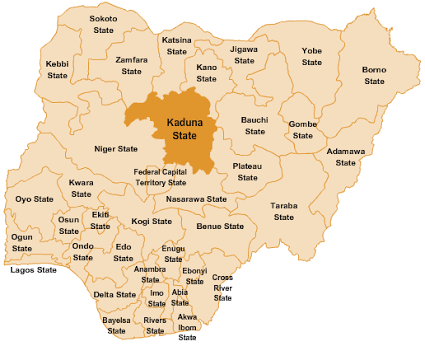
Women of Kurmin Ajah, a community of 3,000 people in Kachia local government area of Kaduna state said pregnant women in the area are dying due to absence of health centre and access road.
The women told the News Agency of Nigeria (NAN) on Friday that the nearest health facility is located 50 kilometres away from the village.
They said the situation is worse during rainy season as the only bridge linking the community to the rest of the world has been washed away.
Esther Mathew, a 32-year-old mother of five who lost three pregnancies, said most women now avoid getting pregnant during rainy season to avoid death and other complications requiring urgent medical attention.
“Every year in the community we lose an average of five to six women during pregnancy and delivery due to absence of health centre.
“We do not attend antenatal because of the poor state of the road coupled with the distance .
“Our only option is to seek the services of the readily available traditional birth attendants which are cheap and accessible.
“Sometimes pregnant women in this community experience bleeding, swollen face and legs and prolonged labour, and in some cases, these lead to deaths, and our traditional birth attendants cannot do anything.
“After suffering two stillbirths and three miscarriages, I later through God’s grace gave birth safely to a baby boy, who is now 12 years old,” the woman said.
She added that the women were also constrained to go for antenatal because of financial difficulties as they have to pay for hospital bills and transportation.
Another respondent, Queen Samson said most of expectant mothers could not afford to buy sanitary items necessary for the delivery like towels, disinfectants, soaps, sanitary pads and many more required while delivering in hospital, as such they just remain at home to be attended to by local traditional birth attendants.
The only traditional birth attendant in the community, Theresa Emmanuel said when complications arise during delivery, the women were mostly left they to their fate.
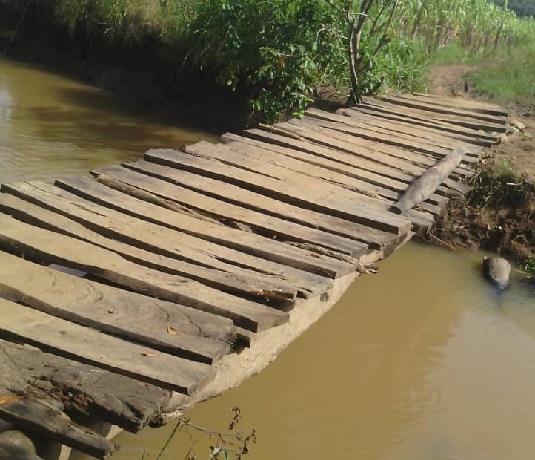
Temporary bridge linking Kurmin Ajah community to the rest of the world
“We do not have even a health post here for women to access health care as I am the only one taking delivery based on experience.
”I have never received training from government but doing the work out of experience gained from my mother.
“During pregnancy or childbirth, I give the women herbs for easy delivery.”
NAN reports that Kurmin Ajah, is a farming community surrounded by water from Gurara Falls.
The closest primary health care facility is in Katari along Kaduna -Abuja road, over 50km to the community, and residents spend up to N1, 500 to get there using motor bikes, donkeys and carts pulled by cows.
Also speaking, the head of the community, Adamu Maiwayo, said the people there require urgent support especially from government.
”This community is surrounded by water from the East, West, North and South and the only place we manage to have road is through the east where we constructed a wooden bridge that we pass through, but during rainy season we are totally cut off from going out.
”We are facing a lot of challenges in this community especially women who go through pains during delivery because of lack of hospital.
”This year alone we lost six women through childbirth, my wife inclusive because the pregnancy came with complications and our traditional birth attendant could not handle the situation.
”When a woman is in labour, the community is affected until she gives birth safely. This is because only the traditional birth attendant helps and when there’s complications and we can’t go to the hospital, we only depend on our faith.
”We encourage our women to go for antenatal but they don’t go due to distance and when they attend once, they don’t go again because you can imagine the pains a pregnant woman go through, and trekking for hours to Katari can also affect her health.
”This community has been abandoned for a long time by government; even the only school we built through community effort, as I am talking to you now, has no teacher to teach our children.
”The students only go there to play during rainy season. We have volunteers who come from another village to teach them but during rainy season they don’t come.
“Inadequate social infrastructure is not just an inconvenience for residents, but has significant long-term consequences, and associated costs, for communities.
”This is one of the major factors that deter women from accessing maternal healthcare services because after such long journey, one may even develop health problems due to stress.
”Even if our women do attempt to get to hospital for treatment, they may arrive too late for their lives to be saved because of poor road and lack of transportation.”
A Gynaecologist, Dr Yusuf Sule said the healthcare system in the country, needs to be particularly thoughtful about how it mitigates peril for pregnant women in remote areas.
“Rural women can perhaps reduce their health risk by moving temporarily to the city before their due dates, but uprooting the women from their families and communities as they prepare to give birth can be risky in a different way,” he noted.
He said in order for rural residents to have sufficient healthcare access, necessary and appropriate services must be available and obtainable in a timely manner.
“Even when an adequate supply of healthcare services exist in the community, there are other factors to consider in terms of healthcare access.
“For instance, to have good healthcare access, a rural resident must also have financial means to pay for services, such as health insurance coverage, the means to reach and use services such as transportation, and the ability to take paid time off work to access such services”
The Kaduna State Commissioner for Health, Dr Paul Dogo said government is refocusing the healthcare system to ensure wider access.
Dogo said that the state primary healthcare development agency had concluded arrangement to recruit 3,059 health workers to meet minimum service delivery gaps in the state.
According to him, the major health policy thrust of the government is the revitalisation of primary health centres to meet minimum standards that would enhance service delivery.
“We have made tremendous progress in the implementation of primary health care under one roof and the designation of one model primary health care centre per political ward.
“We have employed 23 medical personnel who have been deployed to all the LGAs, to equally ensure efficient service delivery to the people.”
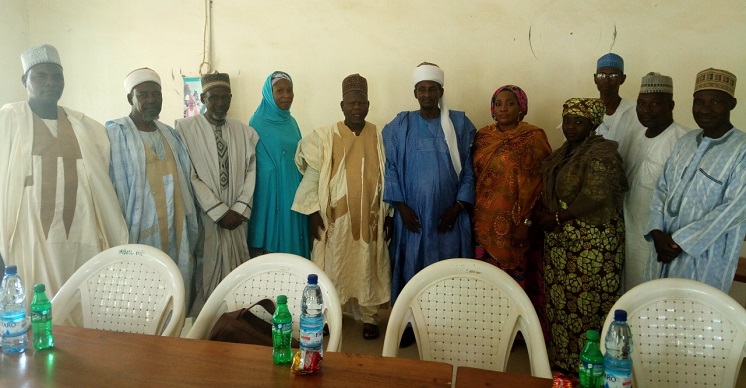
Jama’atu Nasril Islam (JNI), leaders in Gombe State withLong Lasting Insecticidal Net (LLIN) campaign team
Jama’atu Nasril Islam (JNI), leaders in Gombe State withLong Lasting Insecticidal Net (LLIN) campaign team
By Ahmad Umar
Jama’atu Nasril Islam (JNI), in Gombe State north-east of the country has pledged to partner with government agencies and relevant NGOs for the success of malaria elimination program.
The state secretary of the JNI, Saleh Danburam gave the assurance while receiving the Long Lasting Insecticidal Net (LLIN) campaign team comprising the Gombe State Malaria Elimination Programme, National Malaria Elimination Programme and the Catholic Relief Services.
He said Islam is a religion that encourages and ensures the health of the people, thus the JNI supports any government policy that will boost the health status of the nation.
Earlier, the campaign team had said thst they were at the JNI office to solicit support and cooperation in the ongoing distribution of treated mosquito nets to curtail the menace of malaria, adding that over two million (2,000,000) treated mosquito nets were earmarked for free distribution across the state.
A member of the team. Ubayo Ali, Advocacy Communication and Social Mobilization Officer of the Gombe State Malaria Elimination Programme urged the JNI to help in mobilizing and sensitizing the populace to collect and use the nets correctly every night and all year round for a malaria free Gombe state.
In his contribution, the Head of the Murshaid department of the Gombe JNI Justice Usman Baba Liman (rtd) said they would sensitize the people on the importance of the nets and relevant information on the house to house registration and issuance of FREE net cards to beneficiaries as well as the FREE net distribution/collection dates.
Hearing that President George M. Weah submitted to the National Legislature a bill that is aimed at repealing tenure positions within the Executive Branch of government coincided with my final reading of the Pro-poor Agenda for Development and Prosperity (PAPD), the five year National Development Plan of the CDC –led government to promote economic growth, sustainable development, and lift 1 million Liberian out of poverty in the next five years.
Comparing and contrasting the ingredients of Pillar 4 of the PAPD and the President’s bill provides the fertile ground for one to surmise that President Weah has not either read the PAPD to fully grasp the various goals and objectives or does not believe in the various aims and objectives of the development plan. The former can be attributed to his lack of discipline or sophistication to play with complex ideas and draw progressive conclusions while the latter can be ascribed to the President’s lack of national consciousness for social transformation.
Meanwhile, his bill is a clear expression of the fact that the homeland has relapsed into the dastard era of the imperial presidency and represents a
penchant for unchecked powers and personification of authority. It signals a throwback to that prehistory of autocracy in the republic where governance was the preserve monopoly of the president, and a brutal and blatant reversal of the gains that the country has made in governance over the decade in terms of de-concentrating power and promoting the independence of anti-grafts, integrity institutions and increase the confidence of citizens, investors and civil society in the governance process.
Here there are contradictions that unmasked Weah as a crude autocrat who on one hand plays to the gallery as a believer in the concept of democracy along with all its adjuncts by peddling overheated rhetoric and on the other hand we see a Weah who shows his true color by undermining the fundamentals that keep democracy in check in the homeland and put a brake on the monopoly of power. Clearly, our president demonstrates a particular idiocy typical of misleaders in Africa: pretend to be champion of inclusive governance and democracy so as to be in the good books of his handlers in the West in order for the aid money to keep pouring in, whereas use the subservient legislature to enact law that entrench and consolidate your power.
On a wider outlook of the PAPD, in my view, for the purpose of meeting citizens demand for a plan to explain or accompany the government’s “Pro-poor mantra, such plan as the PAPD was hurriedly crafted through the
process of patent copying and pasting of the Unity Party’s Interim Poverty Reduction Strategy (iPRS) (2006 – 2007), Poverty Reduction Strategy (PRS) (2008 – 2011), Agenda for Transformation (AfT) (2012 – 2017), UN’s Sustainable Development Goals (SDGs) and Africa Agenda 2063. This is just a further proof of our assertion that fraud, incompetence, and awful knowledge deficit decimate and pervade the Weah-led government. It thus goes without saying that any expectation of this government delivering social transformation and shared prosperity to the wretched people and broken state is an absolute nonsense. The Presidency of Weah is a further authentication of leadership degeneracy in Africa that the Liberian people must now not only have to live with for the next five years but also get prepare to struggle against its aim of undemocratically consolidating power in order to industrially plunder the resources of the country.
The principle goal of Pillar 4 (Governance and Transparency) of the hurriedly prepared copied and pasted PADP is to build “An inclusive and accountable public sector for shared prosperity and sustainable development.” This document which I am convinced has not been read by the intellectually deflated president acknowledges the establishment and strengthening of integrity institutions such as the Liberia Anti-Corruption Commission (LACC), Internal Audit Agency (IAA), Public Procurement and Concession Commission (PPCC), National Bureau of Concession (NBC), and the Liberia Extractive Initiative for Transparency International (LEITI) which have “serve as ‘checkpoints’ for effective management of government resources and for follow-up actions to deter breaches”. One of
the ways in which these institutions have played such roles is the inclusion in their Acts tenure positions for those who head them. This prevent these institutions to not be undermined by political influence but instead ensure their independence from the interference of the Executive, Legislative and Judiciary Branches of Government. The PADP has as a development outcome from one of the objectives of Pillar 4 that by 2023, integrity institutions would be more autonomous, well-funded and with strengthened staff’s capacity and given more teeth to provide checkpoints for the effective management of government’s resources.
President Weah’s bill seeking the repealing of tenure positions of these integrity institutions not only contradicts his own development plan but also serve as a recipe to scrap the little gains made under the UP-led government and create subservient state institutions that will function at the whims and caprices of a breeding despot in George Manneh Weah. In the PADP, which is geared at giving power to the people, creating economic stability and jobs, sustaining the peace and ensuring good governance and transparency, we read that the plan is aligned with the United Nation’s Sustainable Development Goals (SDGs) and the African Union’s Africa Agenda 2063. On the contrary, President Weah’s bill seeking to repeal the tenure positions of anti-graft commissions and agencies that are supposed to be independent in the execution of their statutory mandates is against the Goal 16 of the SDGs which commits to the “Promotion of peaceful and inclusive society for sustainable development, and building effective and accountable institutions at all levels”. The bill is also against the Agenda
2063 Aspiration 3: “An Africa of good governance, democracy, and respect for human rights, justice and the rule of law.”
Already, in the first year of his Presidency, President Weah initiated the violation of the Acts and undermining of integrity institutions especially the Public Procurement and Concession Commission (PPCC) Act and the Liberia Extractive Industries and Transparency Initiative (LEITI) Act. President Weah submitted to the National Legislature a road contract which was awarded to his Burkinabe friend without national or international competitive bidding as it is required by the Public Procurement Law. The government again awarded the Military Hospital Contract and the Doe Community road Contract to Bittar Construction Company (Lebanese company) through a single source although other construction companies in Liberia including Liberian owned construction companies have the capacity to execute the projects. But because Bittar is constructing the exotic mansions of President Weah and it is alleged that Bittar Construction is listed as one of the assets of the President, the contracts were awarded through single sourcing, thus prohibiting other companies from bidding for those contracts.
J. Gabriel Nyenkan was appointed as the head of Secretariat of LEITI at a time the five year tenure of the erstwhile head of secretariat had not ended. In fact, the Act of LEITI calls for the President to appoint a Multi Stakeholder Group (MSG), drawn from the government, civil society and the extractive industry which will then appoint the head of secretariat of LEITI. On the contrary, the President appointed the head of secretariat and
has up to writing this piece not appointed the MSG. This led to the distortion in the programs of LEITI to an extend Liberia was suspended from the Extractive Industry Transparency Initiative (EITI) for failing to present a report to the International body in time. With these violations of the laws of these integrity or anti-graft institutions, imagine how would it be were the institutions to be scrapped of tenure positions. We will be right; they will be wrong. We will be right that the George Weah’s phenomenon is a poison chalice instead of a political revolution that would transform into social revolution.
With the gullibility of a National Legislature that passed two bogus loan deals (Eton and EBOMAF) without any due diligence, we see no hope in that body to quash the bill of President Weah. That instrument will be passed into law, thus giving the president more power to distort the process of good governance, transparency and accountability (important pillars of democracy) and build a more imperial presidency that has the aim of consolidating power in order to not only gang rape the national treasury as was done with new Liberian bank notes that were printed to replace mutilated notes in the Liberian economy, but also abuse the human rights and dignity of our people at a higher level than the oligarchy of the True Whig Party, the autocracy of Samuel K. Doe, the despotism of Charles Taylor and the economic gangsterism of Ellen Johnson Sirleaf did to the mass of people. These injustices and distortions in the upward socioeconomic mobility of the country perpetrated against the nation-state have never happened without the heroic struggle of the people. Soon and very soon, the people will realize that they are far detached from a political
class they have so much confidence in and they will engage in an intense class struggle to undo it!
Gabriel Moore Doe is a Research Fellow at the Independent Democracy Forum in Liberia. He can be reached via idfmdoe@gmail.com