Home Blog Page 1068

Buhari: Politicising Religious Majorities in Nigeria

0
Leo Igwe
Leo Igwe
Leo Igwe
Leo Igwe


By Leo Igwe


In a piece that was published in The Church Times, President Buhari urged Nigerians not to politicize religion, warning Christians and Muslims against those who would seek to divide them for political reasons. But the question is: did Buhari take a critical look at his form of politicking before making this statement? In this piece, I show some of the ways that Buhari’s appeal contradicted his own politics.


First, let us look at the timing of this piece. The presidential election is less than three months away. And President Buhari’s name will be on the ballot. He is seeking re-election in a contest, which some analysts have said he would lose. The projected defeat is mainly due to the alleged religiously divisive politics that Buhari had played since he became the president. Buhari is very unpopular in the Christian communities where he’s seen as a religious bigot. His handling of the killings and attacks by Fulani herdsmen has reinforced this impression.


So, this opinion is obviously a political piece, a calculated attempt to woo Christian voters in the run-up to next year’s election. In that piece, Buhari tried to identify with Christians, claiming he was a ‘descendant of Abraham’. A descendant of Abraham indeed! By making this assertion, President Buhari tried to tell Christians, “Look I am one of you”, Although I am a Muslim, I belong to you too”.


Interestingly, Buhari paid a glowing tribute to the Anglican missionary pastor, Rev Samuel Ajayi Crowther. Rev Ajayi Crowther was not a politician. He was a missionary and the first African Anglican Bishop in Africa. So one could ask: what was President Buhari’s business with Rev Ajayi Crowther’s life and legacy? Buhari noted the work that Rev Ajayi Crowther did to propagate Christianity and to foster dialogue, tolerance, and reconciliation. Then he reiterated their Abrahamic connection: “Like Bishop Crowther”, I am a descendant of Abraham”.


Surely, Buhari wanted the Christians, especially the Anglican members to see him as their hero and champion, as somebody who embodied the same values as Rev Ajayi Crowther. He went further to emphasize what the two main religions, Christianity and Islam, had in common using some verses from the Bible and the Quran to admonish Christians and Muslims. Buhari urged Muslims and Christians to unite and to “walk together” because there was no compulsion in religion.


Buhari also reminded Christians that they, like Muslims, were “People of the Book”: “As People of the Book, I believe that there is far more that unites Muslims and Christians than divides them”. He urged Christian and Muslim faithful not to retreat into their communities but rather work together to reach new heights and greater possibilities. Some would argue that one of these new possibilities is his reelection in February next year.


Buhari later addressed the elephant in the room, that is, the allegation that he wanted to Islamize Nigeria and that he was supporting Boko Haram. As usual, he flatly denied the allegation stating that his administration had significantly degraded the jihadist group and befriended church leaders in Nigeria and beyond. Buhari pointed out that his deputy, a Christian pastor, has tried to reach out and dialogue with Muslims across the country.


In an attempt to win over Christians in Nigeria and get them to support and vote for him in next year’s presidential election, Buhari did exactly what he warned Nigerians not to do. He politicized religion. Buhari played the Chrislamic religious card. Incidentally, he could not resist the ‘temptation’ of playing the majoritarian religion politics.


Buhari used religion, the majority religions, as a political leverage for his political ambition. He ignored the fact that millions of Nigerians do not profess Christianity or Islam, and that there are religious minorities in Nigeria including Nigerians who have no religion.


Buhari should have used this article to appeal to Nigerians of all faiths and none, to Christians and Muslims, indigenous faith believers, other minority religionists as well as atheists and agnostics. He should have used this piece to rise above the narrow majoritarian religious politics and reach out to Nigerians of all faiths and philosophical persuasions. Buhari should have used this piece to stress the fact that he was a president for all Nigerians, that he was not politically biased for or against any religion or outlook. The article provided an ample opportunity for Buhari to play the inclusive political card reiterating that, as a president, he truly belonged to no (religious/ nonreligious) body and that he belonged to every (religious/ nonreligious) body. Unfortunately, Buhari missed this opportunity and instead ended up politicizing religion, the majoritarian religions, and confirming that he belonged to somebody, the majority religious body.


Leo Igwe is the founder of the Nigerian Humanist Movement, and represented the international Humanist and Ethical Union in West and Southern Africa. He can be reached through: nskepticleo@yahoo.com

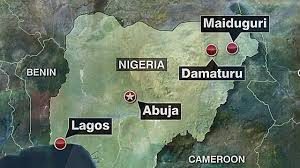
Nigeria: Terrorists Attack Military Base, Kill 2 Soldiers

0


By Ahmad Umar :

Suspected Boko Haram terrorists in a convoy of Toyota Hilux vehicles and gun trucks attacked Buni/Gari Community military base in Yobe State North-east of the country, killing two soldiers with several others missing on Saturday.

The community is located on south fringe of Sambisa Forest, and 60 kilometres south of Damaturu, the state capital along Biu road.

Confirming the attacks on Sunday in Damaturu, a military officer, who was  not authorized to speak on incident said: “We were caught unawares, when the insurgents burst into our base, along Damaturu-Biu road with sporadic gun shots.

“By the time we could respond, the terrorists set our Armoured Personnel Carrier (APC) and the base ablaze, before being pursued with a fighter jet and a helicopter gunship.”

The military officer said that some of the houses in the community were also torched, with dozens of people fleeing into farmlands and Buni/Yadi Community for safety.

The two communities were also in the last six years destroyed by Boko Haram and liberated by the military in 2015.

At Buni/Yadi, over 26 students of Federal Government College, Buni/Yadi were also killed in their male and female dormitories in 2013.

Besides the military officer’s confirmation in Damaturu, there was no official confirmation from security operatives of Operation Lafiya Dole, Theatre Command, Maiduguri.

In a related development, troops of Operation Lafiya Dole also foiled two suicide bomb attacks at the Muna Garage on the outskirts of the metropolis.

It was learnt that the suspected suicide bombers hurriedly detonated their Improvised Explosive Devices (IEDs) vests on sighting troops of 195 Battalion on patrol on Saturday.

The patrol team; quickly accessed the scene and discovered that; “It was only the female suicide bombers’ vest that was detonated, killing her and the male suicide bomber.”

Unfortunately, five members of Civilian. JTF on duty at Muna market were also injured in the blast.

The area was cordoned off after the Police Explosives Ordinance Department team was drafted to defuse the other bombs.

The Borno State Emergency Management Agency (SEMA) and the Red Cross had evacuated the mutilated body parts of suicide bombers, while the wounded persons were taken to 7 Division Hospital, Maiduguri for treatment.

Advocacy Coalition Groups Commemorate World AIDs Day Campaign In Nigeria

0

By Joseph Edegbo

A National advocacy campaign on HIV/AIDS, targeting multiple communities across eight high- risk States in Nigeria kicked off on  Friday as part of the World AIDS Day celebration with the theme “Know Your Status”.The high risk states are Lagos, Oyo, Imo, Akwa Ibom, Anambra, Gombe, Kano and FACT Abuja.

HIV infection has spread over the last 32 years in Africa since it was first discovered and has continued to have a great impact on health, welfare, and employment, affecting all social and ethnic groups throughout the world.

It is estimated that about 3, 229,757 people living with HIV in Nigeria and about 220,393 new HIV infections occurred in 2013 and 210,031 died from AIDS-related cases.

HIV prevalence among adults in Nigeria is relatively low (3.2%), yet Nigeria is an enormous country where HIV infection remains an issue that demands a systematic and highly tailored intervention.

The advocacy campaign is organized by the Red-Ribbon Coalition, Youth Empowerment Foundation (YEF), Society for Family Health (SFH), Development Communications Network and convened by Coca-Cola Nigeria.

Inaugurated in 2015, the past projects have brought together leading stars in Nigeria’s football, music, comedy, and movie industry to work together as advocates for the fight against HIV.

The World AIDS Day is a day globally set aside to provide an opportunity for people to unite in the fight against HIV, show support for people living with HIV, and to commemorate those who have died from an AIDS-related illness.

The number of people estimated to be receiving Anti retroviral Therapy (ART) was 747,382 with 3.0 million adult populations estimated to be living with the disease as of 2014.

Albeit due to its population size, Nigeria has the second largest HIV disease burden in the world, with 3.2 million people living with HIV, after South Africa which has 6.8 million burden of the disease though prevalence is stable at 3.4% (National HIV/AIDS Reproductive health survey 2012 PLUS II)

This year’s advocacy campaign targets multiple communities across Eight high-risk States in Nigeria through a combination of activities which includes media awareness, voluntary counselling and testing, public education and awareness sessions and entertainment using drama and football.

The target for this year is to reach over thirty thousand people across 8 sites (Lagos, Oyo, FCT Abuja, Imo, Akwa Ibom, Anambra, Gombe, and Kano). Activities to commemorate the World Aids Day campaign includes:

  • A press conference which would herald line-up of this year’s activities on Friday, 30th November 2018.
  • Flag off will be at Aboki Estate Ajah on Saturday, 1st of December 2018 at 11 am, with Society for Health (SFH) deployed counsellor testers to conduct HIV counselling and testing.
  • A 2-week long voluntary counselling and testing session which begins on Friday, 30 November 2018 and ends on Saturday,15th December 2018
  • A Novelty Match to close out the events on Saturday, 08 December 2018 @ Araromi mini stadium Gbagada.

Nigeria: The Plight Of Plateau Rural Woman As Attacks Rage On

0
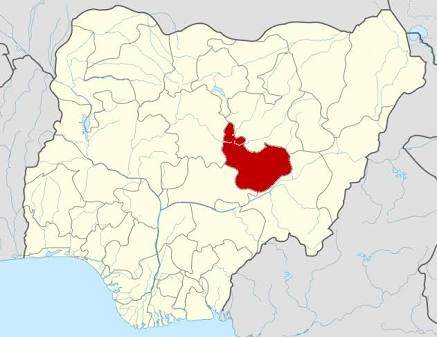
Plateau Map
Map of Plateau State in North Central Nigeria
Plateau Map
Map of Plateau State in North Central Nigeria


By Martha Agas, NAN

Mrs. Vou Dido, a 90-year-old grandmother from Gidan Akwati village in Barkin Ladi Local Government Area of Plateau, has formed a habit of talking to herself since she was taken to the camp sheltering displaced victims of the recent attacks that destroyed her village.

The attacks claimed the lives of her two granddaughters who had fled to a neighbour’s house when they heard persistent sounds of gunshots.

She had refused to leave the house, and did not even hide under the beds as others did. She just sat there, waiting for the worst.

As it turned out, no harm befell her. But the girls, who had fled, were burnt to death when the attackers set the neighbour’s house on fire.

“Life has no meaning to me. The children were left in my care when they lost their parents in an attack last year. They were all that I had. We were living as friends and sisters. Now they are gone.

“The children were my joy. I was very fond of them. I really cannot understand what is happening.’’

According to her colleagues at the Internally Displaced Persons (IDPs) camp, Dido has not eaten much since she was brought to the camp.

They say that the nonagenarian spends most of the time staring into blank space and would, occasionally, shout, giggle or talk to no one in particular, as she struggles to come to terms with the reality.

Mrs. Martha Dauda, another displaced woman from Ganorop village, also in Barkin Ladi, appears to share similar fate with Dido. Except that Martha seems to understand her situation.

Martha, 42, says that she gave birth to 11 children, lost six at birth, while three have been killed by invading gunmen.

“The recent attack claimed my husband’s life and condemned me to total helplessness,’’ a sobbing Martha told newsmen.

“The attackers strangled him in my presence. He was one of the biggest farmers in our community and had often used proceeds from the farm business to sponsor his children and those of his relatives.’’

The woman says she is confused over where to start from. Aside the psychological trauma, she is at a loss as to where to acquire land for farming because her husband usually relied on the family land which would now be taken over by his brothers.  .

The situation of the two women only typifies the plight of women in the rural areas of Plateau that have suffered lots of attacks by unknown gunmen over the past few years.

Investigation has revealed that women have remained the worst victims of the violence as they are usually left to cater for their households after the deaths of their husbands.

The investigation further revealed that while it is possible and easy for men to disappear from their houses, the women, being wives and mothers, have always remained with the children no matter the situation.

Further checks have indeed shown that women hardly recover from the ordeals of these incidences, especially when they have to relocate to other communities as widows and start life all over again

A recent report by the British Broadcasting Corporation (BBC), indicated that the women, after losing their husbands, shoulder the responsibilities of supporting their families, caring for the injured, orphaned and the elderly

“They are also faced with the risk of grave human rights violations and sexual and gender-based violence. They may also face lots of discrimination,’’ the report said.

According to the BBC report, sexual abuse, child marriage, prostitution and trafficking are linked to areas of violence and disasters, with young girls at the highest risk in such situations.

“Sexual and gender violence is also recorded the most after disasters in communities, with women in IDPs camps becoming very vulnerable,’’ it said. 

A Don, Oluwafunmilayo Para-Mallam, a Professor of Gender and Development Studies at the National Institute of Policy and Strategic Studies (NIPSS), Kuru in Jos, says that women suffer most during communal attacks because of their social position in the society.

“This situation is called structural violence because she is incapacitated by the system. She is forced into adopting survival tactics. We call sexual violence in IDPs batter sex.

“The hardship faced by victims of this sexual violence is called re-victimisation because the women are already victimised and thrown into the IDPs camps, only to experience another round of victimisation in the camps.

Women are victims of direct and indirect violence; they get sexually assaulted and exploited. Very often, they become sexual slaves in their quest for survival even at their `assumed refuge shelters’ which are the IDPs camps.

“We have conducted a study and found out that women are assaulted in communities hit by attacks, with widows forced to marry a family member of their late husbands or have sexual relations with their in-laws so as to be catered for, by the family.

“Batter sex is very prevalent in IDPs camps where women are coerced, through intimidation or starvation, to have sexual relations with camp officials just for meals,’’ she explained.

The Professor regretted the “pitiable’’ plight of women in crises-ridden areas, saying that they were often left to fend for their children, family members, care for the sick and elderly, with no support system.

She, however, blamed the situation on poor education and the lack of capacity, such as assets and cash, to take up such obligations.

“Sometimes, desperate mothers take their female children to brothels to sell their bodies for financial gratification in a bid to fight poverty. Very often, this becomes the dark and sad option when benefactors are killed, properties destroyed and survivors displaced.

“Women’s experience during armed conflict is multi-faceted; aside the physical separation from their homes, loss of relatives, physical and economic insecurity, there is also the exposure to health challenges like cholera, diarrhoea, vaginal infections, forced labour for the pregnant women, and even death,’’ she said.

Recent developments at some of the IDPs camps in Plateau, indeed confirm Para-Malam’s claims.

At the Riyom IDPs camp, for instance, nine children were recently delivered, but four died for lack of prompt medical attention, while those that survived were found to suffer respiratory tract infections.

According to a female social worker, who refused to disclose her name, emotional pains of the women were hardly noticed as the IDPs were always locked in the unending battles for food rations and medical supplies.

“Even when the National Association of Social Workers visited some of these camps, the women there were more interested in getting food items instead of `long talks’ with counsellors.

“The result is accumulated psychological trauma, which may eventually lead to their breakdown,’’ she said.

The social worker, who disclosed that Plateau recorded 430 cases of Violence Against Women and Girls (VAWGs), in 2016, expressed fear that the figure could quadruple with the rising spate of attacks on rural communities.

But, as the Plateau rural woman battles with her plight in the IDPs camp, analysts have noted that her situation is shared by all women in other crisis-ridden areas.

They particularly note the case of the Chibok girls that were abducted in 2014, and the Dapchi girls that were also abducted early this year, and say that the incidences were examples of the rising vulnerability of young girls.

They also note that such girls, after being released, struggle to re-integrate into the societies because they had been used as sex slaves, carriers of weapons and brainwashed with ideologies which they may never let go.

UN reports indicate that since 2014, at least 2,000 women and girls have been abducted by Boko Haram insurgents in north-eastern Nigeria, with many of them forced into sexual slavery.

The report also indicated that the persistent attacks by insurgents have huge economic, social and political implications for the Nigerian women.

The world body noted further: “the abducted women and girls are used as sex slaves and as political negotiating baits to satisfy the needs of their abductors’’.

“The mental stress, trauma, disruption of social life, health challenges and deepened margin of poverty keeps putting the woman at a great disadvantage in her development in the aftermath of attacks,’’ the report said.

But, in spite of the bleak situation, organisations like the International Federation of Women Lawyers (FIDA), the UN Women and other faith-based groups are optimistic that the protection of the rights of Plateau women would be more realisable with the gazetting of the Gender Equal Opportunity (GEO) law by the state government earlier in June this year.

The provisions of the law encompass penalties for infringement on the rights of women and children.

To make the law serve its purpose, Mrs. Mary Izam, FIDA chairperson in Plateau, has urged the state government to strengthen its agencies so as to ensure compliance with its provisions.

Analysts say that gazetting the law is indeed timely in view of the injustices the Plateau woman has suffered over the years, and urged stringent measures to protect this vulnerable specie from societal injustices that had remained her lot over the years.

They also urged those concerned to sincerely address issues responsible for the violence on the Plateau so as to restore permanent peace to the hitherto peaceful north-central state.

Martha Agas, is a Reporter with News Agency of Nigeria (NAN) in Jos, Plateau State

Nigeria : UNICEF Spends 90 Million Dollars Under Bauchi Field Office

0
UNICEF
UNICEF Logo
UNICEF
UNICEF Logo

By Ahmad Umar,

United Nations Children Fund UNICEF Bauchi Field Office, Northeast of the country, says it has spent  90 Million US Dollars in six supported States in the areas of Water Sanitation, Health and Education in the 2018.

The States, are Adamawa, Bauchi, Jigawa, Gombe, Taraba and Plateau

UNICEF Field officer, Bhunu Pathak who disclosed this in Gombe at the 2018 End Year Review and 2019/2020 Planning Meeting for the States, said the field office had utilized 95 percent of the resources allocated to it  by the Fund.

He said UNICEF has also achieved 95 percent of its mandate in the states working for,  with the support and cooperation of the states government  and their implementing Ministries, Departments and Agencies.

Mr. Pathak however appealed to states defaulting the payment of their counterpart funding to provide for the effective implementation of the programmes tailored towards the needs of respective benefitting States.

The officer thanked the media for their support in taking up UNICEF activities and urged them to be vigilant on issues of children and women in states so as to be reported.

Multimedia Campaign On Improving Infant, Young Child Feeding Practices (IYCF) Takes Off In Kaduna , Northern Nigeria

0
Map of Nigeria Showing Kaduna State
By Joseph Edegbo
Worried by the increasing incidence of malnutrition -related infant mortality in Kaduna State , the Government in partnership with Nutrition stakeholders has launched the first ever multimedia campaign to improve infant and young child feeding practices (IYCF).
The campaign themed, Start Strong was launched on Friday by wife of the Governor of Kaduna state and the Chairperson of Kaduna State Emergency Nutrition Action Plan (KADENAP), Aisha Ummi Garba El-Rufai .
 The campaign championed by the state Primary Health Care Development Agency (PHCDA) , the State Emergency Nutrition Action Plan (KADENAP) and supported by Alive & Thrive project, with funding from Bill & Melinda Gates Foundation, is a unique initiative that will catalyze behavior change towards improving IYCF indices in Kaduna state.
The outcome of the Strat Strong campaign, according to a statement , is expected to contribute to the efforts of government and its stakeholders to strategically address and improve infant and young child feeding practices in the state.
“Kaduna state is launching this campaign to address the unsatisfactory status of IYCF in the state and the increasing incidence of malnutrition-related infant mortality.
“Available data indicate that malnutrition accounts for more than 50% of under-five mortality in the state. Infant Mortality rate is 103/ 1000 live births (NDHS 2013); Under 5 Mortality rates is 169/1000 live births (NDHS 2013); The rate of timely breastfeeding initiation is 28.9%( MICS 2017); Only 19.7% are exclusively breast fed (MICS 2017); Only 10% of children aged 6 – 23 months were fed appropriately; 11.7% are wasted from acute under nutrition; 47% of children under-5 years are stunted; 34% are under weight(MICs 2017).
“Some of the identified barriers to appropriate IYCF behaviors and practices in the state are connected to issues related to poor knowledge and attitudes about the benefits of appropriate timing of initiating breastfeeding, giving colostrum, misconceptions about giving water and introducing appropriate complementary feeding.
“The IYCF multi-media campaign is therefore intended to respond to these concerns through evidence based strategic communication towards changing the dire IYCF indices in the State.
“The general campaign activities took off on November 22, 2018 and will run through 2020, across the state.
“The activities of the campaign will involve media roundtable, press briefing by her Excellency, the wife of the Governor of Kaduna state and the Chairperson of Kaduna State Emergency Nutrition Action Plan (KADENAP), Hajia Aisha Ummi Garba El-Rufai, IYCF orientation for journalists, radio and TV jingles, and several levels of media engagement and trainings, the statement emphasised.
To successfully drive this initiative,  it said, an effective campaign management mechanism made up of competent personnel from the PHCDA, State Ministry of Health (MOH) and partner organizations (including A&T, UNICEF, Save the Children, Wellbeing Foundation) has been put in place by the government and its stakeholders.
 The state IYCF campaign management committee is led by the State PHCDA and is responsible for providing overall administrative oversight in the process. This committee will receive technical support from FHI 360 A&T and relevant civil society organization (CSO) networks.
This multimedia campaign, the statement reemphasized ,is a shared responsibility, and everyone has a part to play to ensure the success of the process.
” It is therefore expected that everyone in the state actively participates in and encourages others to participate in the activities of IYCF multimedia campaign accordingly.”

When a Nonentity Takes to Notoriety: The Gangsterism of Monrovia City Mayor, Jefferson T. Koijee

0
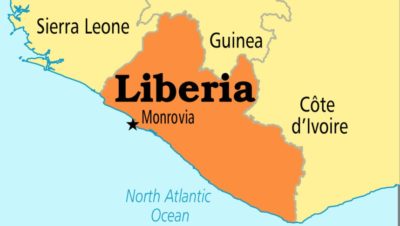
Liberia map
Map of Liberia
Liberia map
Map of Liberia

By Alfred P. B. Kiadii & Moses Uneh Yahmia

A mad house with dullards and perverts scrambling for quick fortune in the face of a frontal assault on the living standards of the masses of the people, the erosion of the fundamental superstructure institutions, compounded by the wholesale defenestration of decent compatriots from the public sector and replacement by despicable CDC faithful, have been the modus operandi and modus vivendi of the wretched CDC government for the last months.
These gory anomalies echo a chilling foreshadowing of the disaster that lurks on the horizon, a downward ebb of governance, and the disruption and reversal of basic gains the homeland made over the years. All the symptoms of a dying administration in all of its manifestations have occurred with striking exactitude, making critical compatriots to conclude that Liberia is in the throes of a putrid crisis. This spells doom for the country and places it not on the cusp of the abyss but at its lowest rungs.
On closer examination of the tragic farce, although we have been treated to the hollow rhetoric of ‘this government will succeed’ from the rabid ‘dat our time boys’, such whipping of opportunistic demagoguery from fanatics run in stark opposite to the widespread anarchy and the scandalous bankruptcy that pervade governance.
Unlike the Weah administration that seems to be content with mediocrity and the spectacles of violence and intimidation,  during the reign of  EJS, at least with all its shortcomings and frailties, it operated within the framework of the bourgeois order—ran an effective civil servants, attracted Foreign Direct Investments (FDI) which come in to exploit the people and their resources and widen the gulf between the rich and poor and not necessarily to move the needle on poverty, the kleptocratic regime managed to maintain the balance of power in the society!
The aphorism that one cannot cure cancer with aspirin has thus being turned into its opposite, if we are to exclude the egregious fraud and awful irregularities that characterized the 2017 presidential election, and the role played by that Machiavellian gangster in Ellen Johnson-Sirleaf who, under the charade of the so-called presidential transition, rigged the election for her preferred candidate. One can thus posit that the election of George M. Weah is an attempt at curing cancer not with aspirin but with an expired paracetamol. This is even a more charitable characterization of his ascent considering he represents the throwback to that ugly past in Africa when leadership was the exclusive preserve and monopoly of the most incompetent yokels.
This downward historical drift of the homeland has witnessed the rise of certain dullards to positions of prominence. We are thus constrained to deal with them and expose their escapades with the aim of taking the halo from their grotesque perversions. These dwarfs who want to play giant on the historical stage by distilling violence and forming an amalgam of docile pawns and toddlers to do their bidding ought to be stripped naked and reduced to shambles. It is from this background that we subject the toxic figure Jefferson Koijee to the sword of our pen.
We must deal with the psychology of this vermin in order to provide a better reprimand. And it boils down to a psychological defect of chronic inadequacy and the illusion of grandeur, which now have taken over this poltroon. However, his actions highlight yet another aberration which is insecurity. It is this fear of insecurity and compounded by the psychological defect of chronic inadequacy and illusion of grandeur that have made the semi-literate numskull to firstly surround himself with bootlickers to sing his praises and hence his penchant for all the wrong things and spotlight. The unsolvable contradictions of insecurity and illusion of grandeur will ultimately lead to a tragic end of this chap, if we are not there already.
Notwithstanding garbage overwhelming Monrovia, notwithstanding the fact that partners are shutting their doors to the city corporation due to the incompetence of the hoodlum Koijee, notwithstanding feces overflowing sewages in the city center, this is who Jefferson Koijee is: a college degenerate; head of the CDC paramilitary death squads in the Sabu Unit and the Zebra Atlas Forces; a pitiful flunkey and a personification of the whole new standard of mediocrity in public service; chief purchaser and builder of exotic mansions; city mayor of the fortress of garbage and city where feces inundate the streets; serial bandit and ruffian; a caricature who wears gaudy clothes and a character with an insatiable quest for primitive accumulation; mayor of the ‘appalling ghetto of a city; etc. etc.!!!
Last Saturday , the toxic figure in Jefferson Koijee was once more at his best and on full display in unleashing savagery and turning a healthy electoral competition into nasty, brutish and reckless violence in district # 13. A situation which led to supporters of opposition candidates sustaining fatal wounds simply because they decided to exercise their democratic freedom within the framework of peaceful assembly. Those defenseless and unarmed masses didn’t have the slightest thought that Koijee would have ordered his cocaine-infested and tramadol-induced bandits to turn on them.
The recent surge in violence orchestrated by Koijee and his band of hooligans was not done without a motive. It was carefully done in the hope of reaping the desire result. And this is it: ignite chaos on the last day of the campaign since the CDC candidate was losing support by violently injuring supporters of the opposition candidates so they are afraid to turnout at the polls to vote. With that, the fanatical supporters of the CDC will then turnout out en masse to vote on polling day so John Weah will emerge victorious. The idea is that once supporters of the opposition camp are badly injured that fear will remain in them and they wouldn’t show up on polling day.
We say to the regime and its friends that shrill savagery will come to an end soon than you will ever imagine.  We emphasize that tyranny is weakened by the spillage of blood. There may be calmness on the surface but there is a cauldron of volcano beneath the surface that will burst onto the surface. We say to you we saw the fall of an oligarchy which lasted for approximately 133 years, which thought it represented the last form of existence of the Liberian people. We saw how Doe and his brutality ended. We witnessed the abrupt end of the despotism of Taylor and his end in a tight British cell.
Our motivation for a better homeland is in the material reality of the country and in some of its deafening hymns of praises. A dying country yet determined to beat back the odds and reassert herself in the milieu of civilization. A brutalized people, yet religious and courageous and hopeful of better days.  Perhaps such hope is the last thing they have to cling on. Thus, we gain inspiration from these illuminating words of the National Anthem: “with heart and hand our country’s cause defending, we’ll meet the foe with valour unpretending.’ We gain inspiration from the words of Guisseppe Garabaldi ‘I offer neither pay, nor quarters, nor food; I offer only hunger, thirst, forced marches, battles and death. Let him who loves his country with his heart, and not merely with his lips, follow me.’
You flunkey!  Your rule is built on lies, scheme and fraud. In the not too distant future your rule will come to an end! It will mark the end of the prehistory of the people and usher in the period of the people’s triumph. There and then we will build a society of shared value and proudly espouse the vision of Edward Wilmot Bylden! We will run with the teachings of Du Fahnbulleh! We will promote the patriotism of Albert Porte. We will yearn to the pedagogical writings of Dr. Mary Antoinette Brown-Sherman with the expurgation of cultural imperialism from the curricular of our institutions of learning! Then we will construct a society of shared value and egalitarianism.

Moses Uneh Yahmia and Alfred P. B. Kiadii are students of the University of Liberia. Kiadii studies Political Science and Public Administration while Yahmia studies Political Science and Economics. They can be reached viamoseswyalc@gmail.com and bokiadii@gmail.com

Humanism: Rethinking Apostasy And Religious Others In Nigeria

0
Leo Igwe
Leo Igwe
Leo Igwe
Leo Igwe


By Leo Igwe

Humanists are meeting in Abuja in early January. The objective of the meeting is to discuss apostasy and the associated risks and challenges. This meeting is special because it is happening at a time when extreme religious beliefs are ravaging the world and wreaking havoc in many places including Nigeria. The event is taking place at a time that the forces of religious fanaticism and bigotry are seeking to shut down the voices of dissent, freethought, and expression. This humanist gathering is happening at a moment in history when there is a growing religious hatred and intolerance, and at a time that the criticism of religion is seen as a crime in many places.

Throughout history, human beings have grappled with how to treat the religious other, the other sect, or the other denomination, including those who are the other by virtue of not belonging to any religion or not believing in a god. The religious other has been called all sort of names- infidels, Kafir, heretics, blasphemers, non-believers-even when these people have their own religions, their own ideas of the divine and of the world.

In the past, these differences have led to so much hatred, oppression, conflict, and bloodshed. It has turned countries and communities, families and neighbourhoods against each other. Religious differences led to the jihads, the crusade and inquisition, and other ‘holy wars’. Religious zealots, who are too often motivated by the injunctions in their sacred texts and traditions, have attacked and killed, demonised and treated with indignity real or imagined unbelievers, apostates and blasphemers. They have literally held human beings intellectually, socially and politically hostage.

In response to the dark forces of religious hatred, violence, and bloodletting, the world adopted in 1948, the Universal Declaration of Human Rights (UDHR). This document provided for the right to freedom of religion or belief, recognising the right of persons to practice their religion, to change their religion and to renounce their religious beliefs. It makes it clear that all human beings who profess a religion, or those abandon or change religious beliefs are equal in dignity and right. They are equal before the law. However, in many countries, this article is not fully respected and guaranteed. In fact, article 18 of the UDHR has been misinterpreted, twisted and only invoked to protect the rights of those who profess religious beliefs, or certain religions, those who convert and embrace a religion, not those who deconvert, renounce or are critical of religious claims. States have been complicit in the persecution of those who renounce religion. Incarceration and execution of apostates and blasphemers are enshrined in the laws that govern many countries including that of Nigeria.

For a long time and in far too many places, atheists, agnostics, and skeptics have been treated with disdain and disrespect; they have been designated as criminals or as terrorists.  They have been called Satanists or devil worshippers and scapegoated when tragedies hit their families and communities. People who abandon their religions have as a matter of tradition been denied their basic human rights by mainly Christian and Islamic establishments. Let’s not forget, these are foreign religious faiths. Those who introduced them were critical of African indigenous religious beliefs. In fact, those who introduced these religions killed, maimed, raped and abused Africans in the course of promoting their faiths. So, persons who leave religion or contemplate doing do so are reluctant and hesitant to go open and public with their disbelief, their views, and identities. They fear for their lives and safety. Let’s make it clear, those who leave religion are not fearful of what the gods will do to them. They are not worried about the so-called Allah’s punishment in the hereafter. No, not at all. Those who deconvert from religion are concerned about what the god believers will do to them.

In a civilised society, the force of logic and evidence not the logic of force and intimidation should guide conversations and debates. Violence should not be a way to persuade and to communicate ideas and religious disagreements as currently the case in many parts of the world.

This situation must change. Persecution and victimisation of those who renounce religion must end, and end now.  Believers should know that sanctioning those who hold different beliefs does not speak well of their faith. They should be ready to tolerate ‘offensive’ views bearing in mind that others may find their religious claims offensive as well. Religious ideas have logical and evidential issues. Many people think that religious beliefs are incoherent, contradictory and absurd. And in a free society, individuals should be able to say what they think about any idea or belief. Individuals should be able to express their thoughts, doubts, and disbelief. After all, that was how religions started and have been able to spread across the world.

Furthermore, how can religious believers truly demonstrate that their faith stands for peace or that there is no compulsion in religion when they routinely incite violence against unbelievers and apostates? Meanwhile, history tells us that the heretics and blasphemers of yesterday are the religious reformers of today and that the founders of the faiths of Christianity and Islam started as heretics and blasphemers.

So how can believers tell us that there is no compulsion in religion when those who are born into a faith cannot renounce it, they cannot change their religion and instead apostates have to choose between recanting and being executed?

How can believers tell us that their religion is peaceful when ex-Muslims and ex Christians mainly operate underground, living in constant fear of religious persecution? This convention presents a historic opportunity to robustly engage this situation and discuss the fears, risks and dangers that those who renounce their religious beliefs face in this country.

This event presents a platform to share, listen and understand the stories, struggles, and experiences of those who have left religion or are contemplating to leave religion. It presents an opportunity to explore ways that can be used to reduce the risks and dangers that are associated with apostasy in Nigeria.

Leo Igwe is the founder of the Nigerian Humanist Movement, and represented the international Humanist and Ethical Union in West and Southern Africa. He can be reached through: nskepticleo@yahoo.com

Currency Exchange Rates

USD - United States Dollar
ZAR
0.06
EUR
1.17
CAD
0.73
ILS
0.31
INR
0.01
GBP
1.34
CNY
0.14
Enable Notifications OK No thanks