Kaduna State Government has been given a pat on the back for evolving effective monitoring measures on the activities of Local Government Councils in the State.
This, NULGE said, has brought visible changes in the performance of the Councils.
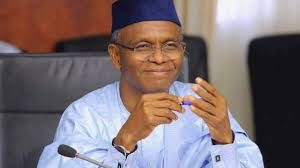
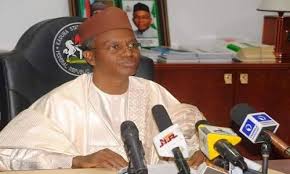
The Acting President of the Nigerian Union of Local Government Employees Kaduna State chapter, Comrade Rayyanu Isayaku Turunku gave the commendation in Kaduna, Northwest of the country, while interacting with some members of the Union to mark the Christmas celebration.
Comrade Rayyanu said there is an indication that the Local Government Councils have imbibed the culture of prudent management of resources by focusing more on projects that have direct bearing on the needs and welfare of the populace.
While commending the Governor El Rufai led administration for the effort to encourage the Councils towards effective service delivery, the NULGE President however appealed to the Governor to allow the Councils to take over the responsibility of payment of salaries of their staff from the State Ministry of Local Government to eliminate delays and other attendant problems.
He also urged the Government to assist the Local Government Councils to settle all outstanding salaries and leave grant arrears to alleviate the hardship of the affected staff.
Comrade Rayyanu felicitated with members of the Union and the entire Christian community in the State and urge them to use the occasion to reflect on the life and teachings of Jesus Christ.
He stressed that the State Government needs the support of all its citizens to restore the State to its past glory in the areas of peaceful coexistence and religious harmony.
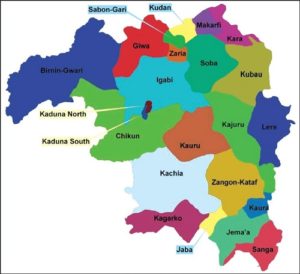
Contracts worth about #5.8billion are said to have been awarded in Kagarko Local Government Area by the Kaduna State government which came to power in May 2015.
Some of the contracts which cover health, education, roads and electrification have been completed, while others are at different stages of completion.
The projects are said to have been influenced by a member of the Kaduna State House of Assembly representing the Area, Nuhu Goro Shadalafiya as part of dividends of democracy under the present Administration in the State.
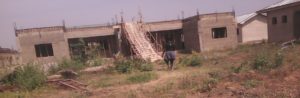
Our Correspondent who was part of a team of journalists on assessment tour of the projects, said the construction of a N1.8 billion new Government Science Secondary School, Jere is about 60% completed.
A block of classrooms under construction at Govt Science Secondary School Jere
At the construction site of the Science school, one of the Engineers, John Laki told the journalists that the work started in November 2017 and was scheduled for completion in February 2019, but for the challenges of Insecurity, it would now be completed in March.
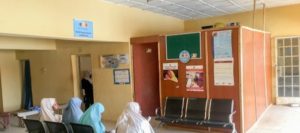
Also at a renovated Primary Healthcare centre, Jere, a community Healthcare worker, Mallam Maharazu Dahiru, said the centre lacks sufficient workforce and appealed to the state government to deploy more hands in order to enhance service delivery.
He commended the government for providing the area with medical facilities that had been lacking in the time past.
At Gida Danbaba village, a resident, Luka Gida Danbaba said the on-going electrification project started since 2007 by the PDP government during Late Governor Patrick Yakowa Administration but was stopped.
According to him, the APC government has done its best in providing water and as well as electrification of major villages in the local government area.
He however called on the state government not to relent in its effort in ensuring that transformers are installed as soon as the lines were provided to ensure proper take off of the rural electrification project.
The construction of access road from Dogonkurmi junction which is 2.5 kilometers covers three villages as well as Kubacha shadalafiya road thereby enhancing the movement of goods and services, as well as economic activities.
A motorist plying the newly constructed road, Abubakar Saeed Kubacha, said they had suffered a lot especially during raining season when the road became impassable.
The construction, he said, has brought a lot of relief to the people, stressing that it would go a long way in enhancing economic activities in the area.
Speaking with journalists at the tour, the member representing Kagarko local government, Nuhu Goroh Shadalafiya was full of appreciation of the state government for the award of contracts in his constituency and enjoined the people to reciprocate government gesture by supporting its programmes.
Africa’s religious landscape is changing very rapidly, in various ways. These changes include the introduction of new religions and adjustments in the modes of worship as well as the personalities that are revered. Transformations in Africa’s religious situation also took a dramatic turn – a more global dimension following the advent of Christian and Islamic missionizers. These foreign religious agents have tried to replace and substitute indigenous religious practices with Western and Eastern faiths.
Centuries of proselytisation, which included persistent and unrelenting demonisation and ‘idolization’ of indigenous religions, structural and physical violence against those who revere African gods and spirits have turned the region into a stronghold of Christianity and Islam. These foreign religions have become the dominant faiths, and account for the highest number of adherents, while the indigenous faiths and practices have been consigned to the margins and continue to survive mainly in syncretic forms.
Unfortunately, the spread of Christianity and Islam has not delivered development and civilization as many had hoped. The continent remains the poorest in the world, and life expectancy in Africa is still the lowest of any continent. Unemployment, diseases, hunger, and illiteracy present endemic challenges that seem as if they may never go away, at least for now. So the self-styled civilising mission of these foreign religions has remained a hocus-pocus, a mirage. The civilizing mission has so far been a failed mission, a pretext for further subjugation, domination, exploitation, and dehumanisation of Africans.
The real tragedy is not that foreign religions are growing in Africa or that these faiths have added to the region’s corpus of superstition, dogma, and irrationalism. No, not at all. The real tragedy is that Africans have become the champions and peddlers of these religious orthodoxies at the expense of their dignity and development. Religious extremism has primarily become a self-inflicted wound.
Recent developments in the African religious sectors attest to the dark and destructive effects of these religions on the continent. For instance, in parts of Africa where Christianity is dominant, priests and pastors have used Christian teachings to exploit and manipulate the people. Clerics have sprayed insecticide on members or compelled them to eat grass or to take harmful substances in the course of faith healing or ministrations. Pastors have extorted money from members in the name of tithe and used donations that were made to promote the “work of God” to fund their extravagant lifestyles. Some few African pastors have become so rich to the point that they have purchased private jets and established their private business empires.
Additionally, many pastors are at the forefront of contemporary witchhunts in the region. Charismatic Christian preachers have caused division, hatred, and conflict in families and communities including organising prayer sessions where the attribute diseases, accidents and other forms of misfortune to the occult machinations of family members. Pastors have continued to endanger the environment. They arbitrarily cut down trees, and destroy forest areas including the groves that indigenous religious worshippers use, claiming that these places are the abodes of the evil spirits.
In addition to opposing the recognition of gay rights and same-sex marriage, Christian establishments have frustrated efforts to uphold the reproductive rights of women and any initiatives to make abortion safe and legal. Churches have discouraged the teaching of evolution in schools. And those who question or criticize the positions of the church are often subjected to overt as well as covert persecution and victimization.
But the situation is worse in areas where Islam is the dominant religion. Arab jihadists, traders and scholars introduced Islam to Africa. They used commerce, Quranic education, and violence to promote the religion and to convert Africans by force. As in the case of the 1804 Jihad of Sheikh Uthman Dan Fodio, Muslim jihadists killed Africans who professed other faiths or those who refused to embrace Islam.
In most places where Muslims are in the majority, de facto or de jure sharia law is in force and adherents of other faiths, and non-religious persons are forced to live under sharia law. This religious climate has provided a breeding ground for religious extremism and the emergence of jihadist groups such as Boko Haram in Nigeria, al-Shabab in the east and the Horn of Africa, and their counterparts in Mali, Algeria, and Tunisia. While these militant organisations have targeted and killed Europeans or Americans, most of their victims are Africans.
Boko Haram militants have killed mainly Nigerians including kidnapping schoolgirls. In Northern Nigeria, Christians, as well as Muslims, have lost their lives in recurrent religious bloodletting in the region. Non-Muslims have been beheaded or lynched for blasphemy or for desecrating the Quran, for insulting Allah or out of anger over the cartoon of Prophet Muhammad in Denmark. Muslim minorities have suffered systematic abuse and persecution.
So, the African continent finds itself at a religious crossroads, at a crucial point in history that the indigenous, Christian and Islam religious Africa tyrannise over the lives of people. Religion is holding African emergence, emancipation and enlightenment hostage. The continent is in urgent need of a religious reformation.
Historically, religious reformation alludes to the movement that Martin Luther led which questioned, criticised and protested the teachings and practices of the Catholic Church and the entire western Christianity. As in the case of the reformation in the 17th century Europe, religious reformation in contemporary Africa needs to target the excesses and extremes of religious establishments. Reformation requires that various religious organisations abolish and abandon anti-human rights positions and practices. Unlike the Reformation in Europe, religious reformation in Africa will not focus only on Christianity but on all religions including Islam, Indigenous religions, Hinduism and other faith orthodoxies. At a time when allegations of Islamophobia and racism are used to shut down important debates and critical examination of Islamic religious claims and other traditional and cultural beliefs and practices, the world needs a religious reformation in Africa.
Africa needs a campaign to highlight the extremism of Islam and of other religious and cultural establishments in the region. Africans need a movement that openly questions religious teachings, highlights their oppressive tendencies, their humanly degrading treatments and positions. A reformation will help expose religious absurdities that fuel extremisms and the misconceptions that clerics too often use to misinform, mislead and exploit Africans.
Leo Igwe is the founder of Nigerian Humanist Movement, and represented the international Humanist and Ethical Union in West and Southern Africa. He can be reached through: nskepticleo@yahoo.com
Joel Gbenga Olawepo Hashim, PT Presidential Candidate
Joel Gbenga Olawepo Hashim, PT Presidential Candidate
By Hassan M. Ibrahim
Mr. Olawepo-Hashim is a Global Energy Executive and founding Deputy National Publicity Secretary of the Peoples Democratic Party (PDP). He is one of the few Nigeria leaders who combine solid business record with strong political background.
A successful entrepreneur with a 26 years impeccable business history. He is chairman of Oilworld Ltd., operator of OPL 241 in the continental shelf of Nigeria as well as chairman Transnational Energy Limited. He is also chairman of Bresson AS. Limited, owners of the 90mw Magboro Independent Power Producing (IPP) project; amongst many business concerns locally and globally. Gbenga is generally acknowledged as principled and courageous.
Gbenga Olawepo-Hashim started exhibiting leadership qualities from elementary and secondary school days. There are many instances; In Cherubim and Seraphim College, he was appointed Health Prefect as well as elected President of the Dramatic Society. At the School of Basic Studies, he was elected General Secretary of the Anti-Apartheid Association, Youth Solidarity on Southern Africa. In 1988, he was elected one of the leaders of the very active National Association of Nigeria Students (NANS). He was incarcerated under the Detention of Persons Decree 2 of 1984 (as amended in 1989), as a result of his leadership role in 1989 Anti-SAP protests, and his Pro-Democracy activities. The Amnesty International adopted him Prisoner of conscience for Nigeria in 1989. He was also a notable Pro-Democracy figure in the then Global Pro-Democracy resistance of the late ‘80s and a respected Youth leadership voice from Africa. He played prominent role in the 13th International Festival of Youths and Students in 1989 in Pyong, North Korea.
In 1990, Gbenga Olawepo-Hashim became the National Administrative Secretary of the National Consultative Forum led by the indefatigable patriot and democrat extraordinaire, former President of the Nigerian Bar Association, Mr. Alao Aka Bashorun. The group had in its fold, the technocratic group led by AIhaji Danshida, Tayo Akpata, Philip Asiodu, etc. It also had a political group led by former Zikist activists, such as Chief KoIa Balogun and others like, Chief RBK Okafor, Mahmud Waziri and Alhaji Tanko Yakasai. The group was the first to raise the need for devolution of power and advocated for the convocation of a National conference as a programme of democratization of Nigeria under Military rule.
Born in Yelwa, Yauri, Kebbi State by a Yoruba mother to a Hausa father. Gbenga spent his early years in New-Bussa, Niger State and was raised in the family of his step-father. A Christian. He attended NEPA Junior Staff School, New Bussa; Cherubim and Seraphim College, Ilorin; School of Basic Studies, Ilorin; University of Lagos and University of Buckingham, United Kingdom, where he obtained a Masters Degree in Global Affairs and was best student in his cohort, securing the Max beloff Prize for Global Affairs, He was also the first student to obtain a distinction in the department course – History of the international Systems.
In a correspondence to Gbenga on the Max Beloff prize won, the chairman of the International Studies Degree Programmes, M.J.M, Crostie wrote, “It is always pleasant to dwell on success and you should make a point of mentioning the prize in your curriculum vitae because it is this sort of distinction that will set you apart from other candidates.” He has also received training at the International Human Resources Development Centre – Boston Massachuset United States.
Mentored into partisan politics by the progressive stock of politician led by the duo of Late Chief Solomon Lar and Alhajj Abubakar Rimi, Gbenga had onetime functioned as the National Publicity Secretary of the National Democratic Party, under the joint chairmanship of Ambassador Jolly Tanko Yusuf and Alhaji Yunusa Kaltungo. In 1998, working closely under the supervision of Professor Jerry Gana (Secretary), Gbenga Olawepo-Hashim and two other young political leaders; Late Senator Dahiru Ahwesu Khuta (Administration) and Dubem Onyia (Organization), helped in the years of the G-34 initiative for the formation of political parties at the group’s secretariat. Gbenga was responsible for the publicity beat.
After the election of President Olusegun Obasanjo in 1999, in the intervening transitional period, Gbenga Olawepo-Hashim served as member/Secretary Youth and Women Development Sub-Committee of the General T.Y. Danjuma Policy Advisory Committee with Late Hajia Laila Dogonyaro as chairman of the Youth and Women Subcommittee.
In 1999, Gbenga was elected as the first Deputy National Publicity Secretary of the then ruling Party, Peoples Democratic Party (PDP). He was a highly influential national officer and became the founding chairman of the Group of 54 NEC members. The group had His Excellency, Dr. Chris Ngige as Secretary and Alhaji Ahmed Gusau, former Minister of Mines, as Deputy Chairman.
He was known for his commitment to the principle of internal democracy in the party, transparency and good governance. As a national officer, he spoke truth to power then at great risks.
Speaking of Olawepo-Hashim’s courage, deep patriotism, and selflessness; Late Chief Ojo Maduekwe, former Nigerian Foreign affairs Minister and Nigerian High Commissioner to Canada, said at a reception in 2005; “The lives of people like Gbenga should inspire us to speak well of ourselves. Gbenga is an inner driven person, not afraid to stand alone, not afraid to be unpopular, not afraid to hold a view. A man who is inner driven, listens to the music of his own universe, listens to the applause of the spirit inside that have etched out an horizon, which he must conquer and moving in that direction; he takes the lead and others follow. Who can see the horizon with him, of such is the stuff of history, of such is the stuff of greatness.”
He was appointed in 2003 as a member of the Political Advisory Committee to the President (In the office of the Political Advisor.) A national Bridge-Builder and complete detribalized, charismatic and excellent negotiator. Gbenga’s experience and deep roots in popular organizations and the broad political sphere will be useful in formulating a national consensus for Nigeria and Unity at a time of great division.
His understanding of political economy and the global architecture of international finance will also be invaluable for an economy that desperately needs growth and development and a people that urgently need prosperity.
Mr. Olawepo-Hashim has won many recognitions and honours including The Kwame Nkrumah African Leadership Award conferred by the continental student body – All African Student Union, at Accra Ghana in 2003; The Veteran Award-in 2005 by the International Union of Students and World Federation of Democratic Youths, (WFDY). He has also received the 2000 Nigeria Union of Journalists Award for Professional Excellence. He is a fellow of the Institute of Corporate Administration.
Community acknowledging El-Rufai's leadership in the State
Gov. El-Rufa’i
By Ben Rogers:
According to former France President, Charles De Gualle, Great men are made out of difficult situations.
This can be likened to Mallam Nasir El-Rufai who from the onset of his Administration in Kaduna State in May 2015, was convinced that nothing great would ever be achieved without determination and Commitment , hence his slogan, to Make Kaduna Great Again.
A man of tremendous vision and zeal to serve his people, Governor El-Rufai has proved beyond reasonable doubt that he perceives leadership only as a privilege and opportunity to contribute to the common good of the people, but for the few elites cum politicians who want the ‘business as usual’.
Since he stepped into Kashim Ibrahim House, the seat of power, El-Rufai has demonstrated by comments and actions that he is an adherent of servant leadership ideology and a believer in the supremacy of the people as a cardinal objective of democracy.
To him, the people are his bosses, while him, their servant.
Little wonder, the welfare of the entire citizens is of his paramount interest, hence the abolition of non-indigeneship syndrome on his assumption of office.
Community acknowledging El-Rufai’s leadership in the State
The Governor remain focused and determined to lead not only by example, but also the dictates of his religious faith, which stresses the virtues of honesty, truthfulness, forthrightness and fear of God.
Armed with the said virtues and in the spirit of democracy, El-Rufai successfully liberated Kaduna from the clutches of of the few elites cum politicians who felt that without them nothing moved.
Despite their unproductive and thankless obstacles to a developmental loan that would have been sourced for economic and infrastructural growth of Kaduna State, Gov. El-rufa’i has been able to superlatively record remarkable feats in all sectors and ushered in a new lease of life in the State.
This piece is neither aimed at blowing the trumpet of the governor, nor does it try to bring the chronicle of all his achievements within the three and half years as it may appear voluminous. Nevertheless, it attempts to call Spade, a Spade by enumerating some of the unprecedented achievements which have earned Kaduna State, a Pacesetter.
The El-rufa’i Administration on assumption of office, met dilapidated primary and secondary schools, primary health care Structures and empty hospitals across the State which have now become a thing of the past.
Govt. Girls Sec. Schl Kabala Costain
Out patients at Rigasa Gen. Hosp.
El-rufa’i Administration also introduced fiscal discipline into the management and control of public finance as well as zero based budgeting against the previous system of incremental budgeting that kept ballooning the size on paper.
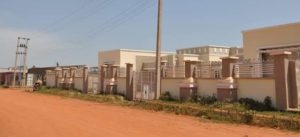
Housing projects at the Millennium City
Kaduna was the first State to implement Treasury Single Account in Nigeria, sweeping 25 Billion Naira from 270 State government accounts in commercial banks to the apex bank, the Central Bank of Nigeria, CBN, downsized the State cabinet and also launched a sustainable infrastructural development plan.
Under the El- Rufai Administration, Kaduna became the first sub-national in the world to join the Open Government Partnership, OGP in order to promote transparency and participatory democracy.
A part from various empowerment programmes and establishment of agencies to create employment opportunities, the Administration revigourated the highly redundant workforce as well as the State Internally Generated Revenue (IGR).
Also, the completion of the 150m litres per day Water Treatment Plant in Zaria which had been begging for attention before the assumption of office of Administration should be applauded.
From the foregoing therefore, El- Rufai can be truly said to remain the personification of courage and resilience, regardless of the immense pressure from thankless critics of his administration and the high demand amidst meager resources which would have ordinarily overwhelmed a lesser man or less tenacious personality.
He has demonstrated over and over again that he is not one of those leaders that can be cajoled or intimidated into looting or using public funds to patronising or satisfying the selfish interests of the so called “Elites” at the expense of the masses.
Therefore, the earlier statement that great men are made out of difficult situation, justifies the re-election bid of Governor Nasir El-Rufai in 2019 to complete restoring the lost glory of Kaduna for posterity.
Sometimes in the first quarter of 2005, Professor Abdullahi Mahadi requested I join him in an afternoon stroll within the foreground field of the Gombe State University; a field he was preparing for what has now become the single largest date plantation in an educational institution in the country. As we stroll, he looked me in the face and said he was going to appoint me his Special Assistant, with a caveat: “amma sabo da kaza baya hana yankanta”, literally meaning being accustomed to a chicken does not stop you from slaughtering it one day. He so appointed me, and about four years later the axe of the Hausa adage fell on me; and I was at fault.
The Prof assumed duty as the pioneer VC of then newly established Gombe State University, along with his principles: humility, dedication, cleanliness, simplicity, sympathy, fairness, straightforwardness, and of course religious dedication.
In August 2004, the VC had a personal mail through the Gombe State Ministry for Higher Education and Special Duties, which I was mandated to deliver. It would be my first contact with him, at one of the Government Lodges where he was temporarily accommodated. The tradition for such high caliber international personalities is for a low-leveled officer to exercise patience to such a time the ‘oga’ deems it fit for him to be ushered in. But in this instance, it was immediate and with the entire courtesies one can think of. I could not hide my surprise and excitement to Professor Rufa’i Ahmad Alkali, who was the commissioner in the ministry. His response: “That is Mahadi for you, an epitome of humility”.
On a courtesy call to the then Visitor and establisher of the university Senator Muhammad Danjuma Goje, and received in his stead by then deputy governor John Lazarus Yoriyo, Professor Mahadi minced no words in demanding that there should not be any political interference in his running of the university, in return for his whole dedication to its overall success. This was guaranteed, and the Prof was in office from 6:30am to 7:30pm, all through his two-term tenure. Outcome: GSU, a citadel of knowledge and overall discipline.
Once, I could not contain my curiosity and therefore asked Mahadi’s driver-cum-domestic assistant, on everything about him being clean, neat and tidy. I said everything and I mean everything! “Zama da madaukin kanwa…” was his response, meaning: that is one character of his principal. The first impression to any first time visitor to the GSU is its complete cleanliness, neatness and tidiness. It is an established principle of Prof. Abdullahi Mahadi.
Apart from a number of staff in the employ of the university as cleaners, the VC engaged additional casual labourers in that regard. These were made to pick any seeable dirt, plus in the plantations and the gardens. On a daily basis and at intervals, you find him in the midst of such workers, playing jokes that boost their morale. In such a situation, a visitor would pass him for head of the labourers. Simplicity is one conspicuous principle of Prof. Mahadi. Arrogance has no place in his life style.
The celebrant runs what is known as Abdullahi Mahadi Foundation, part of whose focus is to provide succour to the poor and the indigent, in form of scholarship and otherwise; to near, distant and non-relations. The current president of the Nigerian Association for the Blind, Mal. Ishiyaku Adamu (currently undergoing doctoral studies) is a beneficiary of this sympathetic principle. And I recently stumbled on Prof Mahadi distributing some assistance to the hospitalized in one of the private clinics in Gombe metropolis. No representation.
Whenever it was the season for remedial programme admission, the Prof would purchase application forms for suitable candidates from his locality. He transported, accommodated and fed them. At the same time, he strongly warned examiners against passing any of them that failed the aptitude test, for being the ‘VC’s candidates’. Merit remained the watchword. It was a clear manifestation of the principle of fairness.
There was this issue of a strong allegation of a “Third Term” agenda against Chief Olusegun Obasanjo, being allegedly backed by some members of the National Assembly, one of whom was representing Mahadi’s senatorial zone. To show his strong aversion to the idea in the spirit of patriotism, he wrote him a strongly-worded letter detailing him the possible repercussions on the Nigerian polity were it to sail through. And he caused the letter to be made public in the zone; I believe to own up to any possible consequence. Always straightforward in expressing his ideologies/opinions.
And only recently, I was in his office on a courtesy visit when he asked for a clarification on a religious topic. After the answer, I politely requested to know what he was up to, based on the nature of his question. He kept silence for a while and then said: “I am in to the memorization of the Holy Qur’an”. This certainly caps all his other numerous religious-rewarding works, which we pray Allah accept; and forgive his shortcomings as he clocks 73 on December 31, 2018.
PT Presidential Candidate, Hashim presenting a document to ACF Ag. Chairman, Alh. Musa L. Kwande
PT Presidential Candidate, Hashim presenting a document to ACF Ag. Chairman, Alh. Musa L. Kwande
By Joseph Edegbo:
As the 2019 presidential election draws closer, the Presidential Candidate of the Peoples Trust, Joel Gbenga Olawepo Hashim has met with the Arewa Consultative Forum (ACF) to acquaint the leadership with his vision and mission for Nigeria, just as the Forum declares that it has no specific candidate, or aligned with any political party.
The visit of the presidential candidate may not be unconnected with the important role the ACF plays in the political equation of the North.
Receiving the Presidential Candidate alongside other chieftains of the forum, Acting Chairman of ACF, Alhaji Musa Liman Kwande said, “we do not align ourselves to any individual or political party.”
The ACF chairman said, what the forum wants to see in presidential candidate is a genuine, very positive and pragmatic policies and measures to fight against corruption, insecurity, impunity, anarchy and a host of other disingenuous activities which, if not effectively contained, would certainly be the bane of the nation’s progress and development as a people and one cohesive nation.
According to Kwande, “Arewa Consultative Forum (ACF), as you are aware, is a non-partisan, non-political, non-religious body devoid of any ethnic or tribal sentiments. Thus, its status as the foremost Northern socio-cultural organization which tries to promote peace, unity, justice and the rule of law, with the main thrust to promoting and protecting the interest and development of North and its people, within the context of one indivisible nation, is not in question.
”In our non-partisan disposition, we do not align ourselves to any individual or political party. Rather, we strive to weigh the scale on what is good for the North in particular and the overall good of the nation.
“As we hold the belief that every aspirant to the office of the President of our great country should have an articulate and thorough blueprint that will catapult the country to be among the comity of
Great nations. We expect to see genuinely, the very positive and pragmatic policies and measures put in place to fight against corruption, insecurity, impunity, anarchy and a host of other disingenuous activities which, if not effectively contained, would certainly be the bane of our progress and development as a people and one cohesive nation.
“I understand that you have availed yourself to contest for the office of the President of the Federal Republic of Nigeria in 2019, under the platform of the People’s Trust (PT). I feel quite enthused to acknowledge the emergence of new breed politicians like your humble self-vying for the various elective offices in our nascent democratic dispensation which, by and large, has the potential to engender healthy political process as we strive to consolidate on the achievements recorded so far.
“As you are quite aware, Nigeria’s political and democratic terrain, at this moment in time, is fraught with negative underpinning that we must all, as citizens and political actors, cultivate the will and courage, to free our country from all that we see could militate against its progress and development in all ramifications. Nigeria’s emergence in a multi-party democracy is a healthy development in our onerous task of nation building.
“It is therefore significant, under the prevailing situation in our nationhood, to witness-quite-a prolific array of political formations and platforms under which each and every Nigerian can have expression. We herefore welcome your emergence of political parties and your good self as the Presidential candidate of one of the new parties, the People’s Trust (PT).” ACF chair said.
The forum therefore appealed to leaders of various political parties to ensure they live by the letters and spirit of the Abuja Peace Accord put up by the National Peace Committee under the Former Head of State, General Abdulsalami Abubakar, which they all signed and pledged to uphold.
Earlier in his remarks, the PT presidential candidate, who hails from Kebbi State, North-West Nigeria harped on the need to unite Nigerians and build a virile economy that can support the nation’s growing population.
According to him, “Nigeria has been badly divided more than ever before. So, our plan is to stop insecurity and return the country to a united nation like it was at independence. Though, North is the largest part of the country, but we must unite with smaller units who feel threatened, and mend the broken bones.” He said.
On the economy, Hashim noted that there is too much hunger in the land because the present nation’s economy is too small to take care of its population.
“With my over 27 years’ experience in business, where I have invested immensely in infrastructure and human capital. I have the experience to build the biggest economy that can take care of our population. I will build a N4 trillion economy for Nigeria in 10 years, which will employ 40 million citizens.” He said
The District Pastor of Christ Gospel Mission International, Abeokuta District 2, Ogun State, Southwest Nigeria, Rev Elijah Olojede has urged Christians to show the reasons for the season and the teachings of the Holy Bible, show love to one another and ensure peace reign.
Rev. Olojede stated this on Sunday during the 2018 Christmas carol concert held at the church auditorium, Sabo, Abeokuta, themed “King of Glory”.
He said people are caught up in Christmas celebrations every year but wondered if they really understand the truth about the season.
Olojede said Christmas is a period for self-assessment using the Bible teachings of Jesus Christ as the main object for the celebration.
According to him, Christians celebrate the miracle of the birth of Christ every Dec. 25, to express joy at the wonders of Jesus’ coming has brought to the world.
“It is a day set aside to mark the birth of our Lord Jesus Christ and no matter the circumstances; Christians must show His virtues of love and peace during the season.
“It is a moment to pray for our country and also show kindness to the less privileged by sharing gifts as shown in the Bible when the wise men came to visit Jesus when he was born,” He said.
The cleric urged Christians to make out time this season to visit the hospitals, prisons and orphanage homes to show those in such places that there was always a reason to thank God.
He said presenting gifts to them, as well as preaching the word of God, would go a long way in wiping away their tears and strengthening their faith in God and the gospel.
However, Olojede appealed to all Nigerians irrespective of their faith, to pray fervently for the country in preparation for 2019 General Elections that Nigeria would experience the most peaceful, credible, free and fair election.