Home Blog Page 1054

Nigeria: Ohanaeze Ndigbo And The 2019 Presidential Elections

0
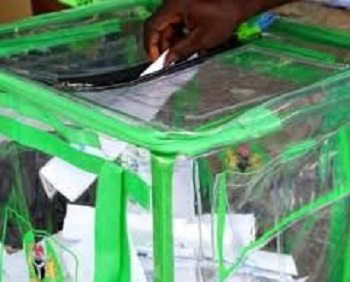
Voting in INEC Box
Voting in INEC Box
Voting in INEC Box
Voting in INEC Box


By Emma Agu

Cyprian Ekwensi’s novel: Survive the Peace was premised, among others, on the disrupted family ties and social relations that emerged in Igboland, after the Nigerian Civil War. Those of us, who witnessed the war, albeit as kids, will confirm that things actually went awry: Brothers turned against brothers; most time, as they squabbled over resources that were, indeed, very scarce. Unfortunately, while in some cases, the enmity caused by the situation has petered out, in others, erstwhile harmonious relationships have been destroyed forever.

By some surprising amnesia, sadly, today, some of those who witnessed that low era, in Igboland, seem not to have properly digested the lessons of the period hence the stage is set for a repeat of that history. This time around, it is the countdown to the 2019 elections, a period that is, again, pregnant with unfathomable forebodings, as Igbo brothers squabble over the best strategy to confront what many regard, as an existential challenge.

From the current fireworks, ignited by the recent endorsement of Alhaji Atiku Abubakar, the presidential candidate of the Peoples Democratic Party, PDP, by the Ohanaeze Ndigbo, over and above the incumbent President Alhaji Muhammadu Buhari of the All Peoples Congress Party, APC, it is obvious that, no matter the outcome of the elections, things will no longer be the same again. While the pro-Atiku groups do not see anything wrong with the Ohanaeze position, those in the pro-Buhari camp disagree vehemently with and, in fact, reject the endorsement. Those who want to dismiss the disagreement with a wave of the hand should be concerned that Barrister Uche Okwukwu, the secretary general of Ohanaeze, has endorsed President Muhammadu Buhari, obviously conveying the lack of consensus on such a serious matter.

For those who do not know, Okwukwu is an unapologetic pro-Igbo Ikwerre man from Rivers State; he is one whose Igbo DNA has not undergone any mutation, even if you prefixed his first name “Uche” with an “R”, to read Ruche! It is against this background that the reported suspension of Okwukwu, last Friday, should be viewed as not just a dangerous escalation of a worrisome crisis but a questionable strategy for resolving an impasse that could have been averted, had Ohanaeze Ndigbo not been dragged into the murky waters of partisan politics.

Here again, history appears to be repeating itself, as this looks like a throwback to the situation just before the 1979 elections when the leadership of Ohanaeze, at the time, endorsed the Shagari-Ekwueme ticket. Predictably, Ohanaeze went comatose after that incident, only to be revived in 1983. Let us hope that the body is not being railroaded into another state of suspended animation! It is interesting to note that the great ZIK of Africa, Dr. Nnamdi Azikiwe, was on the ballot as the presidential candidate of the defunct Nigerian People’s Party, NPP, the same year Ohanaeze endorsed Shagari. This time around, by some poetic coincidence, Buhari was at Onitsha, Anambra State, commissioning the Zik Mausoleum, a project that had been abandoned for over 20 years, just as the Nnia Nwodo-led Ohanaeze leadership was publicly endorsing Atiku Abubakar. History!!!

Passions are understandably very high at the moment with each group posturing sanctimoniously, as the moral beacon of the Igbo society. This is particularly the case with those who support the Ohanaeze President, the erudite Dr. John Nnia Nwodo who, in turn, sees himself, not without justification, as the repository of the sovereign socio-cultural authority, of the Igbo nation. Curiously, that is the source of the problem: his authority is socio-cultural, not political. The Ohanaeze leadership was never intended to usurp the role, of political parties, to openly canvass for votes, in a purely partisan fashion. Those who take this line of argument have a strong point, for several reasons.

The first reason is that Ohanaeze is supposed to act as FATHER, to every Igbo person, no matter where the person lives or what interest group, the person belongs. That is why people of Igbo extraction, in the South-South, who share common geo-political and socio-economic affinity with other ethnic groups, also belong to Ohanaeze. However, given their dual identity, their political interests may not always converge with those of the core Igbo heartland. It is precisely for reasons such as this that, playing the role of FATHER demands a high level of dispassion, on the part of Ohanaeze leadership. Put bluntly, neutrality confers on the body, the moral authority to legitimately expect those in dispute to enthusiastically submit to the organisation’s adjudication. But when the body takes an overtly partisan posture as it has done, it subverts its own authority.

The second reason is that partisan politics exposes the actors to all sorts of indignities, given that politicians are not known to be too economical with disparaging language. To be in politics is akin to entering the boxing ring, for a fight: Once in, you cannot hide; you throw and take punches and your opponent may not respect your height or status. Could that be what is happening right now between the Ohanaeze President, Dr. Nnia Nwodo and Governor Willy Obiano of Anambra State? It is precisely for this reason that traditional institutions and socio-cultural organisations like Ohanaeze are advised to steer clear of partisan politics. At any rate, if one may ask, what makes it mandatory for Ohanaeze to make its support public? Are there no corridors for conveying the position of the group, in a manner that it still retains the confidence of all, without exposing some of its members to public ridicule or even danger?

We must face the fact: that is precisely what Ohanaeze has achieved. It has given the impression, which is wrong, that those who support other candidates, especially President Buhari, are less patriotic than others; that they do not have the interest of Igboland at heart. Yet we know that that is debatable. For crying out loud, it is preposterous for anybody to claim that every person, of South-East extraction, in the APC, is an Igbo hater. Furthermore, it will be dubious in the extreme, to suggest, let alone insist, that Igboland got to its present sorry state, just in the past four years.

Let’s face it: the poor infrastructure, absence of strategic national assets such as refineries, iron and steel complexes (in spite of the abundance of coal in the zone!), etc did not just start, four years ago. By some coincidence, many high-ranking members of the Imeobi, the apex decision making organ of Ohanaeze Ndigbo have held sway in Nigeria’s political scene as governors, ministers, special advisers, chief execs of strategic federal institutions or top party men, even as infrastructure in the south east deteriorated and sunk into complete disrepair. If one may ask, did the miserable state of the Enugu-Port Harcourt Expressway just happen? It will be interesting to tell our people why that stretch of road has lingered in that condition since the restoration of democracy in 1999. What about the Sam Mbakwe International Cargo Airport in Owerri? Do we need a national referendum or United Nations supervised plebiscite, to provide the infrastructure required to achieve its designated status? Why have successive administrations before now not effectively tackled the indefensible underutilization of sea ports in the eastern corridor of the country? Did President Buhari or the APC stop any previous administration, from doing the needful? I think the time has come for us, Ndigbo, to be more honest with ourselves.

Another strong case that should discourage Ohanaeze, from overt political exposure, is the fact that, by its structure and role, it interfaces with similar bodies in other parts of Nigeria. Granted that other socio-cultural organisations necessarily have their political preferences, these are astutely masked by emphasizing matters that affect regional interests and programs, rather than endorsing individuals or political parties. One possible exception to this rule is the Afenifere which publicly supports any candidate or party. But they hedge their bets through what, some have argued, are public stunts, designed to obfuscate their overall strategy. While I do not necessarily agree with that position, the reality is that, head or tail, the Yoruba will always find a way of not losing out completely; it doesn’t matter if they scream to the top of their voices that the contrary is the case! I think they have mastered the art of not stacking all their (political) eggs in one basket! Are there lessons for the Igbo in this?

Political wisdom will dictate that institutions, like Ohanaeze, retain the credibility to act, on behalf of their groups, no matter the outcome of the elections. There are moments when people think that elections have been wrapped up, that the public mood, as expressed on social media or even dictated by opinion polls or public debates, have settled the outcome of elections. That is where false confidence can be disastrous. Let us hope that Ohanaeze does not become a victim of such over-confidence. Should Buhari/APC win, and going by the demographics and the peculiar primordial determinants of electoral behaviour in Nigeria, nothing so far suggests that the party will lose, it is hoped that Ohanaeze will retain the moral fiber to present itself as a credible voice of the Igbo, thereafter.

Besides, it needs to be stated that one way to avert a reenactment of the immediate post-civil war era calamity, where the Igbo found surviving the peace much more difficult than surviving the war, is to commence immediate fence-mending steps, to repair the damage already caused. Ohanaeze Ndigbo can borrow a leaf from President Buhari who, while campaigning in Owerri, advised voters in Imo State to vote for candidates of their choice, across party and not ethnic or religious lines.

Emma Agu, CEO of GAVINTA & ASSOCIATE LTD, a media consultancy, is a fellow of both the Nigerian Union of Journalists (NUJ) and the Nigerian Guild of Editors (NGE).

Nigeria: How We Lost Our Babies Due To Negligence Of Health Workers At Sabon Tasha General Hospital, Kaduna

0
Sabo gen. hospital
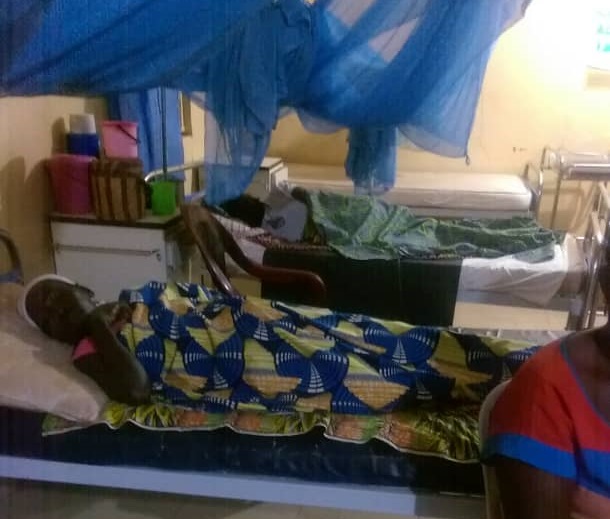
Admitted patients at Sabon Tasha Gen. Hospital Kaduna
Sabo gen. hospital
Admitted patients at Sabon Tasha Gen. Hospital Kaduna


By Maureen Sheyin.

Thursday 29th November 2018 remains a day Fatimah Solomon will never forget in her life. On that fateful day, she went for her usual ante-natal checks slated for every month at Sabon Tasha general hospital, Kaduna northern Nigeria.

Most of the pregnant women in the area numbering about a hundred prefer to go to Sabo General Hospital because of its proximity.

Mrs. Solomon was full of joy after being checked by the midwife on duty and told that her baby was kicking fine. she was asked if she had any complaint which she said no, she then bought the usual drugs taken by pregnant women and left the hospital.

On that same day, at about 5pm, back at home, she started experiencing pains, she never thought it was labour, because her estimated delivery date was in two weeks time. But when the pains persisted, she hurriedly went back to the hospital, and met the midwife on duty, who checked and informed her that the unborn baby was not breathing.

This left Mrs. Solomon with many thoughts, because she was at the hospital in the morning of the same day when they told her that the baby was breathing normally.

‘’On arrival the nurse asked me to lie down and close my legs, to me it was highly unusual in cases of giving birth as one is expected to open her legs and not to close them, I obeyed her because I thought she was a professional, but to my surprise the midwife went and sat down doing nothing, I called her several times but she ignored me, she was busy chatting on her phone, I believed that I had only 30 per cent assistance from the midwife, upon losing my baby in the process, I was charged N1,500.

Findings revealed that Mrs. Solomon was one out of many pregnant women who suffered bitter experiences when they visit the hospital for ante-natal checks, where new born babies have continued to die due to negligence from the health personnel.

The hospital which is located in Chikun Local Government Area has a good number of nurses and midwives and 7 medical doctors.

A visit to the hospital revealed that women and children have continued to die with such impunity, even when the state government created a budget line in order to reduce maternal and child mortality.

In the second part of 2018, there was a reported case from the hospital, where 16 women who took a family planning method became pregnant. It was gathered that the service provider administered one stick of implant, instead of the usual two, for women who wanted to space their deliveries for 5 years.

Despite the introduction of the free maternal and child health care services, pregnant women visiting the hospital have been made to pay for services which the state government continue to announce were free.

It appeared that the hospital was interested in collecting monies from pregnant women who attend ante-natal and women who deliver there, more so, official receipts were not issued for such payments – charges are written with a pen on paper. A lot of such women are left with inadequate care, as a result, many have lost their lives, or left with permanent damage and in most cases lose their babies.

Mrs. Nankling Nansel is a woman who lost a six months pregnancy due to negligence of health workers at the Sabo general hospital. She narrates her ordeal thus;


The Chief Medical Director of Sabon Tasha general hospital, Dr. Emmanuel Gajere, who assumed duty three months ago said there is large number of women who come for ante-natal care and nearly 80 per cent of them don’t deliver at the hospital. Rather, he said, they go elsewhere to deliver, attributing this to what he called ‘a problem in the labour room’.

He confirmed most of the complaints by pregnant women, attributing it to shortage of health personnel, adding that in most cases, only one or two midwives will be on duty attending to many pregnant women who came to deliver.

He said lack of communication skills from both parties is another contributory factor, where the midwife sees the clients as a customer, not as a pregnant woman who comes for anti-natal care, adding that some of the health workers have conflicting characters towards their work that need to be checked.

On alleged illegal charges on pregnant women, the chief medical director said since he assumed office there had not been charges when a woman comes to deliver, except on certain items for which receipts were issued.

‘I don’t subscribe to that, I don’t think the management is aware of this, nevertheless, I think this is something management would look into, but its free, services are free, don’t pay any money for delivery, it is free.

“Somebody charging you N1, 500 or N3, 500 is an illegal act and is not acceptable.”

He assured that with his coming to Sabon Tasha general hospital, measures would be put in place to restore the lost confidence people have in the hospital.

Dr. Gajere said, his desire is to turn Sabon Tasha General Hospital to be like the General hospital in Zangon Kataf Local Government Area, where he was coming from, which has not recorded any maternal and infant mortality for two years.

He said, the success story of Zangon Kataf hospital is as a result of prompt response from the health workers in the hospital.

In an interview, the Permanent Secretary, Kaduna State Ministry of Health and Human Services Dr. Muhammad Shehu Usman, said, health is the most important agenda of the present administration and that Government was not unaware of the inadequate manpower in the health sector.

It is against this background that the state government in 2018 approved the recruitment of three thousand and fifty-nine health workers to have sufficient health workers in the state.

The permanent secretary explained that if there were adequate health personnel in the hospitals, cases of maternal and child mortality and other related diseases will be reduced to barest minimum.

‘’if you look at our statistics of maternal mortality, it has been dropping from 2007, at that time we were having about 1500 death per 100,000 life births, but it has dropped seriously. If you look at the statistics, we are less than the national average, but that does not mean that women are not dying but it cannot be compared with two to three years ago.

“Babies are also dying but it cannot be compared to years back.”

Additional information on family planning by Iliya Kure

Rivers Niger, Benue Goldmine For Nigeria To Develop – Consortium

0
Arc. G.Y Aduku in red cap cutting his 75th birthday Cake after addressing the World Press Conference at Yakubu Gowon Centre Abuja


By Joseph Edegbo:

A consortium of development professionals YG-CONSULT wants Nigeria to accord the deserved attention to the development of a goldmine naturally bestowed on the nation by Rivers Niger and Benue.

Addressing a World News Conference in Abuja on Sunday, the Coordinator of the consortium, Arc. Gabriel Aduku noted that nature has been very generous to Nigeria in terms of resources, especially through the two rivers which have been begging to be developed.

Rivers Niger and Benue, Arc. Aduku explained, are not just nature’s gifts, but have the potential to generate power, national integration, engender productivity, create jobs, business opportunities and livelihood for millions of Nigerians.

It is against this background, the Coordinator said, YG-CONSULT is raising national consciousness to the enormous advantages the two rivers offer Nigeria in her search for economic diversification and empowerment of the people regardless of ethnic, religious, geopolitical and political affiliations.

Nation building, Arc. Aduku emphasised, is not the sole responsibility of the political leaders alone, hence the establishment of the YG-CONSULT.

For the full realisation of the objectives, the Coordinator asks both the Federal Government and National Assembly to among others, ammend and harmonize related laws to support the development of the project, designate the Niger- Benue trough as Special Development Areas, designate the rivers Niger and Benue confluence as economic zone.

Others are development of smart City and Nigerian iconic Dome and Grant the project along the trough, Duty Free status.

For State and local governments, Arc. Aduku wants them to allocate land for each project as their equity, provide adequate security to guarantee good and hitch free operation, establish advisory teams comprising core Stakeholders and community leaders in the planning and management of the projects. They would also participate in attracting investors and foreign direct investment.

The Coordinator reemphasized that the consortium is ready to offer its partnership and professional support to any government, development partners or corporate citizen willing to work with her to facilitate the modernization and economic development of the States, cities, towns and villages contiguous to the two rivers.

Projects identified by YG-CONSULT, include agriculture, especially irrigation. hydroponics and aquaponics farming. Smart cities, aquaculture supported by extensive fish canning, drying facilities, culture industries and other investment clusters, technology incubation, hubs science and Nanotechnology research parks. Smart land and water transportation systems as well as tourism and international water sports.

On the dredging of River Niger, Arc. Aduku expressed deep concern over the abandonment, adding that the initiative would have made Nigeria to become one of the 20 most industrialized nations in the world.

He stated that Nigeria commenced the N30 Billion dredging of the Niger from Baro to Warri in September 2009, to provide 1,600,000 hectares of irrigable farmland to boost agriculture and Poverty alleviation if it was implanted successfully, but sadly, the Initiative died a stillbirth.

President Ramaphosa Of South Africa Delivers State Of The Nation Address

0
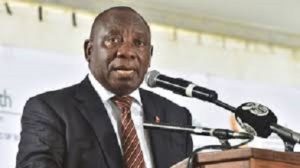
South African President, Cyril Ramaphosa


President Cyril Ramaphosa will this week deliver the State of the Nation Address (SONA) at a joint sitting of the National Assembly and National Council of Provinces (NCOP).

The February SONA, the last of the fifth Administration due to the elections later this year, will take place at 7pm.

As is usual for this important event in Parliament’s calendar, the address will be broadcast live on a number of news channels, radio stations as well as live streamed on the Parliament website. There are also public viewing sites set up by GCIS that will broadcast the SONA in the provinces.

The address affords the President an opportunity to speak to the nation on the general state of South Africa, to reflect on a wide range of political, economic and social matters within the domestic and global contexts.

SONA is a mechanism used by the President to account to the nation on the work of government and to set out government’s program of action.

Earlier this week, Speaker of the National Assembly Baleka Mbete said the budget for SONA has been cut by 47%.

“Consistent with our endeavour to continuously scale down on costs in light of prevailing economic conditions, we have kept arrangements to the bare minimum without compromising the significance and decorum of the occasion.

“As South Africans continue to face economic challenges, Parliament is taking very feasible steps to do more with fewer resources progressively. Parliament has cut the budget for the SONA ceremony by 47% in comparison with the 2018 SONA budget,” she said.

Mbete said a couple of events and items that usually form part of SONA have been withdrawn from the 2019 February SONA.

However, there will still be a ceremonial parade exhibiting military traditions, drills and ethos of the army, the navy and the Air Force of the Republic of South Africa will be maintained. This includes a national salute by the Ceremonial Guard of the South African National Defence Force, a military band, a salute flight by the SA Air Force and the 21 gun salute.

Former Heads of State, President Thabo Mbeki and President Kgalema Motlanthe, and former Presiding Officers, former National Assembly Speaker Dr Frene Ginwala and former National Assembly Speaker Max Sisulu, have confirmed that they will attend the event.

“We are pleased to state that all arrangements are in place to ensure a successful hosting of this important and last State of the Nation Address for the Fifth Parliament,” she said.

The public are encouraged to engage on the important national event, using #SONA2019.

– SAnews.gov.za


World Cancer Day: Medical Experts Sensitize Destitute, Inmates & Gheto Women Preventive Measures

0


By Ibrahim Yakubu:

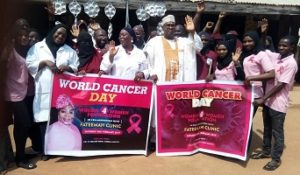
As the world celebrates this year’s International Cancer Day, a team of 10 medical experts comprising doctors and nurses has embarked on a sensitization campaign to persons with disability as well as inmates at rehabilitation centres in Kaduna, Northwest Nigeria.

The team which is headed by the Director, Fatima Clinic Kaduna, Hajiya Maryam Abubakar also goes from house to house in order to raise awareness among women.

Commenting on the Day, Hajiya Maryam said there are different types of cancer saying that they are all dangerous to human life.

Cancer, she added, has become a major threat to lives of men and women hence the need for all hands to be on deck to ensure cancer is eliminated world-wide.

She explained that the awareness is focused on women simply to educate the poor, physically challenged and those that are residing in rural areas and the ones living in ghettos as well as those in detention due to certain factors.

“My medical team is out for 2 days, to sensitize over 200 women destitute who include Blind, cripples and Inmates as well as others residing in the ghettos”.

“Thousands of lives could be saved each year if people are aware of the signs and symptoms of cancer and people looked for help as soon as possible, as treatment is usually more effective in the early stages of cancer.

“Breast cancer is the second leading cause of cancer deaths in women worldwide hence the need to double efforts in raising  awareness of cancer and to encourage its prevention, detection and treatment for the purpose of saving humanity and lives of millions of men and women.

“Cancer treatment very expensive for the poor women, and that is why we are out today to raise more awareness of the disease to the women, so as to prevent them from getting it” she said.

Maryam listed smoking as the biggest cause of cancer of the lung, mouth and throat hence the need to educate rural and urban women on the dangers to avert deaths.

“Obesity is the second biggest cause of cancer after smoking simply because extra fat in the body can have harmful effects, like producing hormones and growth factors that affect the way our cells work.

“The sign and symptoms of cancer include the following, a sore or bruise that does not heal, new lumps or growths on our skin, cough or hoarseness that lasts more than three weeks, indigestion or difficulty in swallowing, unexplained weight loss or tiredness.

Hajiya Maryam then called for more cancer diagnostic centres across the 36 states in order  to reduce the number of women and children that are dying of the diseases associated with Cancer  in the country.

A handicapped at the home of persons with disability in Kaduna metropolis, Mallama Maryam who thanked the team for the gesture, called on other health related NGOs and CSOs to also remember them in all issues related to health.

Also speaking, Mallam Lawal Maduru, Chairman of Niggers Rehabilition Centre in Kaduna commended the medical team for the service.

World Cancer Day is celebrated

4th of February every year.

World Interfaith Week: Clerics Deradicalize 50 Inmates Against Religious Extremism, Drugs Abuse In Kaduna, Northern Nigeria

9


By Ibrahim Yakubu:

As part of activities to mark the World International Interfaith-week and Harmony in Kaduna, a group of clerics of both muslims and christians has taken campaigns to a rehabilitation and skilled acquisition centre to sensitize inmates on the dangers of drugs abuse and other vices.

The rehabilitation centre. Nigger, situates at Rigasa in Kaduna Metropolis, Northwest of Nigeria.

Led by Pastor Yohana Buru, the clerics stressed the importance of religious tolerance, peace and harmony among the people.

Buru said, last year they organized reading and written competition for the inmates to mark international interfaith week and harmony, so as to encourage them to be fully committed to studying religious books, as a way of promoting better understanding and religious tolerance among them.

“This year, we are focusing on teaching them ways to shun drug abuse and religious extremism, and better ways to live in peace and harmony, and also to educate them on the real teachings of the holy books, in order to enable them have the fear of God; as well as sensitizing them on the need for peaceful co-existence, tolerance and harmony amongst people, regardless of their religious inclinations, culture and tradition.

“This is the 6th time we are organizing conference and event at the centre with inmates from the 36 states of Nigeria, they are mostly drug addicts and mentally challenged persons, and people with other forms of deformities, which we believe will help them in living in peace and harmony with every inmate that is in the house”

Buru said religious leaders could play a major role in educating youths on various ways to counter violent extremism by promoting peace and tolerance through corrective interpretations of the teachings of the holy books.

“We must teach our youths what the Bible and Qur’an say so as to promote peace and harmony, as well as to educate them on the dangers of religious extremism”

Religious preachers, he said, could provide psycho-social support, and enjoined them to preach genuine teachings of their respective religions to their followers.

He was also of the opinion that the Press could play a major role towards averting religious violence and promote peace and stability in the country.

He stressed the need for the promotion of inter-religious dialogue in Nigeria, which according to him will contribute a great deal in averting religious violence.

Buru observed that the problem of religious violence could be tackled through poverty alleviation programmes and the involvement of religious clerics in educating youths on the teachings of the two religions.

The leader of the Centre, Mallam Lawal Naduru expressed appreciation with the kind gestures, adding that it was indeed the 6th time they are organizing this type of meeting aimed at raising awareness on the importance of tolerance among different faith based organizations that are residing in the centre.

“This centre has been here for over 14 years, and has been helping transforming mentally challenged and drugs addicts youth to normal, only that it lacks financial support to carry out more awareness” he said.

He disclosed that the centre has over 20 Christians who performed their religious rites without any form of hindrance considering the perception of people within the state; adding that, the centre has graduated over 1700 youths that came to the centre for rehabilitation and counselling.

“Majority of the inmates are young people including women who are affected mentally, drug addicts as well as some faced with spiritual challenges that need assistance. We give everyone here equal right and permit them to practice his/her religious without discrimination,” he said.

International Inter-faith week and Harmony is usually celebrated on every first week of February.

Nigeria 2019: Avoid Inconclusive Election, Interfering with Electoral Process – Group Warns

0


Stakeholders in Nigeria’s electoral process have been told to avoid Inconclusive election, interference with electoral process and late arrival of materials in order to attain free, fair and credible polls in 2019 general elections.

Also to be avoided, are hate speeches while the electoral body should remain neutral and media practitioners be objective in their reportage.

These are part of the Communique issued at the end of a workshop on Conflict Sensitive Reporting organised for journalists by the Centre for Humanitarian Dialogue in collaboration with Kaduna State Peace Commission, which was held in Kaduna, Northwest Nigeria.

In the Communique, participants also enjoined all Stakeholders to abide by the ethics of their profession and obey electoral laws.

They identified hate speech during Campaigns, fake news, presence of thugs to disrupt Campaigns, destruction of opponents Campaign materials, Unilateral change of electoral dates and delays in announcing results as well as vote buying as some of the early warning signals.

On the part of the media, the Communique tasks the practitioners to exhibit self-censorship, ethic discretion in reportage, being objective, accurate and unbiased in Reporting .They should also exhibit responsible Journalism, down playing hate speeches, putting the society first and also create enlightenment in the society.

The Communique calls for continuous interface between journalists with INEC and security agencies before, during and after the election.

Nigeria 2019: Make Impartiality, Accuracy Your Watch Word – Peace Commission Tells Journalists

0


By Joseph Edegbo:

As Nigeria approaches the 2019 general elections, Kaduna State Peace Commission has enjoined journalists to avoid any reportage that could lead to violence.

The Executive Vice Chairman and Chief Executive of the Commission, Priscilla Ankut made the appeal on Friday at a workshop on Conflict Sensitive Reporting, organised for journalists in Kaduna State, Northwest of the country.

Describing journalists as movers, shakers and influencers in the society, Ankut said sensational headlines should be carved with sensibility, especially at Crises period.

“We should place humanity above what we write”, she advised.

The Peace Commission Vice Chairman noted that the 2011 election in Kaduna State could not be forgotten easily pointing out that people were still skeptical on which way the 2019 elections would go.

Ankut who reaffirmed the Commitment of the commission towards ensuring peaceful coexistence among the diverse groups in the State, said a committee had already been set up to monitor the activities of political parties and their respective key players.

She said being an agency of prevention, the Commission would strengthen its mechanism to correct the notion in certain quarters that the election in the State would witness violence.


Speaking in the same vein, Lead Facilitator from the Centre for Humanitarian Dialogue, Sponsor of the workshop, Dr Ahmed Yassin urged journalists to be patriotic so as not to put the state of the nation on trial.

“Sensitivity and patriotism should always be considered in the discharge of your duties,” he warned.

Dr. Yassin who was a member of the Kenyan Peace Commission, used the country as a case study and advised journalists to always demonstrate accuracy, fairness and impartiality in their reportage for the attainment of peaceful elections.

He said although reports could be factual, sensitivity be considered.

On his part, the Chairman, Kaduna State Council of the Nigeria Union of Journalists, Comrade Adamu Yusuf commended the Peace Commission for identifying with the media as a Critical Stakeholder in peace building towards the election.

He said although some people are of the opinion that peaceful elections lie on the politicians, the media which Sensitizes the people, plays a vital role to achieve the desired goals.

Comrade Adamu Yusuf drew the attention of the Commission to the destruction of bill boards and therefore stressed the need for the body to convene a meeting with political parties to check the ugly trend.

He assured the Commission that members of the Union would remain unpolitical and unbiased in the discharge of their duties.

Participants who were drawn from the print, electronic  and the new media,  brainstormed on among others, understanding hate  speech and  conflict sensitive  reporting  perspective from Kenya, understanding the Kaduna State context, Strategies for conflict sensitive reporting and the role of Journalists in ensuring peaceful 2019 elections.


Currency Exchange Rates

USD - United States Dollar
ZAR
0.06
EUR
1.17
CAD
0.73
ILS
0.31
INR
0.01
GBP
1.34
CNY
0.14
Enable Notifications OK No thanks