By Winifred Bulus
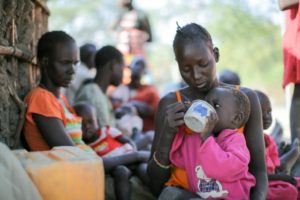 United Nations High Commissioner for Refugees (UNHCR),has revealed risk of mass deaths in parts of Africa including, Nigeria and Yemen.
This was made known by Adrian Edwards, the spokesperson of the United Nations High Commissioner for Refugees (UNHCR) during a press briefing in Geneva, Switzerland.
He added that this was a result of the drought experienced by some African neighbouring countries, displacement of persons in war zones as well as insurgency amongst others.
Edwards pointed out the possibilities that the poverty could be worse than the 2011 East Africa crisis, the worst in 60 years which caused about 260,000 lives.
According to him, “In northern Nigeria, seven million people are now struggling with food insecurity and need help. The situation is particularly bad in parts of Borno, Adamawa and Yobo states where by June it’s expected that some 5.1 million people will be in Integrated Food Security Phase classification levels of between 3 and 5.
“In Yemen, which is experiencing the world’s largest humanitarian crisis with almost 19 million people in need of humanitarian help, around 17 million people are food insecure. Food needs are being cited as the lead factor in displacement at three quarters of all locations where there are internally displaced people.
“Already, displacement is rising, forcing us to upgrade our displacement estimates for 2017. In Sudan, for example, where our initial estimate was for 60,000 arrivals from South Sudan this year, we are in the process of revising the expected total upwards to 180,000. Similarly in Uganda we are revising planning from 300,000 displaced to 400,000.
“In all, some 20 million people in these countries are in areas affected by drought, 4.2 million of whom are refugees. Consecutive harvests have failed, conflict in South Sudan coupled with drought is leading to famine and outflows of refugees.
” insecurity in Somalia is leading to rising internal displacement, and rates of malnutrition are high, especially among children and lactating mothers.
“In the Dollo Ado area of southeast Ethiopia, acute malnutrition rates among newly arriving Somali refugee children aged between 6 months and five years are now running at 50-79 percent.”


