…..Organises Capacity Building Workshop
With a strong conviction that peace, unity and development require informed citizens, responsible leadership and institutions, that contribute positively to society, the Arewa Cohesion for Peace, Unity and Development Initiative, (ACI) has organised a One- Day Workshop on Journalism, Civic Responsibility and the Protection of Electoral Democracy.
The event featured the unveiling of a 22-page handbook for journalists to serve as a practical guide to fair, accurate, objective and conflict- sensitive election reporting.
The workshop which was held on Wednesday in Kaduna, North West Nigeria, with a theme ” Fair, Objective and Conflict- Sensitive Election Reporting: Strengthening Journalism for Credible Nigerian Elections, drew 30 journalists along with some media executives from the print, electronic and new media.
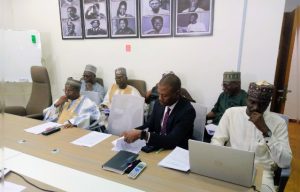 Declaring the workshop open, the Director General of ACI, Dr Abdullahi Idris noted that elections are not held only at polling units but also at public space created by information adding that citizens form opinions based on what they hear, read, watch and share, which therefore makes responsible journalism particularly important.
Dr. Idris who spoke on Journalism, Accountability and Good Governance among others, said citizens need reliable information about what public officials have promised, what candidates are proposing, what governments have done and what is happening during elections and electoral disputes.
“Holding leaders accountable does not mean supporting their opponents. Reporting wrong doing does not require political allegiance, fairness does not mean treating every claims equally credible,” he contends.
The Director- General made it clear that the role of the ACI in bringing together the participants was not to dictate political positions, influence editorial decisions or tell journalists who to support. But because they respect media independence with a view to strengthening professional standards that help citizens receive reliable information and participate peacefully and meaningfully in democracy.
While expressing hope that the participants would be better equipped after the workshop to verify information, understand their legal and ethical responsibilities, they should report sensitive issues responsibly and approach election results and disputes professionally.
Dr. Idris made it clear that ACI supporting responsible election is part of supporting peaceful coexistence, good governance, informed civic participation and accountable leadership.
Meanwhile, a veteran journalist and former editor with the Federal Radio Corporation of Nigeria, Elder Joseph Edegbo, said the media had a critical role to play in strengthening Nigeria’s democracy ahead of the 2027 general elections.
Edegbo made the assertion in his presentation at the workshop where he examined public interest in journalism, the media’s role in elections, independence, impartiality, accountability, political capture and journalists’ responsibilities to voters and the wider public.
The Veteran said the media remained a vital pillar of democracy through information dissemination, public enlightenment, voter education and the provision of platforms for political campaigns and public debates.
According to him, a free and objective media promotes transparency and accountability, while a compromised media could undermine the electoral process and weaken democratic institutions.
Edegbo identified voter education, campaign coverage, facilitating political debates, reporting election results and scrutinizing the electoral process as some of the key responsibilities of the media.
He urged journalists to provide accurate information on voting procedures and ensure that their reports were free from inflammatory language capable of inciting electoral violence.
The veteran advised journalists to maintain editorial independence and avoid political capture by politicians, governments and other powerful interests.
Edegbo explained that political capture occurred when powerful groups influenced the content of news reports to serve their interests.
To guard against such influence, Edegbo urged journalists and media organisations to uphold ethical standards, maintain professional distance from politicians and ensure transparency in their operations.
He also stressed the importance of impartiality, urging journalists to present diverse perspectives, verify claims and keep personal opinions out of news decisions. “Journalists must prioritize verified facts over speed, rumours or sensationalism,” he said.
Edegbo further advised media practitioners to apply the public interest test when making editorial decisions, ensuring that their reports served the needs of citizens rather than commercial, personal or political interests.
He urged journalists to provide fair and proportional coverage of political parties and candidates, including smaller parties and independent candidates.
According to him, the media should facilitate public discussions on electoral issues by providing platforms for diverse perspectives.
He recommended that journalists prioritize public interest, scrutinize those in power without bias, provide context in their reports and empower citizens to make informed democratic choices.

